7 min read · Last updated September 21, 2026
- Original Medicare’s dental exclusion traces to Section 1862(a)(12) of the Social Security Act (42 U.S.C. 1395y(a)(12)), and per the Kaiser Family Foundation (KFF), Medicare “has not covered routine dental care” since the program began in 1965.
- Medicare.gov lists six narrow exceptions where Original Medicare does pay for dental care: hospitalization tied to a dental procedure, written into the statute itself, plus five coverage-policy exceptions from the Centers for Medicare & Medicaid Services (CMS) tied to a transplant, a heart valve replacement, cancer treatment, or dialysis.
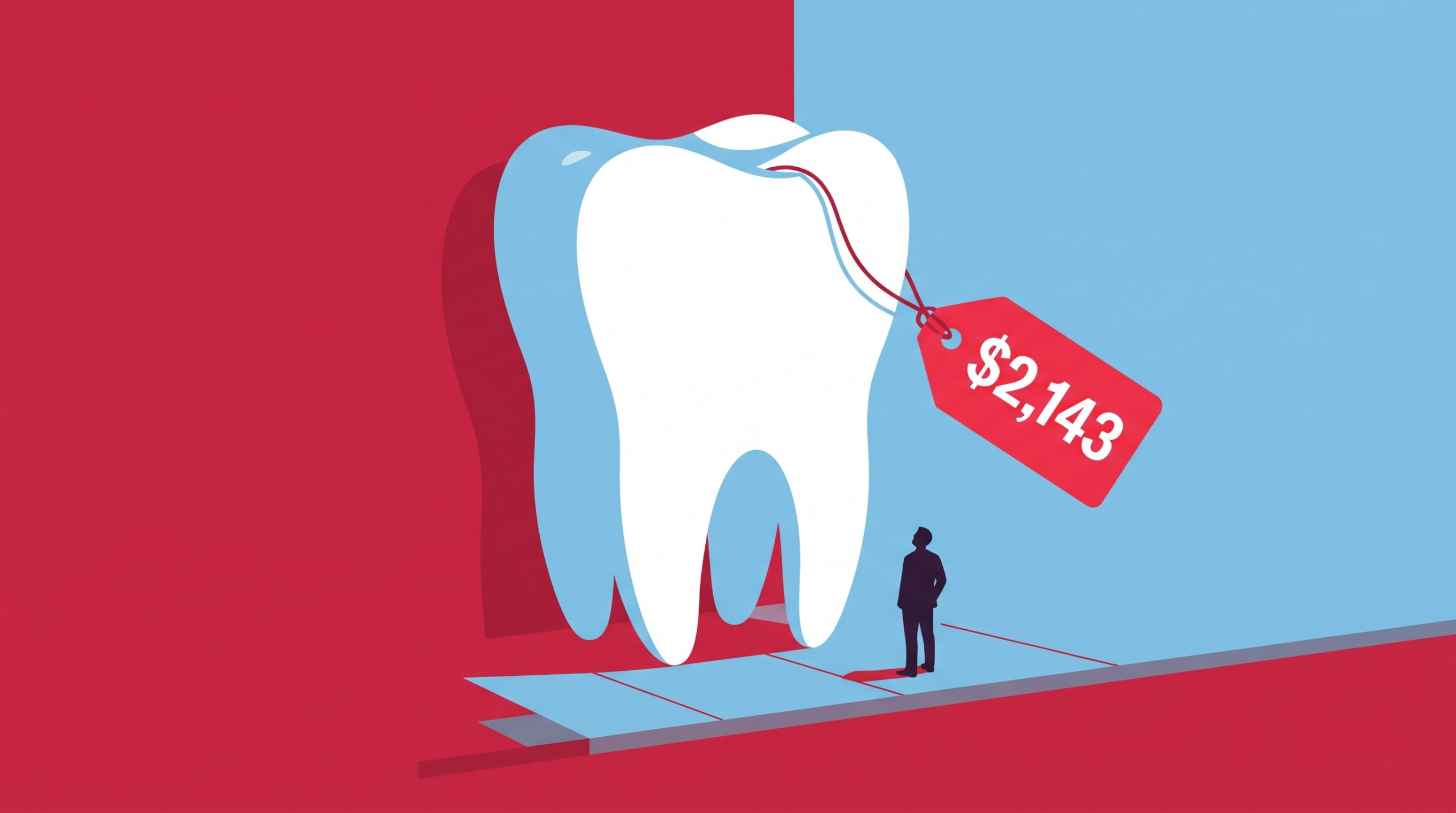
- KFF’s most recently published estimate, from 2021, put the average annual Medicare Advantage dental allowance at about $1,300, with 59% of enrollees capped at $1,000 or less, against a national average single-implant cost of $2,143, per a 2024 CareCredit/Synchrony survey.
- Almost all Medicare Advantage plans now include some dental benefit, 98% of individual plans in 2026 per KFF, but a benefit being included and a benefit being enough are two different questions.
Original Medicare has never covered routine dental care because it’s excluded by federal statute, and it only pays for a narrow set of dental procedures tied directly to a covered medical treatment. A Medicare Advantage plan’s dental allowance, typically capped around $1,000 to $1,300 a year, often covers less than half the cost of a single dental implant.
In this article
- The exclusion that has never moved
- The narrow doors Original Medicare left open
- What a Medicare Advantage dental allowance actually buys
- What to check before you need the answer
- Frequently asked questions
Walter Kowalski, 68, had been putting off a cracked molar for eight months when the tooth finally broke apart while he was eating dinner in his Dayton, Ohio kitchen. His dentist quoted $2,143 for a single-tooth implant to replace it. Walter assumed Medicare would cover at least part of the bill. It covered none of it. His separate Medicare Advantage plan’s dental benefit paid $1,300 toward the procedure, leaving him with an $843 balance he hadn’t budgeted for.
The exclusion that has never moved
The exclusion isn’t a coverage decision an appeal can reverse. It’s written directly into federal law, at Section 1862(a)(12) of the Social Security Act, codified at 42 U.S.C. 1395y(a)(12). The statute excludes payment “for services in connection with the care, treatment, filling, removal, or replacement of teeth or structures directly supporting teeth,” with a narrow carve-out only for hospitalization tied to a dental procedure when the patient’s medical condition requires it. Everything else, cleanings, fillings, routine extractions, dentures, implants, sits outside Medicare’s reach by law, not by underwriting judgment. KFF’s own research confirms how far back this goes: “Since its enactment in 1965, Medicare has not covered routine dental care,” and as of 2019, roughly 47% of Medicare beneficiaries had no dental coverage of any kind. DIN has covered the broader Medicare dental and vision gap in more general terms; this article focuses on the exceptions and the real cost math.
The narrow doors Original Medicare left open
CMS’s own consumer guidance confirms the general rule and lists six exceptions in total: “In most cases, Medicare doesn’t cover dental services like routine cleanings, fillings, tooth extractions (removals), or items like dentures and implants.” The first exception is the hospitalization carve-out already described above, written into the statute itself. The other five are CMS coverage-policy exceptions, all tied to a separate covered medical procedure rather than to the tooth on its own.
| What Original Medicare will pay for | What actually triggers it |
|---|---|
| Oral exam and dental treatment before a transplant | Required as part of the workup for a covered heart valve replacement or bone marrow, organ, or kidney transplant |
| Tooth extraction before cancer treatment | Treats a mouth infection that would otherwise interfere with covered chemotherapy |
| Treatment for a complication during cancer treatment | Arises during covered head and neck cancer treatment services |
| Dental or oral exams around dialysis | Performed before and while getting Medicare-covered dialysis services |
| Removal of an oral or dental infection around dialysis | Medically necessary and tied to covered dialysis treatment |
Walter’s cracked molar didn’t fit any of these. It wasn’t connected to a transplant, cancer treatment, or dialysis, so Original Medicare’s answer wasn’t a denial. There was never a claim to file.
What a Medicare Advantage dental allowance actually buys

This is where a Medicare Advantage plan’s dental benefit comes in, and where the gap most people don’t see coming shows up. KFF’s most recent published figures on this specific question are from 2021: “the average annual limit on dental coverage among plans that offer more extensive benefits is about $1,300 in 2021, and more than half (59%) of enrollees in these plans have dental benefits that are capped at $1,000 or less.” That figure hasn’t been updated in KFF’s more recent Medicare Advantage research, so treat it as the most recently published estimate rather than a current 2026 number. What has been measured more recently is access: 98% of Medicare Advantage enrollees in individual plans had some dental benefit in 2026, up from far lower rates a decade ago.
Against that $1,000 to $1,300 typical range, a 2024 national cost survey conducted by ASQ360° Market Research on behalf of Synchrony’s CareCredit found the national average cost for a single-tooth dental implant is $2,143, ranging from $1,646 to $4,157 depending on geography and provider. Walter’s own quote, $2,143, landed right at that national average. His plan’s $1,300 allowance covered most of it, but not all. He paid the remaining $843 out of pocket. Federal marketing rules limit how specific this article can get about which carrier’s plan pays what: CMS’s own Medicare Communications and Marketing Guidelines classify plan comparisons and benefit rankings as regulated marketing content subject to CMS review, and separately bar anything that could be read as implying a government endorsement of a specific plan. That’s why the honest, generally applicable answer is a range tied to KFF’s research, not a claim about any one carrier.
What to check before you need the answer
The annual dental maximum varies by plan, sometimes by thousands of dollars, and it isn’t listed on the plan’s marketing brochure the way the premium is. It’s in the plan’s Evidence of Coverage document, under the dental benefits section, usually stated as an annual maximum with a separate list of covered procedures. For anyone facing a major procedure, implants, a full denture set, multiple crowns, checking that specific number before the appointment, not after the bill arrives, is the only way to know whether a standalone dental policy or a dental savings plan is worth adding on top of what Medicare Advantage already provides.
Walter’s insurer didn’t do anything wrong. His plan performed exactly as its Evidence of Coverage said it would. The $843 gap existed the moment he enrolled, sitting quietly in a document he never had a reason to read until a molar broke in the middle of dinner.
Frequently asked questions
Does Medicare cover dental implants? Original Medicare does not, under any circumstance tied to the implant itself. The exclusion is written into federal law. A Medicare Advantage plan may offer a separate, capped dental benefit that can pay toward an implant, but the amount is usually well below the procedure’s actual cost.
What dental procedures does Original Medicare actually pay for? Only dental care performed as part of a separately covered medical procedure: an oral exam before a heart valve replacement or organ transplant, a tooth extraction to clear an infection before chemotherapy, treatment for a complication during head and neck cancer treatment, and oral exams or infection treatment tied to covered dialysis. Routine dental care of any kind, cleanings, fillings, extractions, dentures, and implants, is excluded regardless of medical necessity on its own.
How much does a Medicare Advantage dental benefit typically cover? KFF’s most recently published research put the average annual cap around $1,300, with a majority of enrollees capped at $1,000 or less. Exact limits vary widely by plan and are listed in each plan’s Evidence of Coverage document, not in its marketing materials.
Can I add a separate dental plan if my Medicare Advantage allowance isn’t enough? Yes. Standalone dental insurance policies and dental savings plans exist specifically to supplement a Medicare Advantage dental allowance or to cover dental care for someone on Original Medicare alone. Coverage, waiting periods, and annual maximums vary by product, so compare the specific procedure you need against each plan’s actual limit before enrolling.
Why doesn’t Medicare cover routine dental care at all? Because Congress excluded it by statute when the program was created in 1965, under Section 1862(a)(12) of the Social Security Act, and that exclusion has never been repealed. It’s a legislative decision, not a coverage determination, which is why there’s no appeal process that can overturn it for a routine procedure.
A $1,300 Dental Allowance Doesn’t Always Cover a $2,143 Implant
Compare Medicare Advantage plans and see which ones offer dental benefits that actually fit what you need.
Compare Medicare Advantage Plans