*6 min read · Last updated July 6, 2026*
In this article
– The bill that arrived after the cap – How the 2026 Part D cap actually works – The drugs that never count toward the cap – The Part B drug trap – What to check on your own plan – FAQ
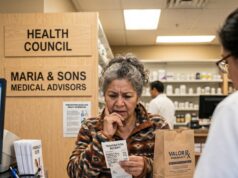
Denise Alvarez-Brooks, 68, hit her Medicare Part D out-of-pocket cap in June 2026. After months of high pharmacy costs, she crossed roughly $2,100 in spending and her covered prescriptions dropped to $0 for the rest of the year. Then her doctor started her on a new specialty medication. At the pharmacy in August, the bill was $900. She was stunned. She had hit the cap. Was not everything supposed to be free now? The pharmacist explained that the new drug was not on her plan’s formulary. Her plan did not cover it, so none of the $900 counted toward the cap, and none of it ever would.
How the 2026 Part D cap actually works
The out-of-pocket cap on Medicare Part D is one of the biggest changes to the program in years. It came from the Inflation Reduction Act. In 2025 the annual cap was $2,000. For 2026 it is indexed for inflation to roughly $2,100. That threshold rises again in 2027, alongside the standard deductible, so this is not a number that holds still year to year. In plain terms: once your own spending on covered prescription drugs reaches that number in a calendar year, you pay nothing more for those covered drugs until January 1.
That is real relief. Before this change, a retiree on expensive medication could spend many thousands of dollars a year with no ceiling at all. Our overview of how Part D prescription drug coverage works walks through the phases in more detail.
But the word doing the heavy lifting is “covered.” The cap counts only what you spend on drugs that your specific Part D or Medicare Advantage drug plan includes on its formulary. The formulary is the list of drugs your plan agrees to pay for. If a drug is on it, your spending counts toward the cap. If a drug is not on it, your spending does not count, because the plan is not covering it in the first place.
The drugs that never count toward the cap
This is the gap that caught Denise. When a drug is not on your plan’s formulary, the plan treats it as if it does not exist for coverage purposes. You can pay cash for it, but that cash does not move you toward the cap, and once you are past the cap, the non-formulary drug still costs full price.
There is a way to fight this. You can ask your plan for a formulary exception, a written request asking the plan to cover a drug that is not normally on its list. Your prescriber has to support it with a statement of medical necessity. If the plan grants the exception, the drug becomes covered and your spending on it starts counting. If the plan denies it, you can appeal. This is the step most people never take, and it is exactly where a hand on the shoulder helps: before you pay cash for a non-formulary drug month after month, ask your plan for an exception in writing.
The Part B drug trap
There is a second category that never counts toward the Part D cap, and it confuses even careful people. Some medications are not filled at a pharmacy. They are given in a doctor’s office, a clinic, or an infusion center. Many chemotherapy drugs, certain injections, and infused biologics work this way.
Those drugs are billed under Medicare Part B, not Part D. In plain terms: Part D is the pharmacy benefit, and Part B is the medical benefit. The 2026 out-of-pocket cap applies only to Part D. It does nothing for Part B drug costs. Under Original Medicare, Part B drugs generally carry a 20 percent coinsurance with no annual out-of-pocket limit, which is one reason a Medigap policy matters. Our comparison of Medicare Advantage versus Medigap explains how each handles that 20 percent differently.
So a retiree can hit the $2,100 Part D cap and still face large, uncapped bills for a drug administered in a clinic. The two systems do not talk to each other, and the cap does not bridge them.
What to check on your own plan
Three checks will tell you where you actually stand. First, pull up your plan’s formulary and confirm every drug you take is on it. If one is not, start a formulary exception request now, not after you have paid cash for months.

Second, ask whether any of your medications are administered in a clinic or infusion center. If so, those are Part B drugs, and the Part D cap will not touch them. Price what your coinsurance looks like and whether a Medigap plan would cap it.
Third, remember the cap resets on January 1. Hitting it in June does not carry over. And the cap does not reduce your monthly premium, which you keep paying regardless. For the big picture on what each part of Medicare pays, our simple guide to what Medicare covers lays it out.
FAQ
What is the Medicare Part D out-of-pocket cap for 2026? For 2026, the annual cap on out-of-pocket spending for covered Part D drugs is about $2,100, indexed for inflation from the $2,000 cap in 2025. Once you reach it, you pay nothing more for covered drugs for the rest of the calendar year.
Do all my medications count toward the cap? No. Only your spending on drugs that are on your plan’s formulary counts. If your plan does not cover a drug, your out-of-pocket cost for it does not count toward the cap, even after you have already reached the limit on your other drugs.
Why did I still get a pharmacy bill after hitting the cap? The most common reason is a non-formulary drug. If your plan does not cover a medication, you pay for it separately and it does not count toward or benefit from the cap. Ask your plan for a formulary exception if you need that drug.
Does the cap cover drugs given in a doctor’s office? No. Drugs administered in a clinic or infusion center are billed under Part B, not Part D. The Part D cap does not apply to them. Part B drugs generally carry a 20 percent coinsurance with no annual out-of-pocket limit under Original Medicare.
Does the cap lower my monthly premium? No. The cap limits what you spend on covered drugs during the year, but you still pay your Part D or Medicare Advantage plan premium every month. The cap also resets each January 1.
Not sure every drug you take is on your plan’s formulary?
Compare Medicare drug plans for 2026 and check formularies, premiums, and coverage side by side.
Compare Medicare plans →Denise applied for a formulary exception, and her plan approved the new drug within two weeks. From that point her spending on it counted, and she was quickly back past the cap. The relief the law promised was real. It just only reached the drugs her plan had agreed to cover, and no further.