7 min read · Last updated August 17, 2026
- The standard ISO Personal Auto Policy excludes liability, medical payments, and uninsured motorist coverage for any vehicle “furnished or available for your regular use” that you don’t own.
- Courts look at availability, not literal frequency: an unrestricted spare key with no need to ask permission each time is usually enough to trigger the exclusion.
- The Pennsylvania Supreme Court upheld this exclusion in January 2024 in Rush v. Erie Insurance Exchange, denying a police detective’s UIM claim for a city-owned car he drove regularly.
- The real fix is being added as a listed or rated driver on the vehicle owner’s own policy, not relying on your separate policy to fill the gap.
In this article
- What the exclusion actually says
- What counts as “regular use”
- Courts have upheld this broadly, not just for family cars
- Why insurers write it this way
- The fix that actually works
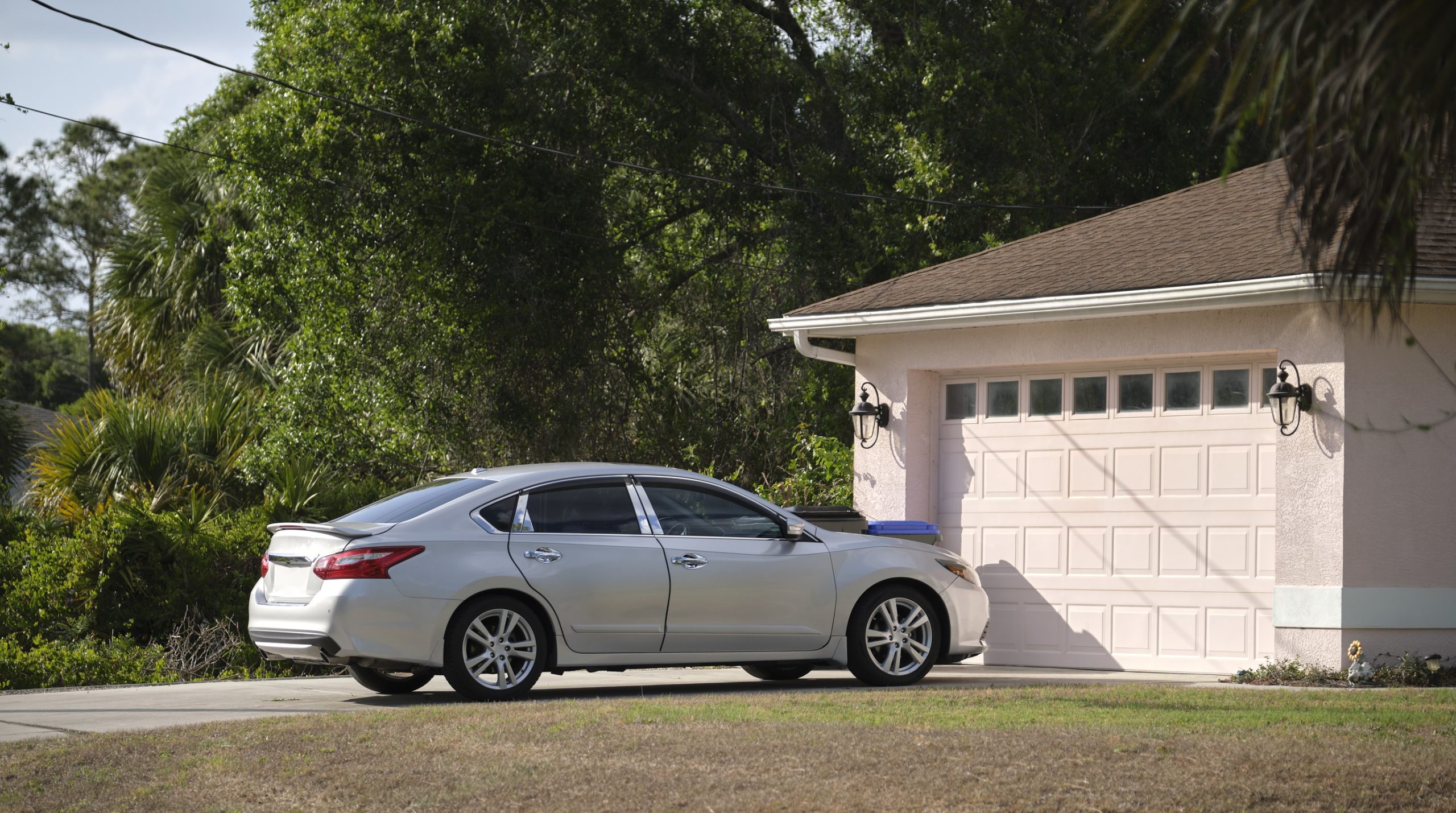
Rosalind Ferro drove her mother’s 2019 Toyota Camry to her hospital shifts five days a week for two years, using her own spare key with no restriction on when or how she used it. She carried her own separate auto policy on an older car she owned outright. One evening, driving the Camry, she caused a crash that left a pedestrian with $150,000 in medical bills and lost wages. Her mother’s policy on the Camry carried $50,000 per person and $100,000 per accident in liability limits, leaving a $50,000 shortfall. Rosalind expected her own policy’s liability coverage to pick up the difference. Her insurer denied the claim entirely, in a single phone call, because the policy excludes any vehicle “furnished or available for your regular use,” and the Camry fit that description exactly.
What the exclusion actually says
The standard ISO Personal Auto Policy, the template most state-filed auto policies are built on, excludes liability coverage for “any vehicle, other than ‘your covered auto,’ which is owned by you, or furnished or available for your regular use,” and repeats the same exclusion for any vehicle furnished or available for the regular use of a family member. That single sentence removed all of Rosalind’s own liability coverage for the crash, not a reduced share of it, because the exclusion does not require ownership. Availability is enough.
The same form excludes Medical Payments coverage under the identical language, and it handles uninsured motorist (UM) coverage a different way that matters just as much: rather than excluding the claim outright, the policy defines a regularly-used vehicle out of the category “uninsured motor vehicle” in the first place. If the vehicle you were driving does not meet that definition, there is no UM claim to make against your own policy at all, whether or not the other driver actually had insurance.
What counts as “regular use”
Insurers and courts do not measure regular use by counting days per week. California’s appellate courts, which have developed one of the more detailed bodies of case law on this exclusion, ask whether a vehicle was accessible whenever the driver “wanted, needed, or desired” it, without asking permission each time. In Highlands Insurance Co. v. Universal Underwriters Insurance Co., 92 Cal.App.3d 171 (1979), a driver who had unrestricted use of a dealer’s loaner car for six weeks was found to be using it regularly, even though he never intended to keep the car permanently. In a later case called Interinsurance Exchange, 148 Cal.App.3d 1128, a teenager who needed her parents’ consent every time she borrowed her father’s truck, had no key of her own, and was limited in when, where, and why she could drive it was found not to be using it regularly.
The practical version of that test: if you have your own key, you do not need to ask permission each time, and there is no limit on when, where, or how far you can drive the vehicle, an insurer will treat it as furnished for your regular use even if you never once thought of it as “your car.”
Courts have upheld this broadly, not just for family cars
This exclusion is not limited to family vehicles, and courts have kept enforcing it even against sympathetic facts. In Rush v. Erie Insurance Exchange, decided by the Pennsylvania Supreme Court in January 2024, a city detective named Matthew Rush was injured in an unmarked police Ford Fusion he drove regularly for work, insured under the city’s own fleet policy with $35,000 in underinsured motorist (UIM) coverage. When his injuries exceeded that limit, he turned to his own personal auto policies with Erie, which carried the identical regular-use exclusion for UIM coverage. Erie denied the claim, and Pennsylvania’s highest court sided with the insurer, reaffirming its own precedent that voiding the exclusion “would force insurers to increase the cost of insurance, which is precisely what the public policy behind” the state’s auto insurance law “strives to prevent.”

Why insurers write it this way
The court’s earlier reasoning in that same line of cases explains the logic directly: without the exclusion, insurers “would be compelled to underwrite unknown risks that it has not been compensated to insure,” and a driver could insure one car and then “drive an infinite number of non-owned vehicles, and receive gratis UIM coverage on all those vehicles.” The exclusion exists to stop one policy from silently covering a second household’s worth of driving.
| If the exclusion did not apply | What actually happened | |
|---|---|---|
| Judgment against Rosalind | $150,000 | $150,000 |
| Mother’s policy on the Camry pays | $100,000 | $100,000 |
| Rosalind’s own liability policy pays | Up to her own limits toward the $50,000 gap | $0, full exclusion applies |
| Rosalind’s personal exposure | Reduced or eliminated | $50,000, paid out of pocket or by judgment |
The fix that actually works
An ISO endorsement called Extended Non-Owned Coverage exists for regularly-used vehicles, but it is built for a different problem, typically a company car furnished by an employer, and it specifically does not extend to a vehicle owned by the named insured or a family member or one substituting for a car you already own. It will not help Rosalind’s situation. The actual fix is simpler: if you regularly drive a car someone else in your household owns, the owner should add you as a listed or rated driver on their own policy rather than everyone assuming your separate policy will backstop the gap. Most insurers already require policyholders to list every licensed driver in the household for this exact reason. When that fix isn’t realistic, because the vehicles and owners keep changing, a named non-owner policy covers the driver directly instead of waiting on someone else’s policy to include them. If you carry your own Med Pay coverage, check whether it carries the same regular-use exclusion, since the base form applies it there too, separate from liability and UM. And if you are the one absorbing an insurer’s subrogation demand after a claim like this, that deductible reimbursement runs through the vehicle’s own policy, not the driver’s separate one.
Frequently asked questions
Does my auto insurance cover me if I regularly drive a car I don’t own? Usually not. The standard personal auto policy excludes liability, medical payments, and uninsured motorist coverage for any vehicle furnished or available for your regular use, whether or not you own it, and ownership is not what decides the outcome.
What does “furnished or available for regular use” mean on a car insurance policy? It means the car is routinely accessible to you without needing permission each time, such as having your own key and no restriction on when or where you can drive it. Courts weigh availability over how many days a week you actually used it.
Can I be added to someone else’s car insurance if I drive their car often? Yes. The vehicle owner can list you as a rated or listed driver on their own policy. That is the standard fix for this exact situation, since your own separate policy will typically exclude the vehicle entirely.
Does this exclusion apply to uninsured motorist coverage too? Yes, though the mechanism differs. Rather than excluding the claim outright, the policy defines a regularly-used vehicle out of the category of “uninsured motor vehicle,” so there is no UM claim to bring against your own policy for it.
How many times a week counts as “regular use” under an auto policy? There is no fixed number. Courts look at whether your access was routine and unrestricted, not a specific day count. Unlimited access with your own key has been found to qualify even without daily use, while access that requires asking permission each time usually has not.
Would your own auto policy cover you in a car you don’t own?
Compare auto insurance policies and see how your liability and UM coverage would actually respond before a regular-use exclusion is the thing you find out about first.
Compare Auto Insurance Quotes