6 min read · Last updated May 18, 2026
In this article
- Landlord insurance and renters insurance live in separate worlds
- What your renters policy pays after a total loss
- Loss of use is where the real money sits
- Can you sue an uninsured landlord?
- What renters should do this week
- FAQ
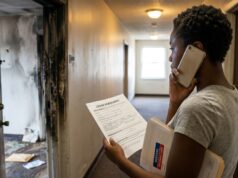
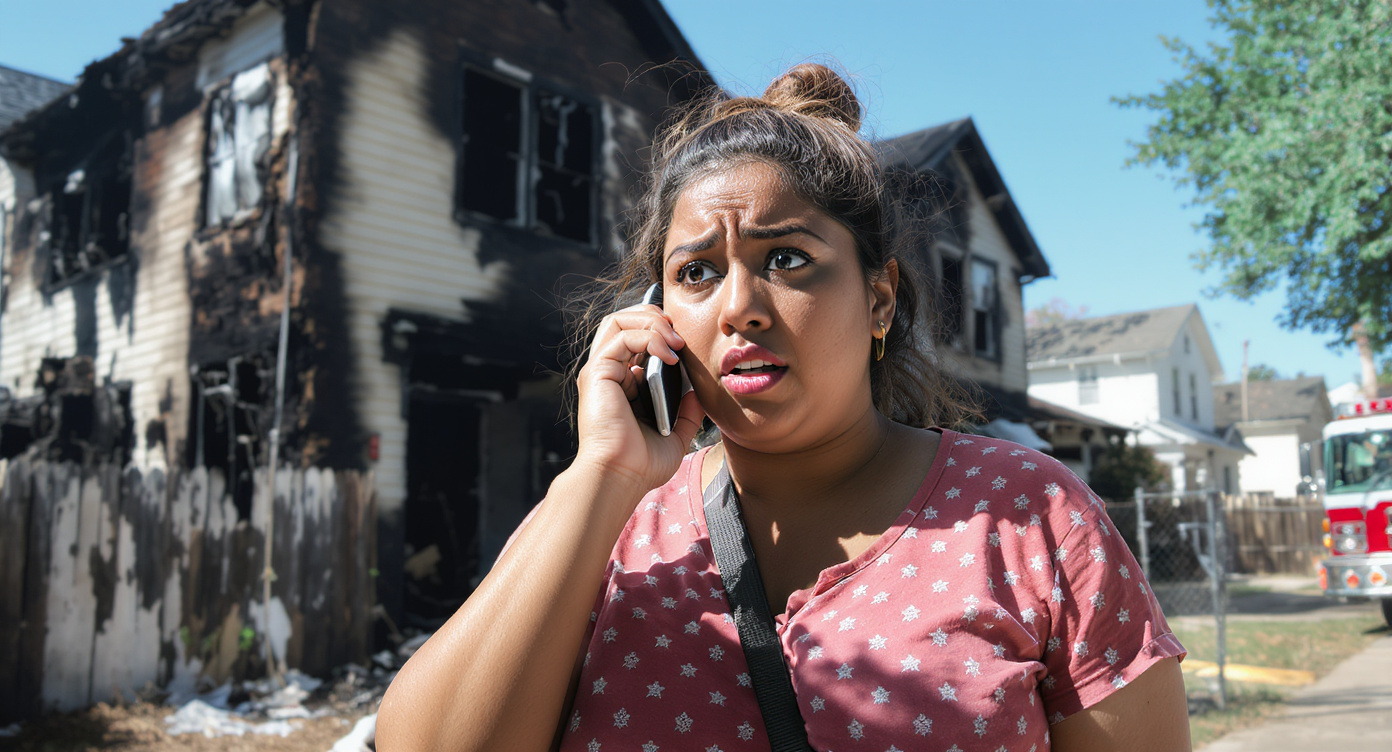
Maria Reyes, 33, had lived with her two kids in a Houston duplex for three years. In May 2025, an electrical fault in the attic ignited around 2 a.m. The fire department got everyone out, but the building was a total loss. Maria’s losses came to $47,000 in clothing, furniture, electronics, and her late mother’s photographs that had been digitized. Two days after the fire, the landlord told her by phone that the building’s property insurance had lapsed eight months earlier. The rebuild would not happen quickly, if at all. She thought the worst part of her year was just beginning. Her $14-a-month renters policy is what pulled her out.
Landlord insurance and renters insurance live in separate worlds
A landlord’s property insurance covers the building itself, the landlord’s own liability if a tenant sues, and lost rental income while the unit is unrentable. It does not cover the tenant’s belongings, the tenant’s hotel bill, or the tenant’s liability if their dog bites someone. Those are renters insurance functions.
The reverse is also true. Your renters policy does not pay to repair the building, does not pay the landlord’s lost rent, and does not pay the contractor to rebuild the structure. The two policies were designed never to overlap. When a landlord lets coverage lapse, your side of the equation does not change at all.
What your renters policy pays after a total loss
Three coverage parts typically activate at the same time:
- Personal property. Your covered limit pays to replace the contents of the unit, subject to deductibles and any category sublimits. Replacement-cost coverage pays what a comparable new item costs today. Actual-cash-value coverage pays the depreciated value, which can be a fraction of what the items would cost to replace.
- Liability. If the fire spread to another unit or a neighbor’s property and the cause is traced to something inside your unit, your liability coverage defends and indemnifies you up to the policy limit.
- Additional living expenses (ALE), also called loss of use. This is the part most renters under-claim. It pays the difference between your normal cost of living in the destroyed unit and your higher cost of living somewhere else while you are displaced.
For a refresher on the distinction between replacement cost and actual cash value, see our breakdown of renters insurance ACV vs replacement cost.
Loss of use is where the real money sits
ALE is the most under-used coverage in residential property insurance. The standard renters policy pays for a comparable temporary rental, increased commuting cost, restaurant meals above your normal grocery budget, laundry costs above your normal household level, and pet boarding if the temporary unit does not allow your pet. Coverage usually runs up to 12 months or until the unit is rebuilt, whichever comes first, with a dollar cap that is often 20 to 40 percent of your personal property limit.
For a tenant whose unit will not be rebuilt because the landlord cannot fund the work, the 12-month window typically governs. Maria’s policy in the Houston example had a $40,000 personal property limit and a 30 percent ALE sublimit, which gave her up to $12,000 over the year to cover the gap between her old $1,400 rent and a comparable $1,950 rental in the same school district.
For the full mechanics of this coverage, our deep dive on renters insurance loss of use walks through the receipts you need and the carrier process step by step.
Can you sue an uninsured landlord?
Sometimes yes, often no. A tenant who can prove the fire was caused by the landlord’s negligence (deferred wiring repair, ignored inspection violations, refusal to replace a known-defective appliance) has a viable claim against the landlord personally. The trouble is collecting.
An uninsured landlord who let property insurance lapse usually did so because of financial strain. Suing a landlord with no insurance means going after personal assets and bank accounts, which often produces a judgment that cannot be collected for years. Subrogation by your own renters carrier sometimes goes after the landlord on your behalf for their deductible reimbursement, but that does not change what you receive. Your settlement comes from your policy, not from the landlord’s pocket.

What renters should do this week
Whether or not a fire is in your future, three steps measurably improve the outcome if one happens:
- Confirm your renters policy is on a replacement-cost basis, not actual cash value. The premium difference is usually $3 to $7 per month.
- Inventory your belongings with phone photos and a running spreadsheet of items above $200. Save it to cloud storage outside the unit.
- Read your ALE sublimit and confirm what it pays per month and for how long. If your current rent is $1,800 and ALE caps at $300 per month, that gap is your blind spot.
The renters insurance claim process is documented step by step and gives you the receipts and statements carriers will ask for. For pricing context, our look at how much renters insurance costs shows the average policy still runs about $14 to $22 per month in most states.
Renting? Compare renters policies in your state.
A replacement-cost renters policy averages $14 to $22 a month and pays whether your landlord is insured or not.
Compare Renters InsuranceFAQ
Does my renters insurance still pay if my landlord has no insurance? Yes. Renters insurance and landlord insurance are entirely separate policies. Your renters policy pays for your personal property, your liability, and your additional living expenses based on your policy limits, regardless of whether the landlord carried any coverage at the time of the loss.
Will my renters policy pay for a hotel after a fire? Yes, through the additional living expenses (ALE) or loss of use portion of the policy. ALE typically covers a comparable temporary rental, restaurant meals above your normal grocery cost, pet boarding, and increased commuting, up to a dollar cap (usually 20 to 40 percent of your personal property limit) for up to 12 months.
Can I sue my landlord if their negligence caused the fire? You can sue, but collection is the hard part. A landlord who let property insurance lapse usually has limited assets and no carrier defending the suit. A judgment against them often takes years to collect, if at all. Your faster recovery comes from your own renters policy.
How long does a renters insurance claim typically take to pay? Personal property claims usually settle within 30 to 60 days after a complete inventory is submitted with receipts or photo documentation. ALE claims pay on a rolling reimbursement basis as you submit receipts. Full closure on a total-loss claim often takes four to nine months depending on the inventory complexity.