Only 56 percent of renters in the United States carry renters insurance, and the 44 percent who do not lost a combined $12.8 billion in personal property in 2024 alone, according to data from the Insurance Information Institute.
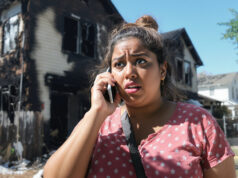
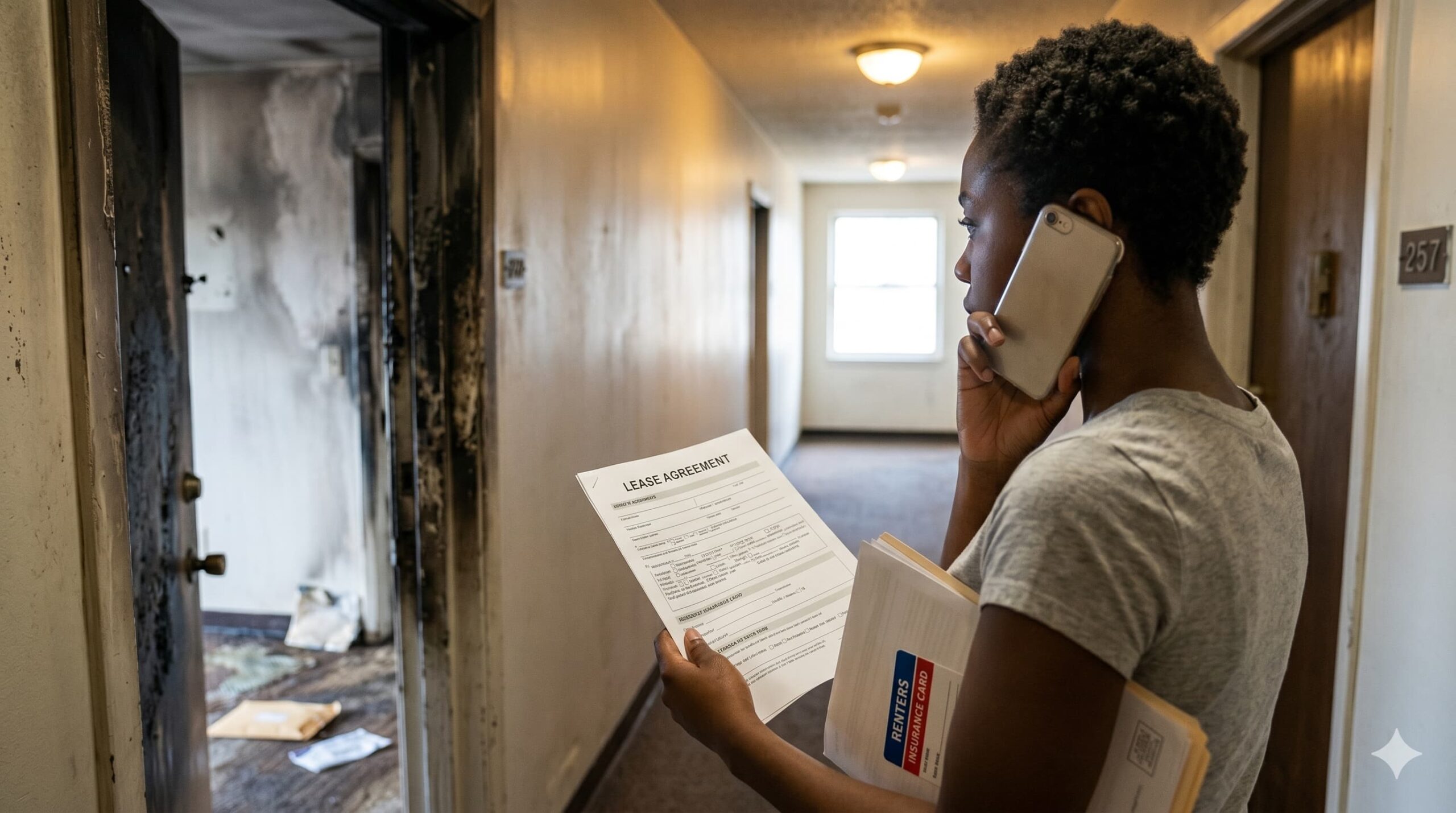
A 26-year-old tenant in Denver left a space heater on while she visited her parents for the weekend. The heater tipped, the unit caught fire, and her landlord’s policy covered the building. Her belongings, roughly $18,000 in furniture, a laptop, clothing, and a bike, were not covered by anyone. The neighboring unit sued her for $34,000 in smoke and water damage to their belongings. She had no liability coverage. The court entered a judgment. Her wages were garnished for 11 years.
Why the Uninsured Rate Is So High
The 44 percent number is not driven by people who cannot afford coverage. The average renters insurance policy in the United States costs $148 per year, roughly $12 to $15 per month. That is less than the cost of a typical streaming subscription. The uninsured rate is driven by two beliefs, both of which are wrong.
The first belief is that the landlord’s insurance covers the tenant. It does not. A landlord’s policy covers the building’s structure and the landlord’s liability for issues such as a broken stair or a flooded roof. The policy does not cover your furniture, laptop, or bike, or any claim brought against you personally. If the landlord’s building burns down because of a tenant’s candle, the landlord’s insurer pays to rebuild the building and then sues the tenant to recover the costs. This is called subrogation, and it is a standard feature of landlord policies. The uninsured tenant ends up personally owing the rebuild cost.
The second belief is that renters do not own enough stuff to insure. When people add up the replacement cost for everything they own, furniture, electronics, clothing, kitchen items, bedding, sports equipment, the number is almost always between $15,000 and $35,000. The average renter underestimates their property’s value by roughly 40 percent. The average renters’ insurance claim payout in 2023 was $4,210, according to NAIC data, which closely tracks the kinds of theft and damage incidents that hit a single room rather than an entire unit.
What Renters Insurance Actually Covers
A standard renters policy has three distinct coverage buckets, and most tenants focus only on the first.
Personal property coverage reimburses you for theft, fire, smoke, water damage from a burst pipe, vandalism, and a long list of other named perils. Most policies default to between $15,000 and $50,000 in personal property coverage, with a small deductible (typically $250 or $500). Most policies are replacement cost by default, not actual cash value, meaning the insurer pays what it costs to replace the item, not the depreciated value of the one that was destroyed. The gap between replacement cost and actual cash value on a 4-year-old laptop can be 60 percent of the claim.
Liability coverage is the bucket that matters most and gets the least attention. A standard policy includes $100,000 in liability coverage as a baseline. This bucket pays for claims brought against you, the tenant, for property damage you cause to the building or to a neighboring unit, and for injuries to guests on your premises. The Denver tenant’s $34,000 neighbor claim would have been fully covered by a baseline policy. Liability coverage also pays for legal defense, which can cost $10,000 to $30,000 on its own before any settlement.
Additional living expenses, often called loss of use, cover hotel, meals, and relocation costs if your unit becomes uninhabitable due to a covered peril. This coverage typically lasts up to 12 months and is capped at a percentage of your personal property limit. Without it, a fire that displaces you for 60 days means you are eating $5,000 to $9,000 in hotel and meal costs out of pocket while still paying rent somewhere.
For a deeper breakdown of what a standard policy covers and excludes, the renters insurance coverage breakdown walks through the specific perils on an HO-4 form. For cost-shopping, the renters insurance cost guide shows why the $15-a-month figure holds up across most major carriers.
The Three Scenarios That Wreck Uninsured Renters
The first is theft. Burglary rates vary by neighborhood, but nationally, a rental unit is broken into roughly once every 30 years. When it happens, the uninsured tenant loses the property outright. A laptop, a TV, a camera, and some jewelry can easily clear $8,000. No policy, no check.
The second is accidental damage to another unit. Bathtub overflows, kitchen fires, and appliance leaks are routine, and each has the potential to damage a neighboring unit. The downstream tenant’s insurance pays their own claim, and then their insurer pursues you for reimbursement through subrogation. A $12,000 water damage claim to the unit below you becomes a $12,000 debt with your name on it if you have no liability coverage.
The third is a guest injury. A visitor slips on a wet floor, falls down the stairs in your unit, or is bitten by a dog you keep. The medical bills alone can exceed $50,000 for a serious fall. If the guest sues you, the lawsuit names you personally, not the landlord. Without liability coverage, you defend the suit yourself and pay any judgment yourself.
Questions to Ask Before You Skip Coverage
- Do I actually know what the replacement cost of all my belongings adds up to, or am I guessing?
- Would I be able to absorb a $15,000 loss out of pocket if my unit were burglarized or destroyed tomorrow?
- Could I pay a $34,000 liability claim or a $50,000 guest-injury judgment without filing bankruptcy?
- Where would I live and how would I pay for it if my unit were uninhabitable for 60 to 90 days?
- Does my lease require renters’ insurance, and am I technically in breach by not carrying it?
The 11-Year Garnishment
The Denver tenant’s $34,000 judgment is being paid out of her paycheck through 2035. She had considered renters insurance the month before the fire and decided to wait until her next raise. The policy she would have bought costs $14 a month. The claim she would have filed would have been paid in full under her baseline liability coverage, with no deductible, and her wages would be her own. The math on renters insurance is not close. Every month without it is a bet that nothing will go wrong, and it only has to go wrong once.
Are you one of the 44% who don’t have renters insurance?
A $14-a-month policy would have saved a Denver tenant from an 11-year, $34,000 wage garnishment.
Compare renters insurance quotes →