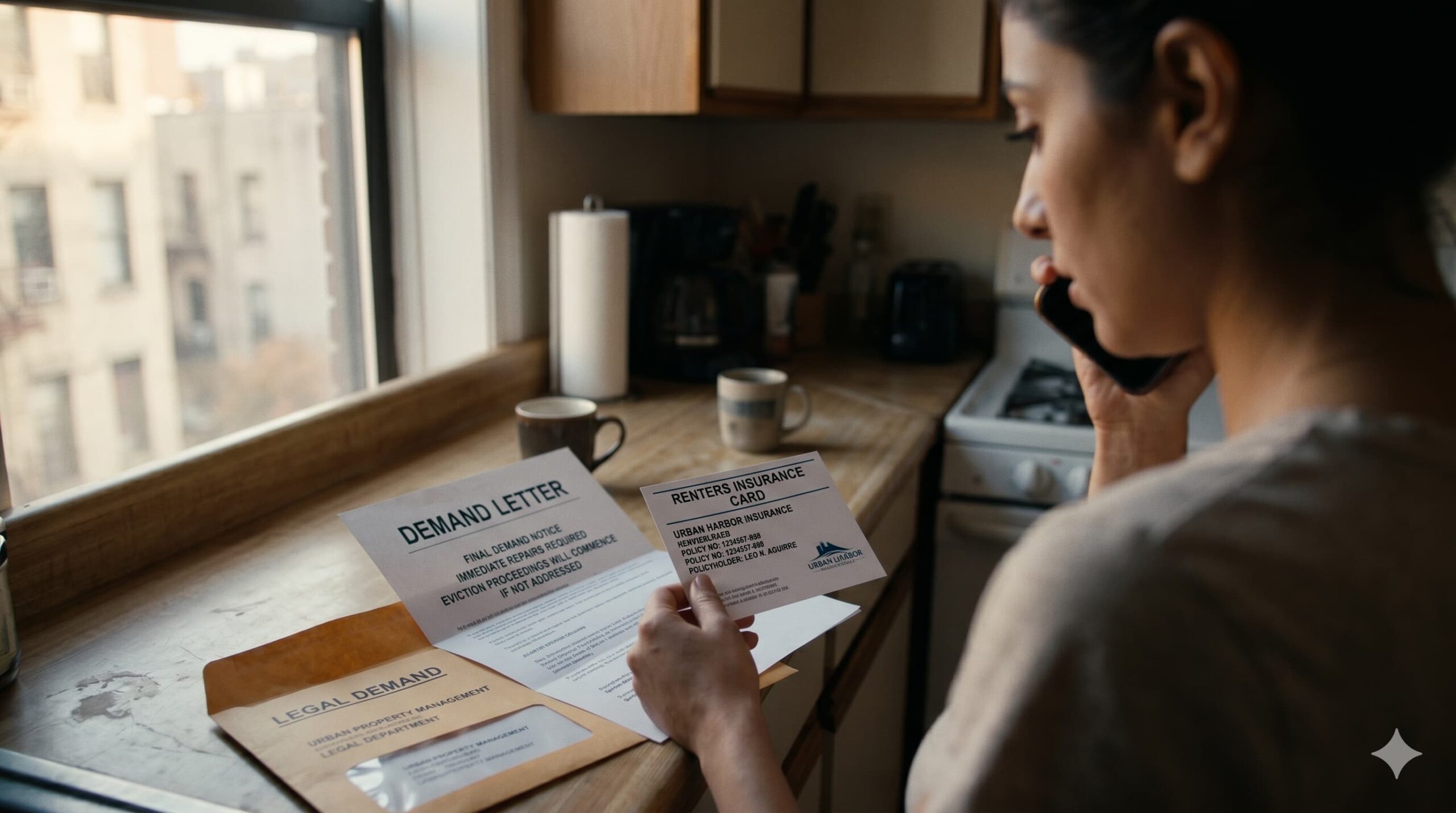
According to the Insurance Information Institute, a majority of U.S. renters have no renters insurance at all, and the ones who do are largely focused on the wrong part of the policy.
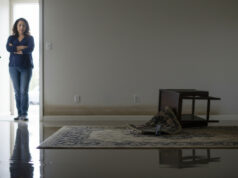
A 27-year-old renter in Chicago had a guest at a dinner party who slipped on a wet floor near the kitchen, fell, and fractured her wrist. The hospital bill was $14,800. Physical therapy costs $4,200. The guest sued for $22,000, including two weeks of lost wages. The renter had no renters’ insurance and paid $22,000 from a savings account that had taken four years to build. A standard renters policy with $100,000 in personal liability coverage would have cost $14 per month, $168 for the entire year, and would have covered every dollar of that suit.
The Three Components Most Renters Don’t Fully Understand
Renters insurance has three distinct coverage components, and most people who buy the policy think about only one of them. Personal property coverage pays to repair or replace your belongings if they are stolen, destroyed in a fire, or damaged by a covered event. This is the piece renters visualize: the laptop, the TV, the furniture. The average renters’ insurance claim for stolen property runs approximately $2,900.
Personal liability coverage pays when you are legally responsible for injuring someone or damaging their property. This does not have to happen inside your apartment. If your dog bites a neighbor in the hallway, if you accidentally leave water running and flood the unit below you, or if a guest slips in your kitchen, your personal liability coverage responds. The average personal liability claim against a renter is not $2,900. It is orders of magnitude higher, and the coverage prevents a single incident from wiping out years of savings.
Additional living expenses coverage pays your temporary housing costs if a covered event makes your unit uninhabitable. If a fire forces you out of your apartment for six weeks, this component covers the cost of a hotel or short-term rental during that period. Most renters never think about it until they need it.
Where the Real Exposure Lives
The case for liability coverage is built on scenarios that renters systematically underestimate. Guest injuries are the most common: a wet floor, a loose rug, a step missed in the dark. Dog bites are statistically significant. The Insurance Information Institute reported average dog-bite claim payouts of $69,272 per incident in 2024, and most renters with dogs assume that the landlord’s master policy covers this. It does not. The building’s master policy covers the structure and common areas. It stops at your door.
Water damage to a downstairs neighbor is another category renters rarely think about until it happens. A bathtub overflow, a leaking washing machine connection, or an AC drain line that backs up: any of these can cause $20,000 to $80,000 in damage in the unit below or beside yours, and you are legally responsible for the water that came from your apartment. Landlord policies do not cover tenant-caused damage to other tenants. Your lease almost certainly contains a clause making you financially responsible for it.
None of these scenarios requires negligence in a traditional sense. They require being human and occasionally having things go wrong.
Why the Liability Limit Matters More Than Most Renters Think
A standard renters insurance policy comes with $100,000 in personal liability coverage by default. That is a floor, not a ceiling, and for many renters, it is not enough. A slip-and-fall in an urban market with an injury requiring surgery, imaging, physical therapy, and a week of missed work can easily reach $80,000 to $120,000. A significant water damage claim in a building with expensive finishes can clear $100,000 without involving a lawsuit at all.
Increasing the liability limit from $100,000 to $300,000 on most renters policies costs $5 to $15 more per month. Adding a personal umbrella policy on top, which extends liability coverage to $1,000,000 or more and also layers over your auto insurance, typically runs $15 to $25 per month. The combined cost of a renters policy with elevated liability limits and a small personal umbrella is often less than $50 per month, and it provides a liability shield that matches realistic claim sizes in most markets.
The Cost of Not Having It
The Chicago renter who paid $22,000 after her guest’s fall had not made a reckless financial decision. She had made a common one. Homeowners carry homeowners’ insurance at far higher rates than renters carry renters’ policies, largely because a mortgage lender requires it. No one requires renters to have coverage. Most renters who go without cite one of two reasons: they assume their landlord’s policy covers them (it does not), or they believe they do not have enough belongings to justify a policy (which misses the point entirely).
Renters insurance is not primarily about stuff. At $14 to $25 per month, it is one of the most affordable financial decisions available to renters. The personal property coverage is a useful benefit. Liability coverage is the reason for having the policy.
Read more about what renters insurance covers and what it doesn’t to understand the full scope of a standard policy. If you want the broader case for coverage, why you should buy renters insurance covers the scenarios most renters are concerned about.
Questions to Ask Before You Pick a Policy
- What is the liability limit on this policy, and what does it cost to increase it to $300,000?
- Is my personal liability covered anywhere in the world, or only inside my apartment?
- Does the policy cover dog bites, and are there any breed restrictions?
- What is the personal property coverage: actual cash value or replacement cost? (Replacement cost is worth the small premium difference.)
- Does the policy include medical payments to others, and what is the limit?
At $14 to $25 per month, the question is not whether you can afford renters insurance. It is whether you can afford the $22,000 dinner party lawsuit, the $69,000 dog bite claim, or the $75,000 flood you sent into your neighbor’s apartment when you couldn’t.
Does Your Renters Insurance Actually Cover a Lawsuit?
A standard policy with $100,000 in personal liability coverage costs about $14 a month and covers the slip-and-fall, the flooded downstairs apartment, and the dog bite you weren’t expecting.
Compare Renters Insurance Quotes →