8 min read · Last updated May 26, 2026
In this article
- Why renters policies treat Airbnb as a commercial activity
- The exclusion clause your policy uses verbatim
- What Airbnb’s AirCover for Hosts actually covers
- The proper coverage path for a tenant who hosts
- FAQ
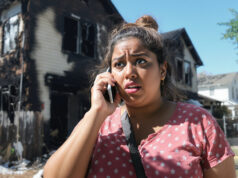
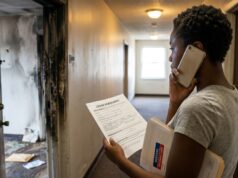
Ximena Torres, 28, rents a one-bedroom apartment in Brooklyn for $2,400 a month. She listed the unit on Airbnb for $185 a night during long weekend trips out of town. After three months and 19 paid bookings, a guest fell asleep with a candle burning on the bedroom dresser. The fire damaged $34,000 of Ximena’s personal property and caused $18,000 of smoke and water damage in the upstairs neighbor’s apartment when the sprinklers triggered. Her renters insurer reviewed the claim, pulled her Airbnb host profile from a public search, and denied the entire claim under the policy’s business-use exclusion. The landlord then served a notice of lease violation and the personal liability claim from the neighbor remained open against her individually.
Why renters policies treat Airbnb as a commercial activity
A standard renters insurance policy is written for the personal occupancy of a residential unit. The carrier prices the premium against the loss profile of a tenant living in the unit with occasional non-paying guests. The policy is not priced for any of the additional exposures that come with running a hospitality business: strangers with keys, frequent turnover, higher liability frequency, alcohol and candle use by people who do not live there, theft of belongings by short-stay guests, and the increased fire and water damage frequency that Airbnb’s own claims data shows is real.
When a tenant accepts paid bookings, the policy is asked to insure a risk it was never underwritten against. Carriers respond by writing exclusion language into the standard form that voids coverage during any period of rental, business use, or use of the premises for any commercial purpose, according to the Insurance Information Institute. The carriers offer separate products for hosts who want to be insured for the activity, but the standard policy is not one of them.
The exclusion clause your policy uses verbatim
The exact wording varies by carrier. The pattern is consistent. Most standard renters policies, including the ISO HO-4 base form used as a starting point by carriers across the U.S., include language like the following: “We do not cover loss or damage arising out of any business engaged in by an insured, including the rental of any portion of the residence premises to others for any purpose, except for occasional rental to no more than two roomers or boarders on a long-term basis.”
The four phrases doing the work in that clause: “any business,” “rental of any portion,” “for any purpose,” and “long-term basis.” Airbnb-style short-term rental triggers all four. A weekend booking is a business activity. Renting any portion of the unit including a spare bedroom triggers the rental clause. Renting for revenue is the business purpose. And short-term turnover is the opposite of long-term occupancy.
Some carriers carry an additional “premises liability” exclusion that voids the liability portion of the policy any time a non-resident is on the premises for a commercial reason, including all paying guests. Others void only property coverage and leave liability in force unless an injury is connected to the rental activity. The exact split changes by carrier and state, which is why every host should pull their declarations page and read it before assuming any coverage applies.
DIN has covered the underlying renters insurance form in detail, including what renters insurance covers and what it does not, why renters insurance is worth carrying even on a modest budget, and the related renters liability coverage scope.
What Airbnb’s AirCover for Hosts actually covers
Airbnb markets AirCover for Hosts as protection for hosts, and the marketing copy is technically accurate. The structure is not what most hosts assume.
AirCover provides $3 million in host damage protection for property damage caused by a guest and $1 million in host liability insurance for third-party bodily injury or property damage claims tied to the stay. The damage protection sits behind a claim process where the host must document the damage, file a request within 14 days, and accept Airbnb’s determination of payout. Excluded categories include intentional damage, ordinary wear and tear, lost income, and pre-existing damage.
The liability piece is structured as excess insurance. Excess means it pays only after the host’s primary insurance has paid up to its limit, or denied the claim. For a tenant whose renters policy is voided by the business-use exclusion, “denied” is the result. AirCover liability then becomes the first dollar of coverage, but only for the categories it covers, which exclude damage to the host’s own property and most contractual claims from the landlord.
The proper coverage path for a tenant who hosts
Three options exist for a tenant who wants to host on Airbnb without sitting on uninsured exposure.
A short-term rental endorsement added to a personal renters policy. Allstate’s HostAdvantage, Proper Insurance, and a handful of regional carriers offer this. Premium runs $50 to $200 per year. The endorsement amends the policy to cover periods when a paying guest is in the unit, subject to the policy’s standard limits and a few activity-specific exclusions.
A standalone commercial host policy. Proper Insurance, CBIZ, and other commercial markets sell short-term rental policies that combine general liability, business personal property, and lost income for hosts running enough volume to justify a commercial form. Premium typically runs $800 to $2,500 per year depending on rental nights and revenue.

On-demand insurance for the specific nights of the booking. Slice and a few other on-demand carriers offer pay-by-the-night coverage that turns on for individual bookings and turns off when the unit returns to personal use. Cost runs $7 to $20 per night of coverage.
The hidden risk that all three options solve and none of them remove is the lease violation. A tenant whose lease prohibits subletting or short-term rental, which most urban leases now do, is in breach the moment the first booking is accepted. Even with valid insurance, the landlord can serve a notice to cure, retain the security deposit, sue for the rental income earned in breach, and refuse renewal. The insurance fixes the coverage gap, not the contract problem.
Get renters insurance quoted with the right endorsements for short-term rentals, side hustles, and the modern set of risks a standard form was never written to cover.
Compare renters insurance optionsA renters policy is priced for personal occupancy and written to exclude commercial use. Airbnb hosting is commercial use. The right move is not to hide the activity from the carrier and hope nothing happens. The right move is to either pay $50 to $200 for an STR endorsement, move to a commercial host policy, or stop hosting in the unit.
Frequently asked questions
Does Airbnb provide insurance for hosts? Yes, through AirCover for Hosts, which includes $3 million in host damage protection and $1 million in host liability coverage. The liability coverage is excess to any host primary insurance, which means it pays only after the host’s own policy has paid or denied the claim.
Will my renters insurance cover damage caused by an Airbnb guest? No, on most standard policies. The business-use exclusion voids coverage for any incident tied to a paying guest, including fire, water damage, theft, and liability claims arising from the rental.
What is an STR endorsement on renters insurance? A short-term rental endorsement is a policy add-on that amends the business-use exclusion to allow coverage during periods when a paying Airbnb-style guest is in the unit. Premium typically runs $50 to $200 per year at carriers that offer it.
Can my landlord sue me for hosting on Airbnb if my lease prohibits it? Yes. The lease violation creates a contract claim separate from the insurance issue. Landlords commonly retain the security deposit, sue for the rental income earned in breach, and refuse to renew the lease. Some states allow eviction for material breach within 30 days.
How much does dedicated short-term rental insurance cost? Standalone commercial host policies from Proper Insurance and similar carriers run $800 to $2,500 per year depending on rental nights and revenue. On-demand night-by-night coverage from Slice and similar carriers runs $7 to $20 per night of active coverage.