
9 min read · Last updated September 14, 2026
- A workers’ comp claim stays inside a business’s experience rating for three consecutive policy years, not just the year it happens, per the National Council on Compensation Insurance (NCCI).
- The experience modification factor (e-mod, or mod) is a multiplier applied to manual premium, not a flat add-on. NCCI’s own example: a 1.25 mod turns $100,000 in premium into $125,000.
- Many small businesses never get experience rated at all. NCCI requires a business to cross a state-set premium threshold, calculated two different ways, before a mod is even calculated.
- The formula compares actual losses, capped per claim and split into a primary and excess portion, against expected losses for similarly sized, similarly classified employers. California uses its own bureau, not NCCI.
A workers’ compensation experience modification factor is a multiplier that NCCI, or a state’s own rating bureau, applies to a business’s manual premium after comparing its actual claims losses against the expected losses of similarly sized, similarly classified employers. One claim can stay part of that comparison for three consecutive policy years before it finally rolls off.
In this article
- How long one claim follows your policy
- The mod is a multiplier, not a flat surcharge
- The premium threshold most small businesses never cross
- Inside the formula: actual losses vs. expected losses
- Dominic’s numbers: what one claim actually cost
- Frequently asked questions
A single workplace injury does not just raise a small business’s workers’ compensation premium for the year it happens, it follows the policy for three consecutive renewals, multiplying the entire premium rather than adding a flat surcharge. When a foreman on Dominic Ferraro’s 18-person landscaping crew tore his rotator cuff wrestling a walk-behind mower off a trailer ramp, the $58,000 claim eventually pushed Dominic’s experience modification factor from a 0.91 credit to a 1.24 debit, a swing that will cost him $53,460 in extra premium before that claim finally rolls off his rating three years later.
How long one claim follows your policy
The three-year duration is not a punishment NCCI invented. It is a structural feature of how the rolling calculation works. NCCI generally builds a mod from the latest three years of an employer’s payroll and loss data, and that window updates every renewal: the oldest year drops off and the newest year gets added in. NCCI’s own explainer walks through exactly this mechanic, noting that a rating effective January 1, 2026 typically draws on policy years running from roughly 2022 through 2025, and that “this constant updating ensures a stable historical record for the individual employer, while also using the most recent available reflection of operating characteristics,” per NCCI’s ABCs of Experience Rating.
That lag matters for timing. NCCI generally will not require an insurer to report a policy’s loss data until 18 months after the policy started, since claims need time to develop and get valued accurately. Dominic’s foreman was hurt in February 2025, and under this reporting rule the claim did not reach his experience rating until the January 1, 2027 renewal. From there it stayed part of the calculation through the 2027, 2028, and 2029 renewals, three consecutive policy years, before a fourth clean year finally pushed it out of the window for 2030.
The mod is a multiplier, not a flat surcharge
The single detail that trips up most small business owners is that the mod is not added to premium, it is multiplied against it. NCCI’s own illustration keeps the math deliberately simple: on $100,000 of manual premium, a 0.75 mod produces $75,000, a 1.00 mod leaves it unchanged, and a 1.25 mod produces $125,000, according to NCCI’s published example. A landscaping company running several classification codes at once, crew labor, equipment operation, maybe a small clerical line for the office, gets that same multiplier applied across the whole policy, not just the code where the injury happened.
The premium threshold most small businesses never cross
Not every employer gets experience rated. NCCI’s plan is mandatory once a business crosses a state-set premium eligibility point, but many small operations never reach it and stay on manual rates with an automatic 1.00 mod. NCCI qualifies a business two ways: enough audited premium in the most recent two years, or an average premium above a lower threshold across the whole experience period. NCCI’s own illustrative example uses a state requiring $14,000 in the most recent two years, or a $7,000 average across the full period, per the same ABCs of Experience Rating explainer. The exact dollar figure is set state by state, so a landscaping outfit with a handful of employees and modest payroll may simply be too small to be experience rated at all, for better or worse.
Even in a softening market, the mod moves independently. The Ivans Index, an agency-placed renewal-rate benchmark tracking the small and mid-market book DIN readers buy in, had workers’ comp renewing down 1.37% in the second quarter of 2026, per Captive.com’s writeup of the Ivans Q2 2026 release. That broader softening does nothing for a business whose own e-mod is climbing. The mod tracks a company’s own losses, not what every other landscaping outfit in the state is paying.
Inside the formula: actual losses vs. expected losses
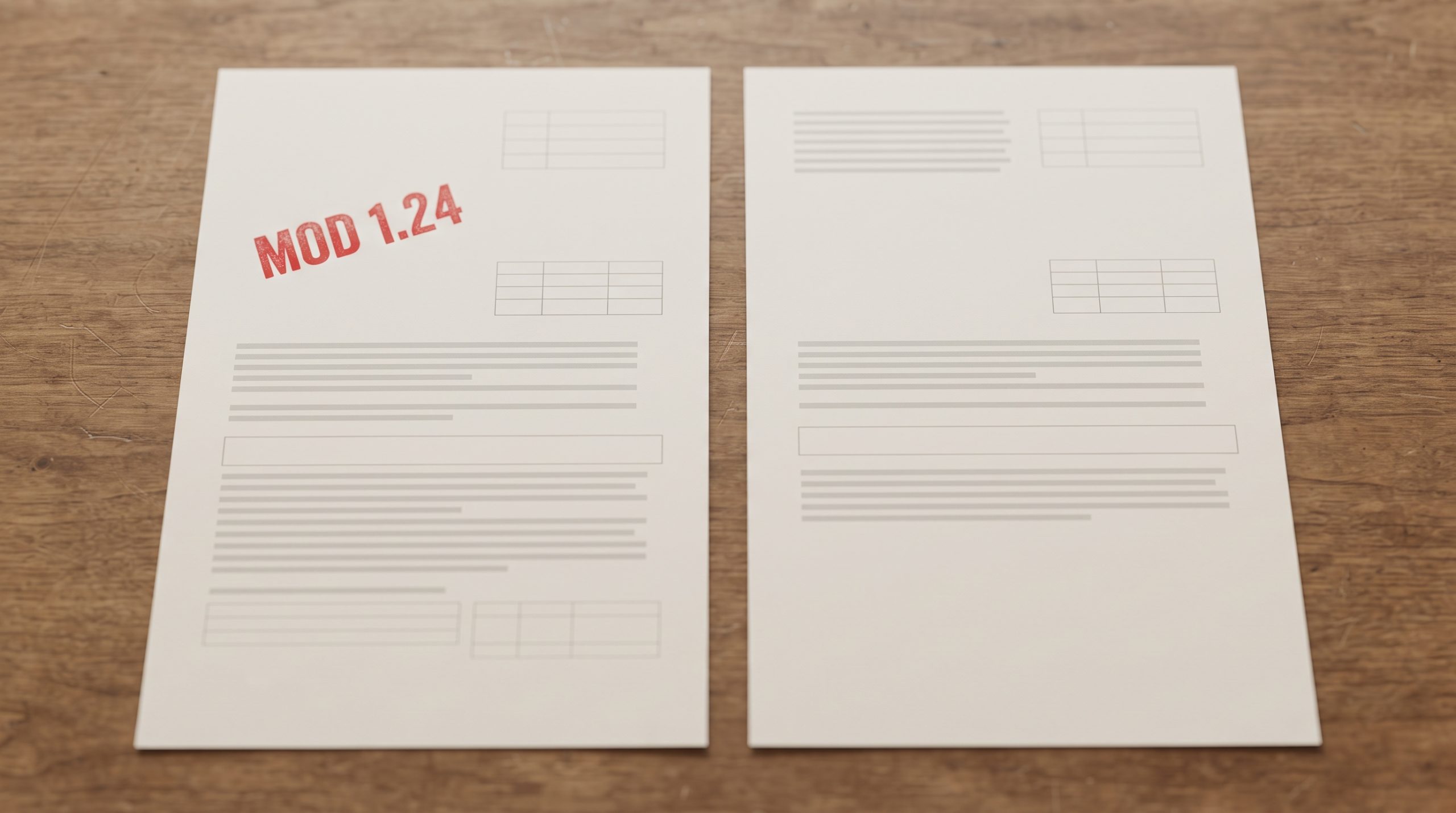
At its core, the formula compares an employer’s actual losses against the expected losses for its classification and payroll size, using NCCI’s own data (or, in California’s case, the state’s independent bureau instead). California is not one of the roughly 39 jurisdictions that use NCCI’s plan directly. It runs its own experience rating system through the Workers’ Compensation Insurance Rating Bureau of California (WCIRB), applying the same actual-versus-expected logic on its own state-specific tables.
Before comparing anything, NCCI splits each individual claim into two pieces using a state-approved split point. NCCI’s own worked illustration uses $18,500 as its example split point: the portion of a claim up to that amount is primary loss, which reflects how often a business has claims, and everything above it is excess loss, which reflects how severe any single claim gets, per the same NCCI explainer. Primary loss carries far more weight in the mod calculation than excess loss does, because NCCI’s data shows that a business’s claim frequency predicts its future costs more reliably than the size of any one claim, which is often closer to chance. That is also why the state sets a per-claim cap, called a loss limitation, so one catastrophic injury cannot single-handedly wreck a small employer’s rating for years.
Applied to Dominic’s $58,000 claim, the first $18,500 counts as primary loss at full weight, and the remaining $39,500 counts as excess loss at only partial weight. NCCI then adds a stabilizing factor for small employers, calibrated by size and state, so a single bad year cannot swing a small business as violently as it would swing a large one. NCCI does not publish those exact per-state weighting tables for public use, so the final arithmetic an insurer’s mod worksheet produces will differ by state and by employer size. What does not change is the underlying comparison: a business’s own primary-weighted actual losses against the primary-weighted expected losses for a business its size and class, repeated for three straight years on Dominic’s claim.
Dominic’s numbers: what one claim actually cost
Before the injury, Dominic’s landscaping company, 18 employees, roughly $900,000 in annual payroll, carried a 0.91 credit mod. A safe record with only a couple of minor first-aid incidents kept his actual losses well below what NCCI’s tables expected for a crew his size in his classification. On $54,000 of manual premium, that credit meant he was paying $49,140 a year, comfortably under the manual rate.
The rotator cuff claim changed that. Once the $58,000 loss entered his experience period at the 2027 renewal, split into $18,500 of full-weight primary loss and $39,500 of partial-weight excess loss, his mod flipped from a 0.91 credit to a 1.24 debit. On the same $54,000 manual premium, that mod meant $66,960 a year, an extra $17,820 annually for three consecutive renewals before the claim finally aged out.
| Policy Year | Manual Premium | Experience Mod | Premium Actually Paid | Premium if Mod Had Stayed at 0.91 |
|---|---|---|---|---|
| 2027 | $54,000 | 1.24 | $66,960 | $49,140 |
| 2028 | $54,000 | 1.24 | $66,960 | $49,140 |
| 2029 | $54,000 | 1.24 | $66,960 | $49,140 |
| 3-Year Total | $162,000 | n/a | $200,880 | $147,420 |
That table adds up to $53,460 in extra premium across three policy years, money that had nothing to do with a rate increase, a payroll change, or a new class code. Landscaping crews get grouped into a classification code the same way a construction crew does (see how workers’ comp class code misclassification plays out on a construction site), and NCCI’s expected loss figures for that code are exactly what Dominic’s actual losses were measured against. A mod swing like this is also a different mechanic entirely from a workers’ comp premium audit reclassifying payroll after the fact. An audit adjusts what payroll gets billed; the mod adjusts the rate that payroll gets billed at, based purely on losses. Understanding what the underlying policy actually pays for in the first place, covered in our guide to what workers’ compensation insurance covers, is the starting point for seeing why one claim carries this much weight.
Frequently asked questions
What is a workers’ compensation experience modification factor? It is a multiplier that NCCI, or a state’s own rating bureau, calculates by comparing a business’s actual claims losses against the expected losses of similarly sized, similarly classified employers. A mod above 1.00 raises the manual premium; a mod below 1.00 lowers it. Most states recalculate it once a year.
How long does one workers’ comp claim affect my premium? A claim typically enters your experience rating at the next renewal after it is reported and valued, then stays part of the calculation for three consecutive policy years before it rolls off, replaced by a newer year of data. One injury can influence three separate annual premiums.
What premium do I need before I’m experience rated at all? Each state sets its own threshold. NCCI applies it two ways: enough audited premium subject to experience rating in the most recent two years, or an average premium above a lower threshold across the whole experience period. Businesses below both stay on manual rates with a 1.00 mod.
Does California calculate the e-mod the same way as NCCI? No. California is not one of the states that use NCCI’s plan. It runs its own experience rating system through the Workers’ Compensation Insurance Rating Bureau of California (WCIRB), which follows the same actual-versus-expected logic but applies its own state-specific tables and split point.
Can a good safety record actually lower my premium below manual rates? Yes. A mod under 1.00 is a credit, and it works the same way a debit does, as a multiplier against manual premium. A business with losses lower than expected for its size and classification pays less than the manual rate, not just less of a surcharge.
One Claim Cost Dominic $53,460. See What Your Coverage Actually Costs.
Compare business insurance quotes and find out where your own premium stands before your next renewal.
Compare Business Insurance Quotes