9 min read · Last updated August 14, 2026
- Civil authority coverage only pays when a covered peril, like fire or windstorm, damages property within about one mile of your business and a government order blocks access because of that damage.
- The standard civil authority extension caps payouts at four consecutive weeks from when the closure began, under ISO-based language filed with state regulators.
- A construction closure like the one that cost Maria $45,400 in lost sales is not a covered peril. Without damage from a named peril, neither civil authority nor ingress or egress coverage pays anything.
- Business Owners Policy (BOP) rates rose 6.16% and general liability rose 5.44% in Q2 2026 (Ivans Index), so paying more for a policy does not mean this specific gap has closed.
In this article
- Civil authority coverage needs damage first, not just a closed street
- The one-mile line and the four-week clock hidden in the policy
- Ingress and egress coverage is not automatically in the policy either
- What would have covered Maria’s loss, and why none of it applied
- The gap most small business owners never see until they file a claim
- FAQ
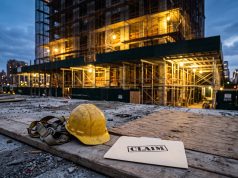
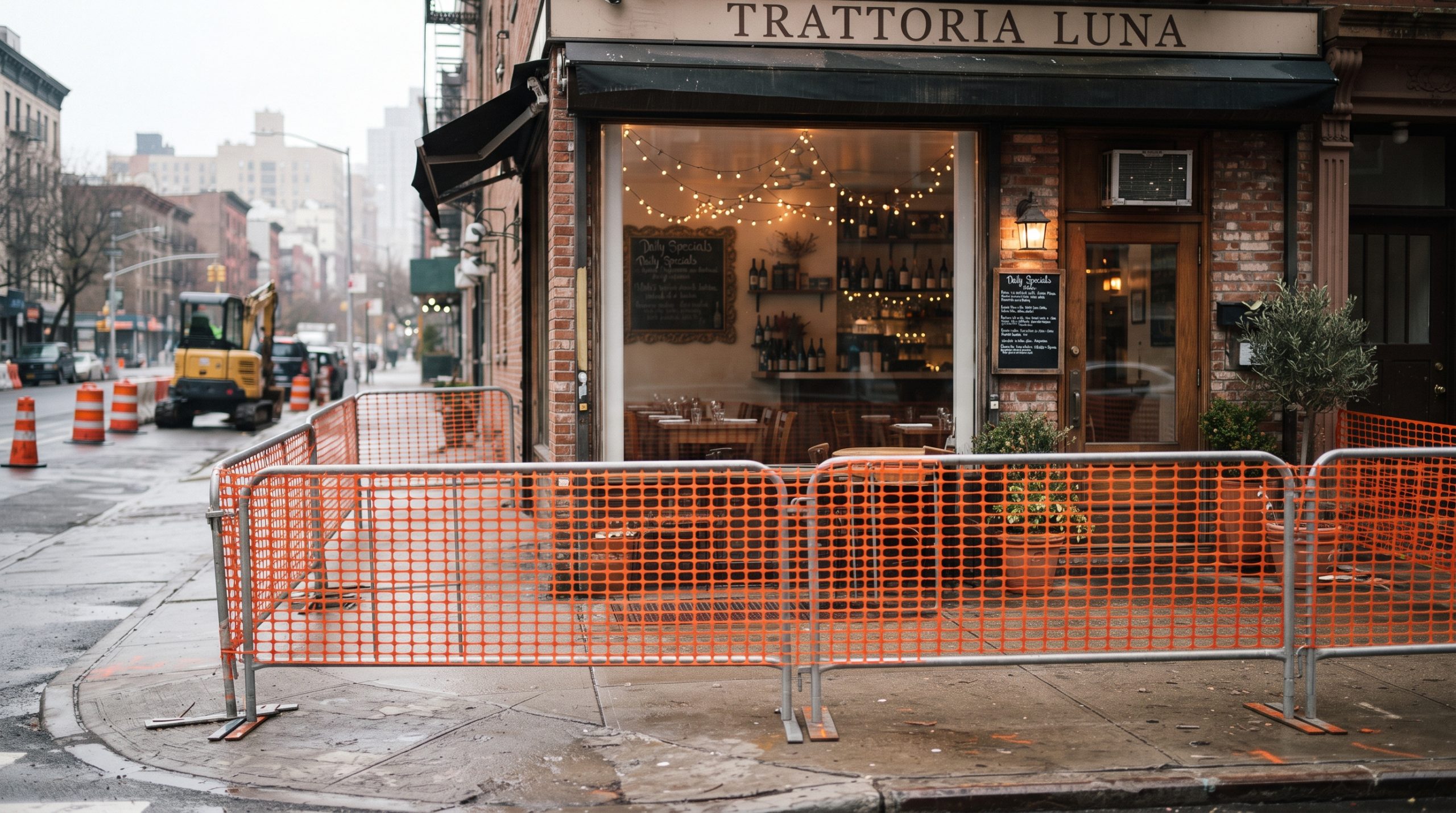
Maria Delgado watched crews put up orange construction fencing outside Trattoria Alba on a Tuesday morning in April 2026. The city was replacing a water main under the street, and the sidewalk in front of her restaurant stayed blocked for six weeks. Nothing inside Trattoria Alba was damaged. Not a window, a wall, or a single table. But her weekday lunch crowd, workers who used to walk over from the office tower across the street, mostly stopped coming because they could not find a clear path to her door. Revenue had run about $54,000 a month before the closure. During the six weeks the street stayed blocked, sales fell 60%, to roughly $21,600 a month, a loss of about $45,400 she never recovered. Her broker filed a business income claim. The carrier denied it in one paragraph.
Civil authority coverage needs damage first, not just a closed street
Civil authority coverage is an add-on to a standard business income form, usually bundled inside a Business Owners Policy (BOP), the package policy most small businesses buy that combines property and liability coverage in one form. The National Association of Insurance Commissioners (NAIC), the group that coordinates insurance regulation across all 50 states, publishes the standard test insurers apply. Three conditions have to be true at once. A government body has to completely prohibit access to your building. Physical damage has to exist near your building. That damage has to be caused by a peril your property policy actually covers, like fire, wind, or an explosion.
Maria’s street closure fails the third test outright. A water main replacement is planned construction, not fire, wind, hail, or any other named peril in her property form. No damage occurred anywhere, covered or not. The order that blocked her sidewalk came from a public works schedule, not from a fire department responding to a burning building next door.
The one-mile line and the four-week clock hidden in the policy
Even a restaurant that qualifies for civil authority coverage runs into limits most owners never read. A Wisconsin-filed business income endorsement built on Insurance Services Office (ISO) language, the industry-standard policy wording used across most states, spells out the mechanics in the filed form itself. Coverage applies only when a covered peril damages property other than the policyholder’s own building, when the area around that damaged property is closed off by a civil authority because of the damage, and when the policyholder’s building sits within that closed area and no more than one mile from the damaged property. Coverage then runs for up to four consecutive weeks from the date the closure began, not the length of the closure itself.
That last part matters even in scenarios where a real fire or storm forced the closure. A restaurant blocked off for six weeks after a genuine covered event would still see civil authority coverage stop paying at week four. The other two weeks would need a different coverage extension or would go uncovered entirely. How long the payments actually run once triggered is a separate mechanic called the period of restoration, covered in detail here. Maria’s closure lasted exactly as long, six weeks, but never qualified for even the first four.
Ingress and egress coverage is not automatically in the policy either
Owners who get denied under civil authority sometimes assume ingress or egress coverage, a related extension that pays when access to a property is physically blocked, will pick up the loss instead. Two problems usually stand in the way. First, many standard BOP and commercial property forms do not include an ingress or egress extension at all unless it was added by a specific endorsement, and Maria’s policy never had one. Second, where the extension does exist, it still generally requires the blocked access to trace back to direct physical loss from a covered peril, the same core requirement civil authority coverage carries. A city crew digging up a water main for a planned repair is scheduled infrastructure work, not physical loss from a covered peril, and the Insurance Information Institute notes plainly that business interruption coverage in general only responds after a covered physical loss actually happens somewhere in the chain.
What would have covered Maria’s loss, and why none of it applied
Two other extensions sometimes fill gaps like this one, and neither would have helped Trattoria Alba either. Contingent business interruption pays when a supplier or key business partner suffers a covered loss that disrupts the policyholder’s income, but that coverage still needs a covered physical loss at the supplier’s own location, and Maria’s suppliers were never touched. A utility services extension can pay when the policyholder’s own power, water, or communications service is knocked out by damage to utility equipment, but that extension covers an interruption to Maria’s own utilities, not a sidewalk closure that left her water and power running the entire time.
What Maria actually lost, foot traffic from a street that was inconvenient to reach, sits in a category few standard commercial policies touch at all. A handful of insurers sell parametric or manuscript coverage written specifically for revenue loss with no physical-damage trigger, but those policies are rare, priced individually, and rarely offered to a single-location restaurant unless a broker specifically shops for one. Restaurants run into the same all-or-nothing logic in a different scenario when a walk-in cooler fails with no storm or fire involved; see how equipment breakdown coverage handles spoilage losses for the same physical-damage requirement playing out on a different claim.

The gap most small business owners never see until they file a claim
Commercial insurance is not getting cheaper for restaurants right now, which makes this gap sting more. The Ivans Index, the industry benchmark that tracks renewal rates on agency-placed small and mid-market policies, the population most independent restaurants fall into, showed Business Owners Policy renewals up 6.16% and general liability up 5.44% in the second quarter of 2026. Owners are paying more for the same policy, and that policy still will not pay for a revenue drop with no physical-damage trigger behind it.
The fix is not a bigger BOP limit. It is asking a broker, before the next renewal, exactly which of these extensions the policy carries, what peril has to cause the damage, and how far from the building that damage has to occur. Pairing that conversation with a broader restaurant risk review catches other blind spots at the same time. Maria found out the hard way, after six weeks of empty tables, that the answer to all three questions was one she should have asked months earlier.
| Extension | What it requires | Time or distance limit | Applied to Maria’s closure |
|---|---|---|---|
| Civil authority | Covered peril damages property near the business, and a government order blocks access because of that damage | Building within about one mile of the damage; pays up to 4 consecutive weeks | No. No covered peril caused any damage |
| Ingress or egress | Direct physical loss from a covered peril blocks access to the business | Varies by endorsement; often not included at all | No. Not purchased, and would not apply anyway |
| Contingent business interruption | A supplier or partner suffers a covered physical loss that disrupts the business | Set by the endorsement’s own limit | No. No supplier was affected |
| Utility services | The business’s own power, water, or communications is cut by damage to utility equipment | Set by the endorsement’s own limit | No. Her utilities stayed on throughout |
Frequently asked questions
Does business interruption insurance cover a nearby street closure?
Usually not. Standard business income coverage, including the civil authority extension, only pays when a peril your policy actually covers, like fire or windstorm, damages property nearby and a government order blocks access because of that damage. A planned construction project or utility repair with no property damage does not meet that test, even if it cuts your sales for weeks.
What is the civil authority extension in a business income policy?
Civil authority coverage pays lost income when a covered peril damages property near your business and a government body prohibits access to your building as a direct result. Standard ISO-based language requires your building to sit within roughly one mile of the damaged property and caps payments at four consecutive weeks from when the order took effect.
How long does civil authority coverage pay for a business closure?
Up to four consecutive weeks from the date the government order took effect, under the ISO-based language most insurers file with state regulators. That clock runs whether the underlying closure lasts three weeks or three months, so a longer closure leaves the remaining weeks uncovered unless another endorsement applies.
Is ingress and egress coverage different from civil authority coverage?
Yes. Ingress and egress coverage pays when direct physical damage from a covered peril blocks access to your property, without requiring a government order. Many standard commercial property policies do not include this extension unless it was added separately, and where it does exist, it still requires the same physical-damage trigger civil authority coverage requires.
Can a small business buy insurance for lost sales from nearby construction?
Rarely through a standard policy. Parametric or manuscript revenue-loss coverage exists for exactly this kind of no-damage disruption, but it is priced individually, sold by a small number of specialty insurers, and typically only available if a broker specifically shops for it on your behalf.
Is your business income coverage actually built for a real closure?
Compare commercial insurance quotes and see what your current business income and civil authority coverage would actually pay before your next renewal.
Compare Business Insurance Quotes