8 min read · Last updated September 2, 2026
- A motor carrier’s commercial auto policy, the one carrying the federally required MCS-90 endorsement, only responds while the leased truck is “in the business of” that carrier, meaning under dispatch or hauling a load.
- The moment the truck is off dispatch, bobtailing home, running an errand, or sitting in a repair-shop lot with no trailer attached, the carrier’s policy typically excludes it entirely.
- Non-Trucking Liability (NTL), sometimes called bobtail insurance, is a separate policy an owner-operator buys personally to cover that off-dispatch window. It is liability-only and typically runs $300 to $800 a year for $1,000,000 in coverage.
- A Wisconsin court in Casey v. Great West Casualty Co. (2013) settled exactly this dispute between two $1 million policies. The owner-operator’s own NTL policy paid. The motor carrier’s policy did not, because he was not acting in the carrier’s business at the time.
In this article
- The truck that had no trailer attached
- Two policies, one truck, and a line between them
- What actually decided a real case like this
- What Non-Trucking Liability does and does not pay
- Before you assume you’re covered
- Frequently asked questions
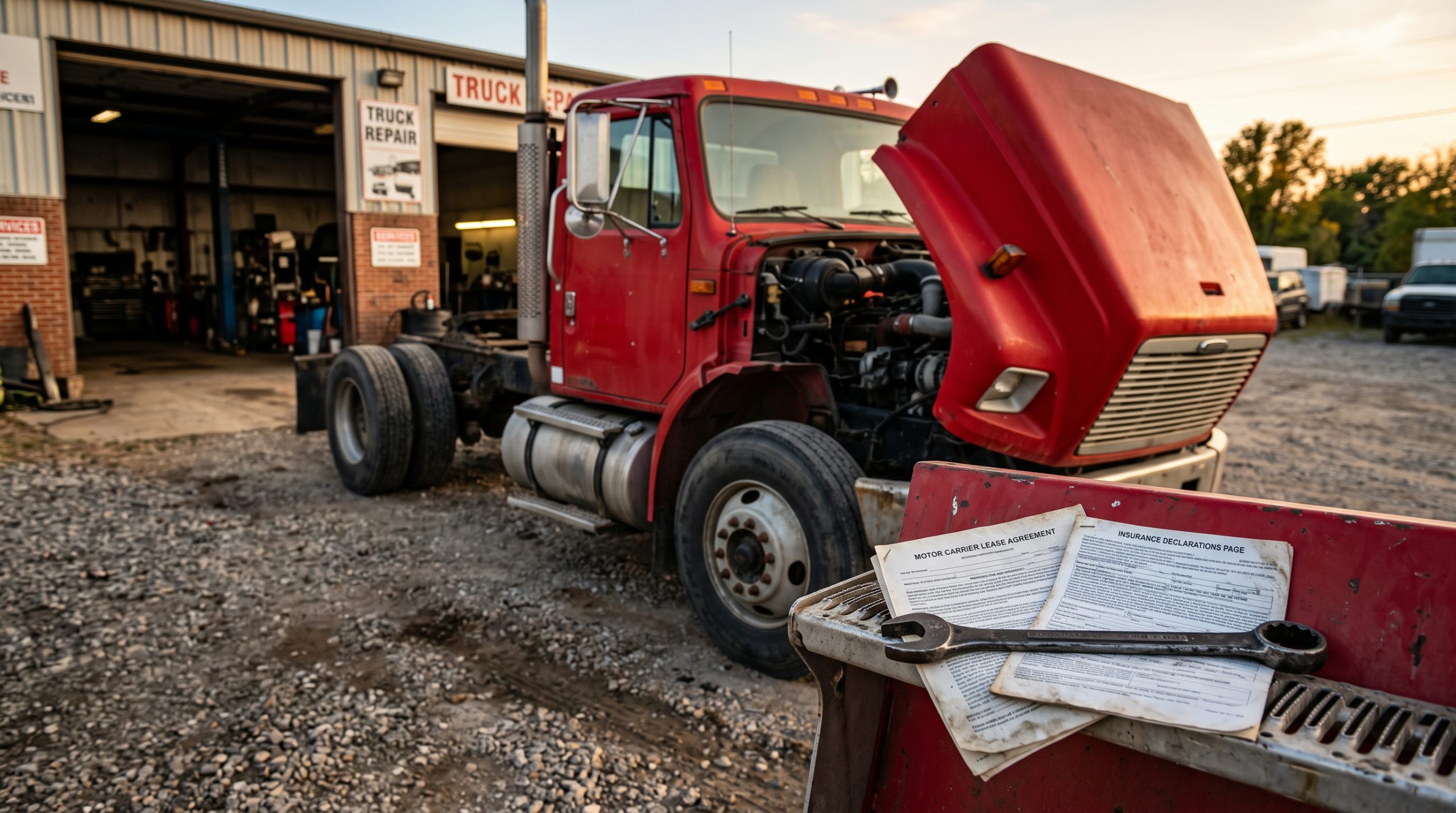
Reuben Castellanos leases his tractor to a regional carrier that pays for a $1,000,000 commercial auto liability policy on every load he hauls under their authority. On a Saturday morning, with no trailer attached and no dispatch on the books, he drove eleven minutes to a repair shop to get his brakes checked before Monday. He clipped a parked delivery van pulling into the lot. The van owner’s insurer wanted $18,400 for the repair.
Reuben called his motor carrier’s insurance line first, the way he always had for any accident involving the truck. The adjuster asked one question before anything else: Was he under dispatch? He was not. The carrier’s policy, the one Reuben had assumed covered “the truck” in every situation, only covers the truck while it is doing the carrier’s business. A brake-shop errand on a Saturday is not that.
The trucking industry has a specific name for the coverage that is supposed to fill this exact gap, and a specific reason most owner-operators only learn about it after an accident like Reuben’s.
The truck that had no trailer attached
Federal law requires an authorized motor carrier to carry a policy with an MCS-90 endorsement, the guarantee that pays injured third parties even when the underlying policy would otherwise deny a claim. But the MCS-90’s own text limits it to liability “resulting from negligence in the operation, maintenance or use of motor vehicles” transporting property for the carrier. A federal appeals court made that limit explicit in Canal Insurance Co. v. Coleman, 625 F.3d 244 (5th Cir. 2010), a case involving a trucker the court described as driving “bobtail,” meaning with no trailer attached, on his way home from work when he hit another car. The court held the MCS-90 “covers only liability for the transportation of property,” and since the parties agreed the truck was not transporting anything at the time, the carrier’s federally mandated coverage never applied.
The underlying lease agreement explains why the carrier’s ordinary policy tracks the same line. Federal trucking regulations require that a lease give the carrier “exclusive possession, control, and use” of the equipment, and require the carrier to “assume complete responsibility for the operation of the equipment,” for the duration of that lease. Courts have read “duration of the lease” narrowly. It means while the truck is doing the carrier’s work, not around the clock for as long as the paperwork is signed.
Two policies, one truck, and a line between them
This is where Non-Trucking Liability, often shortened to NTL and also called bobtail insurance, is supposed to step in. A major trucking insurer’s own explanation of the coverage puts it plainly: it “protects owner-operators and independent drivers by filling a serious gap in coverage left by a standard motor carrier insurance policy.” It is a separate policy an owner-operator buys personally, and it covers bodily injury and property damage liability during exactly the window the carrier’s policy will not touch: personal errands, the drive home, a trip to the repair shop, any use of the truck that is not “in the business of” the carrier.
NTL is not free coverage layered on top of the carrier’s policy. It is the other half of a handoff, and the handoff has a hard edge. One major trucking insurer describes the boundary this way in its own product materials: NTL “wouldn’t apply” the moment a driver is dispatched to pick up another load, even bobtailing to get there, because at that point the driver is “still using the truck for business purposes.” Attach a trailer, and NTL generally excludes coverage outright, since hauling anything, for anyone, moves the truck back into the carrier’s side of the line. The two policies are built to bookend each other. Neither is built to cover the same minute twice.
What actually decided a real case like this
A Wisconsin appeals court worked through this exact dispute in Casey v. Great West Casualty Co., 2013 WI App 24. An owner-operator named Zeverino had leased his tractor to a carrier under a standard agreement, with the carrier’s insurer, Great West, providing $1,000,000 in liability coverage and Zeverino’s own insurer, Acceptance, providing a $1,000,000 non-trucking use policy. On a day off, with no trailer attached and no instructions from the carrier, Zeverino drove his tractor to a dealership to have the grille replaced and was involved in a four-vehicle accident on the way.
Two insurers, two identical $1,000,000 policies, and a real crash victim needing to know which one would pay. The court ruled that Zeverino “was not acting in the business” of the carrier, so he was not an insured under the carrier’s policy at all, and it owed nothing. His own non-trucking use policy was the one on the hook.
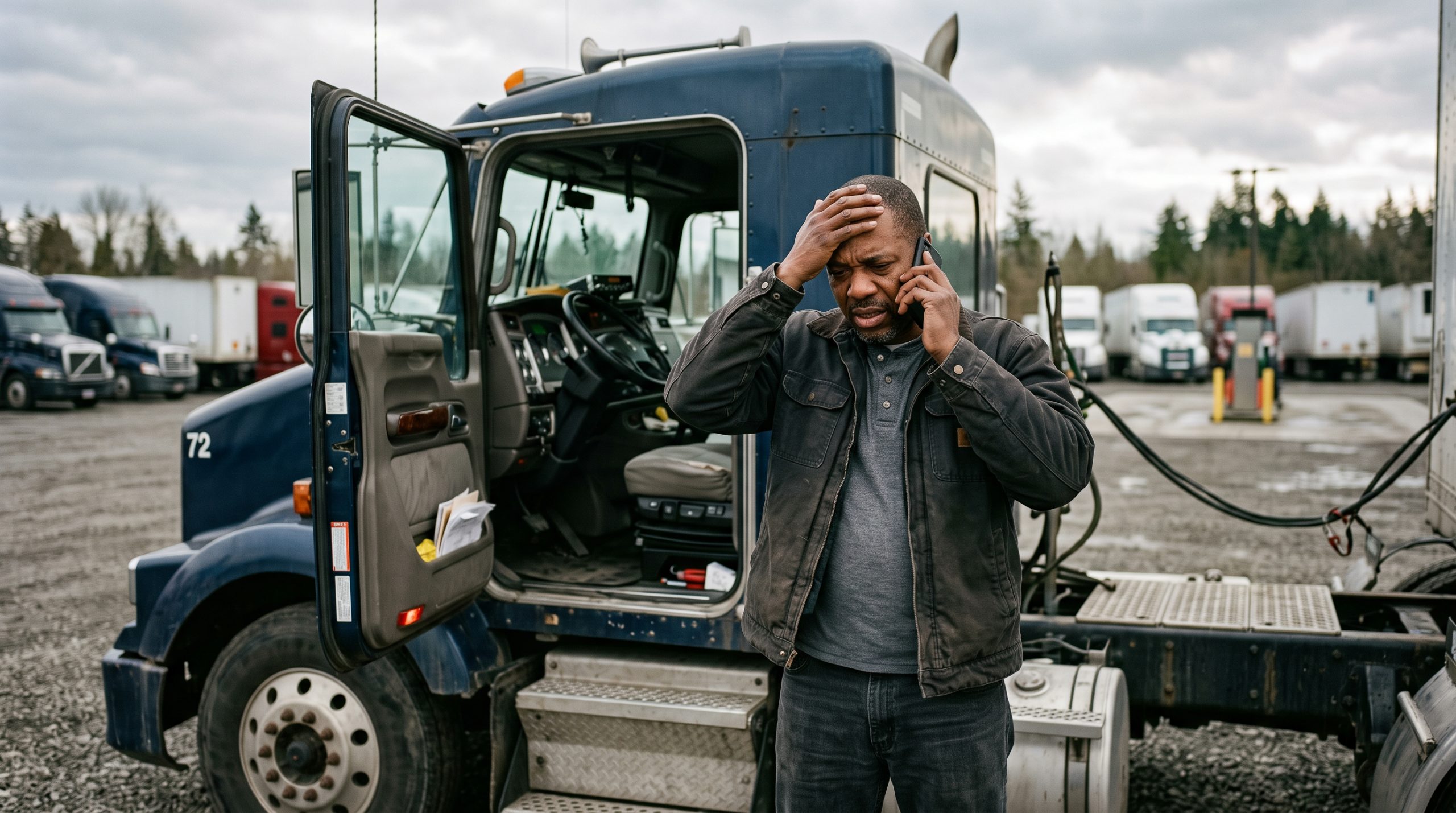
That outcome only worked because Zeverino had actually bought NTL. Reuben had not.
What Non-Trucking Liability does and does not pay
NTL is liability-only. It pays for injuries and property damage the truck causes to other people while it is off dispatch. It does not repair the truck itself, and it does not cover cargo, since NTL policies typically exclude hauling any property at all, which is what keeps it from overlapping with the carrier’s cargo coverage. An owner-operator still needs a separate physical damage policy to protect the truck from a bobtail-trip collision, a comparison worth reading through in DIN’s drive other car endorsement gap breakdown, which covers a related but distinct personal-vehicle gap for business owners.
| Question | Motor carrier’s policy | Non-Trucking Liability (NTL) |
|---|---|---|
| Applies when | Truck is under dispatch or hauling a load | Truck is off dispatch, no trailer, personal use |
| Who buys it | The motor carrier | The owner-operator, personally |
| Typical liability limit | $750,000 federal minimum for general freight; many carriers require $1,000,000 by contract | Commonly $1,000,000 combined single limit |
| Covers cargo | Yes, while dispatched | No, hauling any property voids it |
| Covers damage to the truck itself | Only under a separate physical damage policy | No, liability only |
| Typical annual cost to the owner-operator | N/A, paid by the carrier | Roughly $300 to $800 per year |
Commercial auto rates are still climbing even as other commercial lines cool off. The Ivans Index, which tracks agency-placed renewal rates on small and mid-market commercial policies, put commercial auto up 4.93 percent in the second quarter of 2026, easing slightly from a 5.28 percent increase in the first quarter but still one of the more expensive lines to renew. Against that backdrop, a $300 to $800 NTL policy is a small add-on next to what a single uncovered accident can cost.
Before you assume you’re covered
Ask the motor carrier’s insurance department, in writing, exactly what “in the business of the carrier” means under your lease, and ask whether that coverage follows you the moment the trailer comes off. Then check your own policy file for a Non-Trucking Liability declarations page, not just a certificate of insurance from the carrier. Owner-operators who assume “the truck is insured” because a carrier’s certificate exists are the ones who find out otherwise at the worst possible moment, the way MCS-90’s reimbursement right surprises truckers who assumed a federal guarantee meant free coverage. It does not. It means someone eventually pays, and if you have not bought NTL, that someone is you.
Frequently asked questions
Does my motor carrier’s insurance cover me when I’m bobtailing to pick up my next load? Usually yes, according to major trucking insurers’ own guidance, because bobtailing to a dispatched pickup still counts as acting in the business of the carrier. The gap opens only when there is no dispatch behind the trip at all, such as a personal errand or the drive home after you have already dropped your trailer for the weekend.
Can I buy Non-Trucking Liability if I only lease to one carrier part-time? Yes. NTL is sold to any owner-operator under a lease agreement, regardless of how many hours a week they drive for that carrier. The policy is priced on the truck and the driver’s record, not on how much of your time is spent under dispatch.
Does Non-Trucking Liability cover me if I let a friend or family member drive the truck? That depends entirely on the policy’s named-driver terms, which vary by insurer. Read the declarations page before assuming anyone else is covered, the same way a named-driver exclusion on a personal auto policy removes coverage for anyone not listed.
What happens if I get in an accident with a trailer attached but I’m technically off dispatch? Standard NTL policies exclude coverage the moment a trailer, semi-trailer, or another towed unit is attached to the truck, regardless of dispatch status. That scenario typically falls into a coverage gap unless your motor carrier’s policy or a separate contingent liability arrangement responds instead.
Is Non-Trucking Liability the same thing as bobtail insurance? They are generally used interchangeably in the trucking insurance industry, along with the older term “deadhead liability.” All three describe the same liability-only coverage for a truck that is off dispatch and not hauling anything for the carrier.
Compare commercial auto coverage before your next renewal
See policies that price non-trucking liability and physical damage together, not as an afterthought.
Compare Business Insurance Quotes