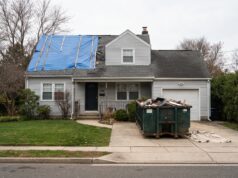
Tom and Linda bought their four-bedroom home in suburban Ohio in 2017 for $295,000. Their homeowners’ policy set dwelling coverage at $310,000, slightly above the purchase price, which felt like adequate protection. They renewed the same policy every year without reviewing the dwelling limit. Six years later, a kitchen fire caused by a faulty dishwasher spread to the structural walls, triggering a full rebuild assessment. The estimate came back at $489,000.
Their policy paid $310,000. They paid $179,000 out of pocket.
The gap wasn’t the result of fraud, bad faith, or a coverage dispute. It was the result of a coverage limit that had never been updated to reflect the actual cost of rebuilding a home in 2024. Construction material costs rose more than 40% between 2019 and 2023, according to the Associated General Contractors of America. Labor costs in residential construction followed a similar trajectory. The policy Tom and Linda bought in 2017 reflected 2017 rebuild costs. The fire happened in 2024.
The Gap Between Market Value and Replacement Cost
Homeowners insurance is not designed to reimburse you for the market value of your home. It is designed to pay the cost of rebuilding the structure if it is destroyed. Those two numbers are not the same thing, and they can diverge significantly depending on where you live, what your home is made of, and when you last reviewed your coverage.
Market value includes the land your home sits on, neighborhood comparables, and buyer demand. Replacement cost includes none of those things. It reflects only the cost of labor and materials needed to reconstruct the structure to its current specifications. In many markets, the replacement cost is substantially higher than the purchase price, particularly for older homes with custom features, high ceilings, or non-standard layouts that are more expensive to replicate than to approximate.
CoreLogic (now Cotality) research cited by the NW Insurance Council estimates that 60% or more of U.S. homes are underinsured, with the average underinsured home carrying a coverage gap of more than 20%. That means a typical underinsured home with a $400,000 replacement cost carries a policy limit below $320,000. After a total loss, that gap falls entirely on the homeowner.
Why Policies Fall Behind
Most homeowners set their dwelling coverage once, at purchase, and renew without adjusting. Some insurers include an inflation guard endorsement that automatically increases the dwelling limit by a small percentage each year, typically 2% to 4%. That adjustment was adequate for the decade preceding 2020, when construction inflation was modest. It was not adequate for 2020 through 2023, when lumber alone spiked over 300% at its peak before partially retreating, and when skilled labor shortages drove framing and electrical costs sharply upward.
A policy with a 3% annual inflation guard that was accurate in 2019 would have increased a $300,000 dwelling limit to approximately $347,000 by 2024. The actual cost to rebuild that same home in many markets is closer to $420,000. The inflation guard closed part of the gap. It did not close all of it.
Extended and Guaranteed Replacement Cost Coverage
Two endorsements exist specifically to address the problem of dwelling limits that don’t keep pace with actual rebuild costs.
Extended replacement cost coverage pays a percentage above your stated dwelling limit if the actual rebuild cost exceeds it. A policy with $300,000 in dwelling coverage and a 25% extended replacement cost endorsement will pay up to $375,000. The additional cost of this endorsement is typically modest, often $50 to $150 per year, depending on the insurer and the home.
Guaranteed replacement cost coverage pays the full cost to rebuild your home regardless of the stated dwelling limit, with no cap. This coverage is less common and more expensive, and not all insurers offer it. When available, it entirely eliminates the risk of being underinsured due to construction cost inflation.
Neither endorsement is a substitute for regularly reviewing your dwelling limit. Both are significantly cheaper than discovering the gap after a loss.
What a Replacement Cost Estimator Actually Does
When you apply for homeowners insurance, insurers use replacement cost estimators, proprietary tools that calculate the cost to rebuild your home based on square footage, construction type, local labor rates, and finish quality. These tools are updated periodically but not in real time. In periods of rapid cost inflation, they may lag behind actual market rates by 12 to 24 months.
This means that even a policy written with a replacement cost estimator in 2022 may have used labor and material inputs that understated costs by the time they were applied. Homeowners who want a more current estimate can request a residential appraisal focused on replacement cost rather than market value. This is a different document from a standard home appraisal and is specifically designed to produce a rebuild cost figure.
For a broader overview of what homeowners’ policies cover and how to evaluate them, see How to Compare Homeowners Insurance Policies.
Questions to Review at Your Next Renewal
- When was my dwelling limit last reviewed or recalculated, and does my insurer use a replacement cost estimator at renewal?
- Does my policy include an inflation guard endorsement, and if so, what percentage does it increase my limit each year?
- Does my insurer offer extended or guaranteed replacement cost coverage, and what does it cost to add to my current policy?
- Has my home been renovated or expanded since the policy was written, and have those changes been reflected in my dwelling limit?
- If I had a total loss today, would my current dwelling limit cover the full cost to rebuild at current labor and material prices?
Tom and Linda had done nothing wrong. They bought a policy, renewed it faithfully, and paid their premiums. The problem was that the number on the declarations page had stopped reflecting the actual cost of rebuilding their home years before the fire.
This article provides general information about homeowners’ insurance concepts. Coverage terms, availability, and costs vary by insurer and location. Consult a licensed insurance agent to review your specific policy.
Is your dwelling coverage keeping up with what it actually costs to rebuild?
Tom and Linda were $179,000 short. Their policy was never updated after they bought it.
Review Your Homeowners Coverage →Related: flood damage · water damage