6 min read · Last updated May 15, 2026
In this article
- What the Standard HO-3 Policy Covers and Excludes
- What the Service Line Endorsement Adds
- Why the Lateral Is the Owner’s Responsibility
- Frequently Asked Questions
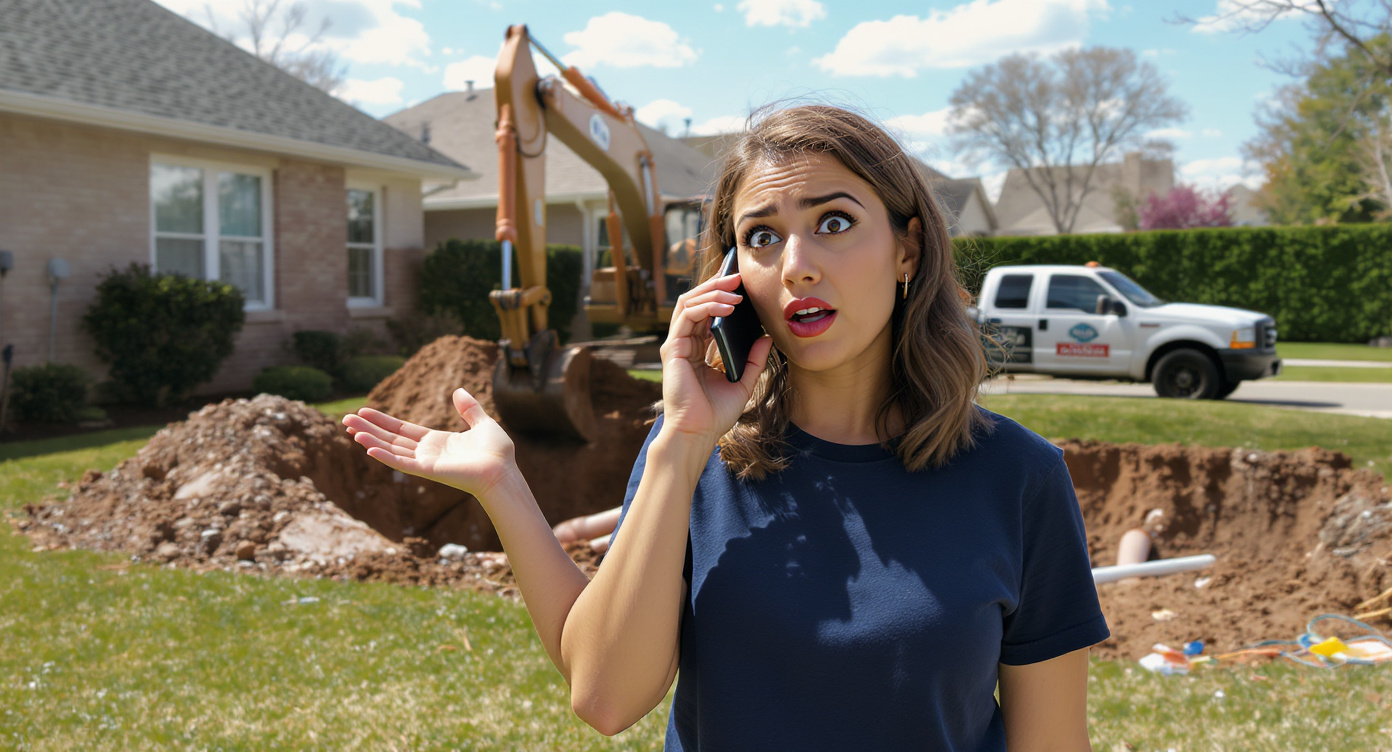
Layla Hassan, a 38-year-old homeowner in Birmingham, Alabama, woke up to a backed-up basement floor drain in February. By the end of the week her plumber had pulled a 14-foot section of cracked cast iron from her front lawn and quoted $14,200 for full lateral replacement. Her homeowners carrier paid $0. The lateral exclusion in her HO-3 policy had been printed on page 23 since the day she bought the home in 2019.
The exclusion is rarely a surprise to underwriters. It is a surprise to homeowners because the language frames the gap as a “buried utility lines” exclusion rather than describing what those lines actually carry. Most policy summaries do not mention sewer laterals at all, even though the lateral is the single most expensive buried line on a residential lot.
What the Standard HO-3 Policy Covers and Excludes
The HO-3 form, the most common homeowners policy in the United States, is structured around two coverage halves. Coverage A insures the dwelling itself, defined as the structure connected to or contained within the foundation. Coverage B insures other structures like detached garages and fences. Neither coverage extends to underground utility piping that connects the home to a municipal main.
Pipes that fail inside the foundation footprint are usually covered, subject to wear-and-tear exclusions. Pipes that fail underground between the home and the main are usually not. The geometry of the exclusion follows the geometry of the foundation. For more on policy structure, see how to compare homeowners insurance policies before renewal.
The exclusion language also targets the specific causes most likely to break a lateral. Tree-root intrusion is excluded as a maintenance issue. Gradual deterioration is excluded as wear and tear. Freeze damage to outdoor pipes is excluded unless caused by a sudden and accidental discharge from a covered cause of loss. Three of the four most common ways a lateral fails are off the table before a service line endorsement is added. For the closely related interior backup exclusion, see the sewer backup exclusion most homeowners learn about after a claim is denied.
What the Service Line Endorsement Adds
The service line endorsement, sold under various names by major carriers, adds first-party coverage for direct physical damage to underground utility service lines running from the dwelling to the property line or main connection point. Coverage typically includes the sewer lateral, the water service line, electric service, natural gas line, communications service, and in some forms heating or steam.
Limits and pricing vary by carrier. Travelers, Chubb, Allstate, State Farm, Liberty Mutual, and most regional carriers offer endorsements with limits between $10,000 and $25,000, consistent with the ranges the Texas Office of Public Insurance Counsel describes for service line coverage. Annual premium typically runs $25 to $80 depending on the limit and the carrier’s loss experience in the geography. Some carriers also include outdoor service equipment such as backflow preventers and detached well lines.
The endorsement is broad-form: it picks up tree-root intrusion, freeze damage, mechanical and electrical breakdown, and wear-and-tear after a sudden failure, which are precisely the perils the base policy excludes. Deductibles are typically a separate flat amount of $500 in most cases, rather than running through the policy’s main deductible. For an adjacent buried-line gap, see the flood coverage exclusion that catches most homeowners by surprise.
Why the Lateral Is the Owner’s Responsibility
Most homeowners assume the city owns the sewer lateral once it leaves their property line. In nearly every U.S. municipality this is wrong. The standard division of responsibility puts the entire lateral, from the foundation wall to the connection at the public main, on the homeowner, even when most of the lateral runs under the city right-of-way or under a sidewalk. Los Angeles County Public Works, for example, tells homeowners they are responsible for the entire lateral including the portion located within the public right of way.
Some older municipalities, particularly in the Northeast, draw the line at the property edge. A handful of cities have public lateral programs that cover repair when the failure is in the public right-of-way. Both are exceptions. The default rule, codified in plumbing codes and reaffirmed by ordinance in most metro areas, is that the homeowner pays.

Frequently Asked Questions
Does my homeowners insurance cover a sewer lateral collapse? A standard HO-3 policy without a service line endorsement does not cover damage to the sewer lateral, the water service line, or any other underground utility line connecting the home to a municipal main. The lateral exclusion applies to the line itself, not to interior damage caused by a backup.
How is a service line endorsement different from sewer backup coverage? Sewer backup coverage pays for cleanup and damage to property inside the home when sewage backs up through interior drains. The service line endorsement pays for the underground line itself. The two endorsements cover separate parts of the same loss event and are usually sold separately.
Does the service line endorsement cover tree-root damage? Yes. The endorsement is broad-form and explicitly picks up tree-root intrusion, which is one of the leading causes of lateral failure and is excluded under the base policy as a maintenance issue. Most carriers also pick up freeze damage and gradual deterioration after a sudden failure.
What about the portion of the lateral under public property? In most municipalities the homeowner owns the entire lateral from the foundation to the connection at the public main, even when the line runs under city property. The service line endorsement covers the full owned length, not just the portion on private property.
Will the endorsement pay for the city’s cost to dig up the street? Usually yes, within the limit. Most service line endorsements cover the full cost of repair including excavation, restoration of landscaping, and patching of municipal pavement when the city requires it. Some carriers cap landscaping restoration at a sub-limit (often $1,000), but the pavement work is typically covered without sub-limit. For related home-value-protection mechanics, see why personal property sublimits matter as much as the dwelling limit.
Adding a service line endorsement before the trench gets dug
Compare homeowners policies that bundle the service line endorsement rather than charging it separately at renewal.
Compare Homeowners QuotesLayla’s policy renewed in April with a service line endorsement added at $42 per year and a $10,000 limit. The $14,200 repair was already paid out of pocket, but a future failure on the water service line, which her plumber flagged as the next likely point of corrosion, will be covered.