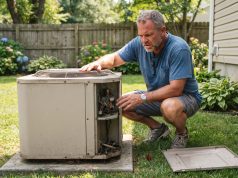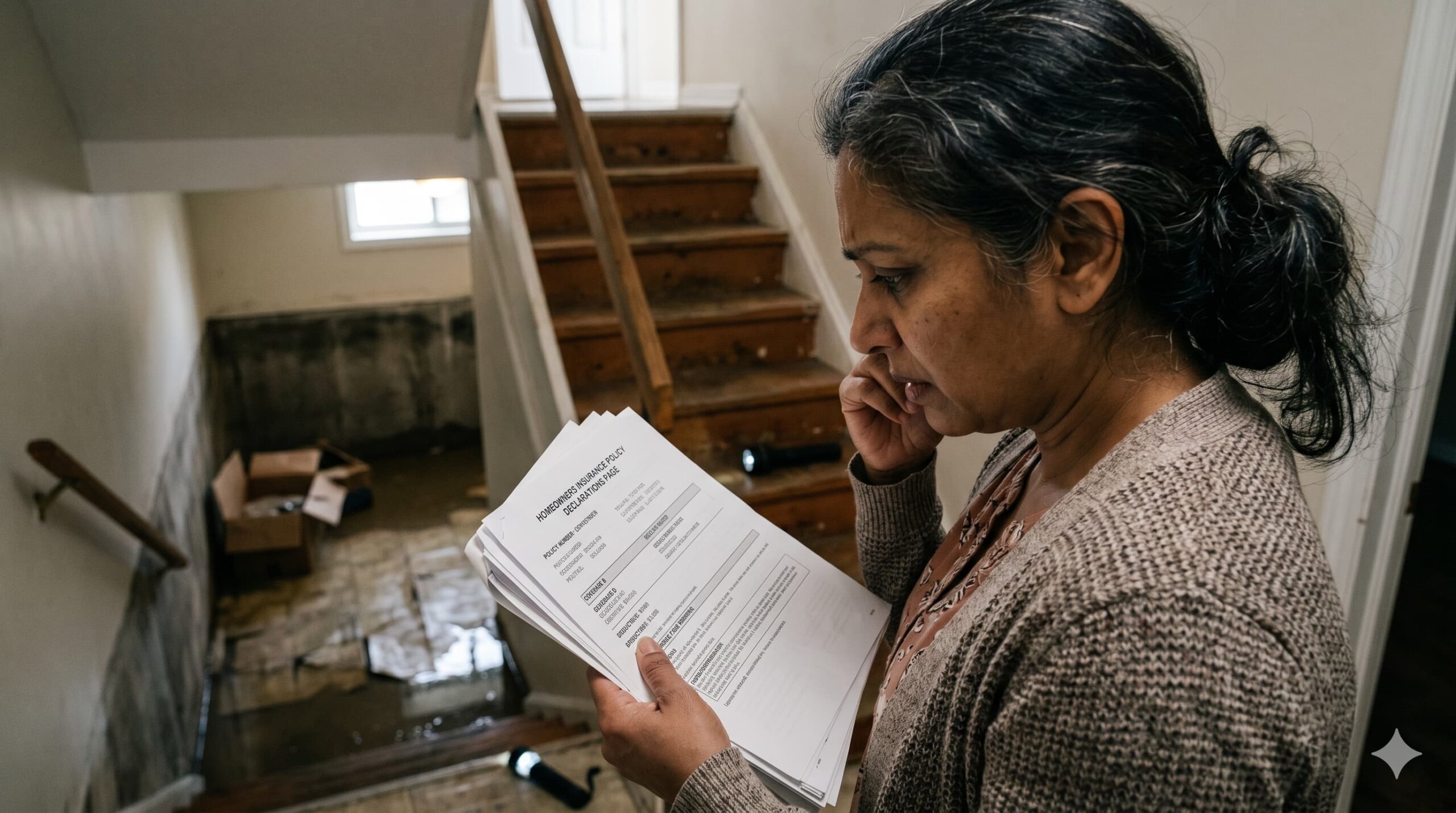
A homeowner in Cincinnati came home from a weekend trip to find four inches of sewage-contaminated water in her finished basement. A city sewer main had backed up during a heavy rainstorm, and the overflow pushed through her basement floor drain. Professional remediation and mold treatment: $8,200. Flooring replacement and drywall: a combined $6,400. Her HVAC unit had sat in the water for three days: $4,100. Total loss: $18,700. She called her homeowners’ insurer from the parking lot. The claim adjuster told her to look at page 11 of her declarations. The water backup exclusion, three sentences long, standard language, no asterisk, ruled out the entire claim. A sewer backup endorsement, which she could have added at any policy renewal, would have covered everything. It costs $80 per year.
What Your Homeowners Policy Actually Covers for Water
The standard homeowners policy, written on the ISO HO-3 form used by most U.S. insurers, covers sudden and accidental water damage that originates from within the home or from above. A pipe bursts inside the wall and soaks the subfloor: covered. A dishwasher hose fails and floods the kitchen: covered. A storm drives rain through a compromised roof, damaging the ceiling below: covered. The policy was designed around water events that a homeowner can prevent or that result from normal structural failure.
According to the National Association of Insurance Commissioners, what it does not cover is water that enters from outside and below the home’s footprint, or from a source that the insurer classifies as a drainage or infrastructure problem rather than a sudden internal failure. The HO-3 water exclusion is comprehensive, listing surface water, overflow of a body of water, spray from waves, water that backs up through sewers or drains, and water that seeps up through foundations or floors. It also excludes failure of a sump pump, a common cause of basement flooding in homes that rely on sump systems to manage groundwater.
These are not fine-print surprises. They are named exclusions on the first page of most declaration documents. The gap between what homeowners assume and what the policy actually covers exists because most homeowners read their policy when they buy it, not when they have a claim.
How the Sewer Backup Exclusion Works
Sewer backup events occur when water, sewage, or waste flows backward from the municipal sewer system or from the home’s own drain lines into the home through floor drains, toilets, sinks, or basement fixtures. They most often occur during heavy rainfall events, when the volume of stormwater overwhelms municipal sewer capacity and pushes overflow toward the path of least resistance, often into connected homes.
The exclusion applies regardless of the source. A backup caused by a city sewer main failure is excluded the same way as one caused by a clog in your private lateral line. The fact that the city’s infrastructure contributed to the event does not create coverage under a standard homeowners policy, nor does it automatically create municipal liability. Cities have substantial legal protections against sewer backup claims unless the homeowner can prove negligence in maintenance or design, a standard that is expensive and difficult to establish.
The coverage exclusion also extends to the damage caused by the backup, not just the event itself. Sewage-contaminated water requires professional biohazard remediation before any structural work can begin. In many cases, the remediation cost exceeds the cost of the underlying damage. The standard homeowners policy covers none of it when the water enters through a sewer or drain.
Who Is Most Exposed
Older homes carry the highest risk. Homes built before 1980 frequently have clay or cast-iron lateral sewer lines that have degraded over decades, creating partial obstructions that accelerate during high-volume events. Root intrusion into older pipes is a second common cause of backup. If your home is in a neighborhood with aging municipal infrastructure, the risk compounds because a failed city main can overwhelm properly maintained private lines. A water backup endorsement only addresses what happens once sewage enters the home; digging up and replacing the degraded lateral line itself is a separate repair that sits outside a standard homeowners policy entirely, and it is the expense that usually surprises homeowners after the water damage has already been remediated.
Finished basements represent the highest financial exposure when a backup occurs. An unfinished basement with a utility floor drain and no installed floor, wall, or ceiling materials loses almost nothing in a sewer backup. A finished basement with luxury vinyl plank flooring, drywall, insulation, electrical, and HVAC equipment can sustain $15,000 to $40,000 in losses from the same event. The more you have invested below grade, the more you need water backup coverage.
Homes that rely on sump pumps are also at elevated risk because the sump pump itself is excluded from standard coverage. If the sump pump fails due to a power outage, a mechanical failure, or a volume exceeding its capacity, the resulting flooding is not covered. Some water backup endorsements also extend to sump pump failure, and it is worth confirming whether the endorsement you are quoted includes that extension.
For additional context on the distinction between sewer backup and flood, which are separate exclusions with separate solutions, the flood coverage exclusion in homeowners’ insurance covers the flood side of the equation. When shopping for a policy that includes the right endorsements, how to compare homeowners insurance policies walks through the evaluation criteria.
What a Water Backup Endorsement Costs and What It Covers
Water backup endorsements, also called water and sewer backup riders, typically cost $50 to $150 per year when added to a standard homeowners policy. The coverage limits available through an endorsement usually range from $5,000 to $25,000, with some carriers offering higher sub-limits. Homeowners with finished basements or significant below-grade personal property should select limits that reflect the actual replacement cost of what is at risk, not the minimum available sub-limit.
The endorsement covers cleanup, restoration, and replacement costs resulting from a sewer backup or drain overflow, including professional biohazard remediation when sewage is involved. Some endorsements also cover sump pump failure, and some extend to loss of use (additional living expenses) if the home is uninhabitable during remediation. Ask specifically which events the endorsement covers, whether sump pump failure is included, and what the sub-limit is on personal property versus structural damage.
The $80 premium referenced in the Cincinnati case is representative of mid-range endorsement pricing in most markets. In high-risk areas with older infrastructure, premiums are typically higher, ranging from $100 to $150. The coverage-to-cost ratio remains among the most favorable in residential insurance products.
Questions to Ask Your Insurer Before Next Rainy Season
- Does my current homeowners’ policy include any coverage for sewer backup, or is it excluded entirely?
- Is a water backup endorsement available, and does it include sump pump failure coverage?
- What are the sub-limits on the endorsement, and can I increase them to reflect the actual value of my finished basement?
- Does the endorsement cover professional biohazard remediation costs if sewage is involved?
- Is there a waiting period before the endorsement takes effect after I add it to the policy?
The homeowner in Cincinnati added the water backup endorsement at her next policy renewal. It cost $80. She also had a backwater valve installed on her sewer line for $1,200, which physically prevents city sewer backup from reaching her floor drain. Both decisions together cost less than one tenth of the claim she absorbed the first time. The coverage gap was never secret. It was just never mentioned.
Does Your Homeowners Policy Actually Cover Your Basement?
The average sewer backup claim runs $18,000. The endorsement that would have covered its costs costs $80 a year. Check your policy now.
Compare Homeowners Insurance →