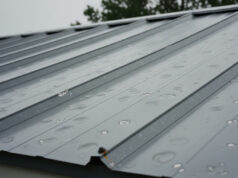
Carmen Ortiz lives in a 2,400-square-foot home in San Antonio with a dwelling coverage limit of $420,000. In April, a hailstorm dropped baseball-sized stones across her neighborhood for fifteen minutes. The roof inspector pulled a $58,000 estimate to replace the shingles, gutters, two skylights, and a section of fascia. Carmen called her insurer expecting to pay her $2,500 deductible. The adjuster opened her policy declarations and pointed to a separate line: Wind and Hail Deductible, 2 percent of dwelling coverage. Her out-of-pocket on the claim was $8,400, not $2,500. The standard deductible did not apply because hail damage triggered the wind and hail line.
Percentage deductibles for wind and hail damage are written into millions of homeowner policies in hail-prone and hurricane-prone states. Most homeowners learn about them only after a claim. The deductible can be three to five times the standard property deductible, and it applies separately every time wind or hail damages the home, even if the same home filed a claim six months earlier.
How percentage deductibles work
A standard homeowner deductible is a flat dollar amount the policyholder pays out of pocket before the insurer pays anything on a covered loss. Common standard deductibles run $1,000, $2,500, or $5,000. A percentage deductible is calculated as a percentage of a coverage limit, usually Coverage A (dwelling). Common percentage deductibles for wind and hail run 1, 2, 3, or 5 percent.
On a $400,000 dwelling limit, a 1 percent wind and hail deductible is $4,000. A 2 percent deductible is $8,000. A 5 percent deductible is $20,000. The deductible applies separately from the standard deductible: a claim caused by wind triggers the wind and hail deductible; a claim caused by a kitchen fire triggers the standard deductible. The policy does not blend the two.
A condominium unit owner faces a related but separate version of this math. The percentage deductible applies to the association’s own master policy, not the unit owner’s individual policy, and the board can bill that deductible back to every owner as a special assessment that a standard condo unit-owners policy’s built-in loss assessment coverage rarely covers in full.
Some policies calculate the percentage against total coverage (Coverage A plus Coverage B plus Coverage C) rather than dwelling alone. That calculation produces a larger deductible, often 25 to 40 percent higher. Read the declarations page to confirm which limit the percentage applies against.
on a 2% wind/hail deductible against a $400,000 dwelling limit
A standard flat $2,500 deductible would have been $5,500 less.
Some policies calculate this percentage against your dwelling plus other structures and contents, not dwelling alone — that can run 25–40% higher. Check your declarations page for which limit applies.
Where percentage deductibles apply
Hurricane and named-storm deductibles are mandatory in coastal counties of Texas, Louisiana, Mississippi, Alabama, Florida, Georgia, South Carolina, North Carolina, Virginia, Maryland, Delaware, New Jersey, New York, and Connecticut. Wind and hail deductibles without a named-storm trigger are common in Texas, Oklahoma, Kansas, Nebraska, Missouri, Arkansas, Iowa, the Dakotas, Colorado, and parts of Minnesota.
The trigger language matters. A hurricane deductible applies only when the National Weather Service has named a storm and the storm has reached a defined intensity, often a tropical storm threshold with sustained winds of 39 mph or higher. A windstorm deductible applies to any wind event. A hail deductible applies to any hail event. Some policies combine wind and hail into one trigger; others split them. A homeowner reviewing their declarations should look for both a Wind and a Hail line, and a Hurricane or Named Storm line if they sit in a coastal county.
Why the deductible structure exists
The percentage deductible structure exists because insurers price wind and hail risk separately from fire and liability risk. Catastrophe modelers expect a hurricane-belt home to file a wind claim every fifteen to twenty years on average, with average severity in the high four to low five figures. A flat $2,500 deductible across the entire policy would force the insurer to pay the bulk of those losses, and the percentage deductible structure shifts a portion of the catastrophic-frequency loss back to the homeowner.
The shift is not small. In a typical Texas neighborhood after a hail event, the average claim severity is $12,000 to $18,000. A 2 percent deductible on a $400,000 home covers $8,000 of that loss, leaving the insurer paying $4,000 to $10,000. The homeowner has paid the carrier roughly $1,800 to $2,400 a year in premium and writes a check for $8,000 on the claim.
How to find and adjust your wind and hail exposure
Three pieces of information resolve most of the surprise. First, the declarations page of the policy lists the deductible structure under a heading like Deductibles or Loss Settlement. Look for any line that reads Wind, Hail, Hurricane, or Named Storm with a percentage and a basis (dwelling or total coverage). Second, the policy specifies whether the percentage applies per occurrence (each separate storm triggers a new deductible) or per policy term (a single deductible for the policy year). Per occurrence is more common. Third, ask the agent whether a higher standard deductible could be paired with a lower wind and hail percentage. Carriers in coastal Texas and Florida will often write a 5 percent standard deductible alongside a 2 percent wind and hail line; raising the standard deductible can sometimes lower the wind and hail line by half a point.
A homeowner reviewing how to compare homeowner policies side by side should pull the declarations page of each quote and confirm the wind and hail line before binding. A separate review of whether the dwelling limit covers the cost to rebuild matters too, because the percentage deductible is calculated against the dwelling limit. An underinsured dwelling limit means a low deductible at claim time but a settlement that does not cover the actual rebuild cost.
Frequently Asked Questions
Does my wind and hail deductible reset for each storm? On most policies the deductible is per occurrence, meaning every separate wind or hail event triggers a new deductible. A homeowner with two hail claims in one policy year pays the deductible twice. Some policies write the wind and hail deductible as per policy term, applying once a year regardless of the number of events.
Can I have a wind and hail deductible without knowing it? Yes. The deductible structure is usually disclosed only in the policy declarations and the policy form. Many homeowners review the standard deductible at quote time and never see the wind and hail line until a claim. Pull the current declarations page and search for any percentage figure tied to wind, hail, hurricane, or named storm.
How do I lower a wind and hail deductible? Three options reduce exposure: raise the standard deductible in exchange for a lower wind and hail percentage, install hail-resistant roofing (Class 4 impact-rated shingles can qualify the home for a 10 to 25 percent premium credit and sometimes a lower wind and hail line), or move to a carrier that writes a flat dollar wind and hail deductible. Some non-admitted carriers offer this in Texas, usually at a higher overall premium.
Is the wind and hail deductible separate from my regular deductible? Yes. The two deductibles cover different perils. A fire claim triggers the standard deductible; a wind or hail claim triggers the percentage deductible. The policy does not credit one against the other.
What states require wind and hail percentage deductibles? No state requires the homeowner to accept a percentage deductible. Carriers in coastal counties of hurricane states and in the hail belt of Texas, Oklahoma, and the central plains often refuse to write a policy without one. Florida law allows the homeowner to opt out only in limited circumstances, usually requiring a signed acknowledgment.
Compare homeowner policies that disclose the wind and hail line. See quotes that show the full deductible structure before you sign a policy that could cost $8,000 at the next storm.