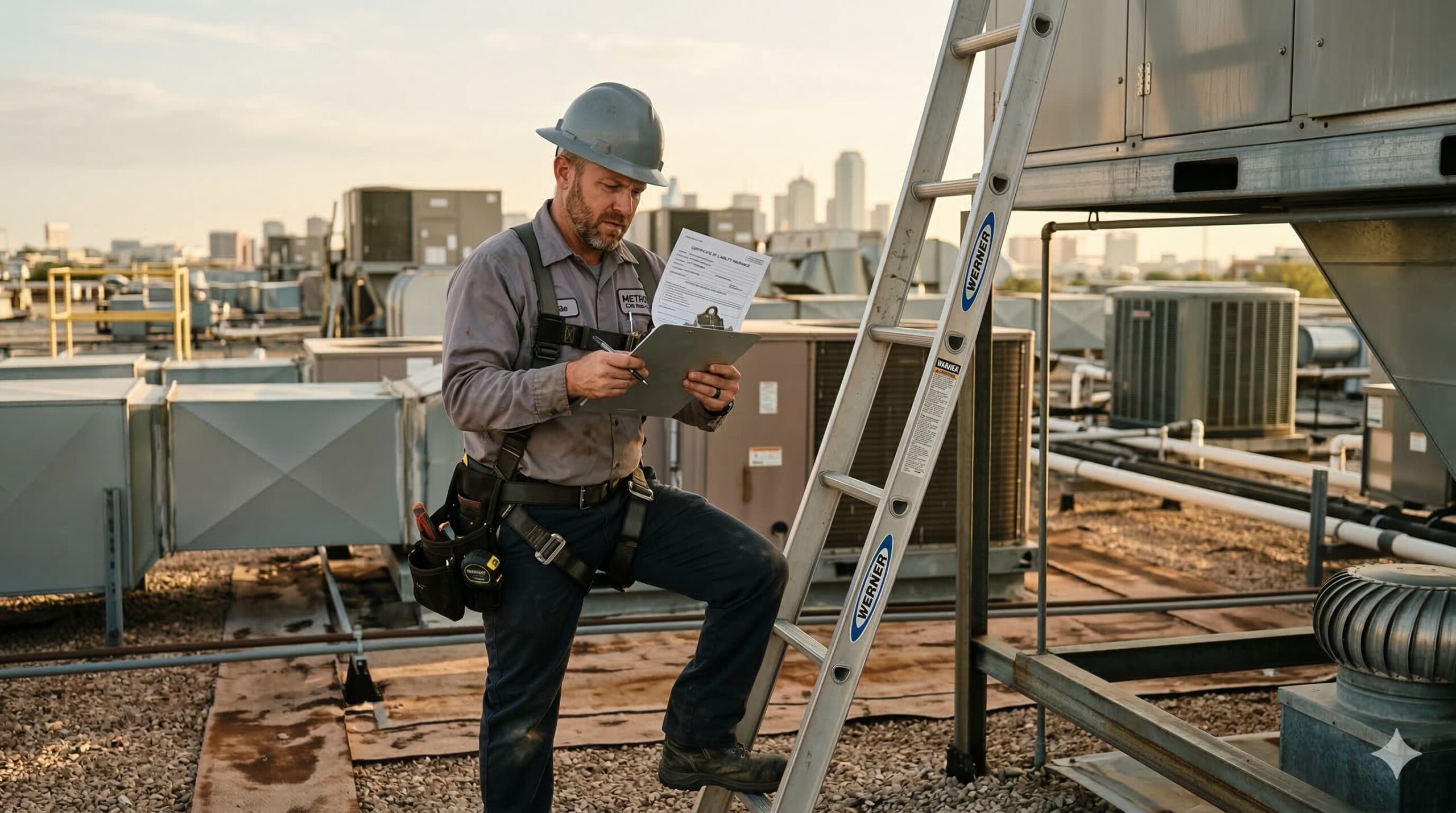
The sub you called to help on a three-day commercial install in November didn’t mention his workers’ comp had lapsed two months earlier, until he fell off a ladder and his attorney started calling your number.
You’d worked with him before. He handed you a certificate of insurance at the start of the season, just like always. You kept it on file, put him to work, and didn’t think twice. That’s the exact sequence of events that leaves small HVAC contractors holding the bag on claims they never saw coming.
Why This Keeps Happening
The HVAC business runs on relationships. You call the same subs every busy season because they show up, do good work, and don’t need hand-holding. That trust is an asset, but it’s also the reason most owners never verify whether a sub’s coverage is still active six months after he handed you that certificate.
A certificate of insurance is a point-in-time document. It confirms that a policy existed on the day it was issued. It says nothing about whether that policy is still in force when your sub climbs a ladder on your job. Policies lapse for plenty of reasons, a missed payment, a carrier non-renewal, a classification dispute, and most subs don’t call their general contractors to announce it.
At the same time, most states have what’s called the statutory employer doctrine, which creates a problem most HVAC owners don’t know exists. The rule works like this: when you hire a subcontractor to perform work that is core to your business, which, for an HVAC company, is essentially any HVAC work, and that sub doesn’t have valid workers’ comp coverage, the state can treat you as the employer of record for purposes of the injury claim. Your policy pays the claim. Your payroll audit reflects the sub’s wages at your highest employee classification rate. And your premium goes up accordingly at renewal.
The doctrine exists in all 50 states in some form, though the scope of liability, qualifying conditions, and immunity protections vary significantly by state, and is designed to prevent employers from shedding liability simply by classifying workers as independent contractors. It applies regardless of how you’ve structured your relationship with the sub, 1099, written agreement, or years of working together. If the sub’s policy isn’t in force, you’re on the hook. (Source: Saxe Doernberger & Vita, P.C. 50-State Workers’ Compensation Immunity Survey)
What Your Policy Actually Does With This
Most workers’ comp policies include something called uninsured subcontractor coverage, and it’s worth understanding how it works before a claim forces you to learn it the hard way.
When a sub without valid coverage is injured on your job, this provision kicks in, but it’s not a free pass. The claim is paid, but the cost flows back to you. At your annual audit, your carrier will ask you to document every subcontractor you used during the policy period. For any sub that can’t produce a valid, current certificate of insurance, their payroll is reclassified. The carrier runs those wages through your highest-risk employee classification, typically rooftop or commercial installation work, and bills you the difference in premium. Rating bureau rules require uninsured subcontractor payroll to be classified the same way it would be if that worker were your own employee. On a $60,000 sub engagement, that reclassification can add thousands of dollars to your audit bill.
Some carriers are also beginning to build certificate-tracking requirements directly into policy language, meaning a pattern of unverified subs can be used to contest coverage on future claims. It’s not widespread yet, but the direction the market is moving should get your attention.
What to Do Before the Next Sub Sets Foot on Your Job
The fix isn’t complicated, but it does require making it a process rather than a one-time effort. Three things need to happen before any sub starts work.
First, get a current certificate of insurance, not last season’s. The certificate should list workers’ comp and general liability, name your company as a certificate holder, and show policy expiration dates that cover the full duration of the project.
Second, verify the policy is actually active. Call the carrier listed on the certificate and confirm the policy number, the insured’s name, and the expiration date. This takes five minutes and is the only step that actually confirms coverage. Most owners skip it entirely.
Third, have a written subcontractor agreement in place that includes indemnification language, specifically, language that requires the sub to maintain workers’ comp coverage and hold your company harmless for injuries arising from their work. This doesn’t eliminate your statutory employer exposure in every state, but it gives you a legal argument and, in some cases, a path to recover costs if a claim lands on your policy.
Keep all of this documentation organized by job. If your carrier asks at audit time, you want to produce it in minutes, not spend a week hunting through emails.
Questions to Ask Your Insurance Agent
-
- Does my workers’ comp policy include uninsured subcontractor coverage, and what’s the sublimit?
- Am I required to report all subcontractors at audit, even those who carry their own coverage?
- Does my policy treat long-term subs differently from one-time help, and does payment method (1099 vs. check) affect how they’re classified?
- What documentation do I need to maintain for each sub to protect myself if a claim comes up at audit?
- Does my state’s statutory employer law impose any specific documentation requirements I should be aware of?
The relationship you have with your subs isn’t the problem. The paperwork gap is. A current certificate, a five-minute carrier confirmation call, and a simple written agreement are the difference between a manageable situation and a claim that doubles your premium. Make verification part of how every job starts, and you remove the risk before it ever has a chance to cost you.
Ready to review your workers’ comp coverage and make sure your subcontractor exposure is properly addressed?