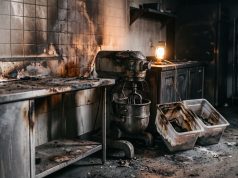
Mei Zhao, an East Asian baker who has run Honeycomb Bakery in San Diego for nine years, opened the back door at 6 a.m. on a Friday in July to a wall of warm air. The walk-in cooler had failed overnight. Her insurance adjuster told her the compressor’s motor had burned out from internal stress, and her commercial property policy would not cover the $7,400 repair, the $14,800 in spoiled inventory, or the three days of lost weekend revenue. Mechanical breakdown is excluded from standard property forms. She did not carry equipment breakdown coverage.
Equipment breakdown coverage is a separate policy or endorsement that pays for sudden mechanical, electrical, or pressure-related failure of business-critical machinery. It is not extended warranty coverage, and it is not what a general liability policy provides. The exclusion gap it fills sits in the same place where most small business owners assume they are already protected.
Why commercial property excludes mechanical breakdown
The standard ISO commercial property form (CP 10 30) excludes “mechanical breakdown, including rupture or bursting caused by centrifugal force.” That language appears in nearly every business policy in the United States. Property insurance is built to pay for damage caused by external perils: fire, wind, hail, vandalism, theft, water from burst pipes. When the failure originates inside the machine itself, the insurer treats it as a product defect or wear-and-tear issue, not a covered loss.
Walk-in coolers, HVAC systems, commercial ovens, dough mixers, computer servers, electrical panels, and boilers all contain motors, compressors, and circuits that can fail from internal stress without any external cause. When that happens, the property policy pays nothing.
What equipment breakdown coverage actually pays for
A typical equipment breakdown policy or endorsement covers:
– Direct damage to the equipment itself (repair or replacement of the failed unit) – Spoiled inventory or perishable goods caused by the breakdown, with refrigeration loss the most common claim – Business income loss during the repair period, often after a 24- to 72-hour waiting period – Expediting expenses to speed up repairs, including overnight shipping for parts and overtime labor – Service interruption when the failure originates at the utility provider rather than on your premises (some forms)
Hartford Steam Boiler, the largest equipment breakdown insurer in the United States, reports that refrigeration and HVAC failures account for the largest share of small-business claims, with average payouts in the low five figures. A bakery, restaurant, florist, or grocer that loses a walk-in cooler can absorb a full year of premium in a single claim.
The mechanical, electrical, and pressure perils
Three categories of failure trigger most claims. Mechanical breakdown covers motor burnout, gear failure, bearing collapse, and similar internal damage. Electrical breakdown covers short circuits, arcing, and damage from power surges that originate inside the equipment. Pressure system breakdown covers rupture of boilers, hot water heaters, and pressure vessels.
A power surge that travels in from the utility line and fries a server is typically a property policy claim. A short circuit inside the server that destroys the motherboard is typically an equipment breakdown claim. The cause matters more than the result.
What it costs to add
Most small businesses add equipment breakdown as an endorsement to a Business Owner’s Policy or stand-alone commercial property policy. The endorsement typically costs $150 to $500 per year for a small operation with under $1 million in equipment values, and limits scale with equipment value. Stand-alone equipment breakdown policies for larger operations or specialized machinery run $500 to $2,500 per year.
When you request a quote, the underwriter asks for the age, type, and replacement cost of major equipment. Older units in service longer than 15 years sometimes face limits or surcharges, but coverage is widely available. The endorsement is one of the cheapest meaningful additions a small business can make to its insurance program.
Who needs it
Any business that depends on machinery to operate should evaluate the gap. The clearest candidates are restaurants, bakeries, dry cleaners, manufacturers, medical practices with imaging or sterilization equipment, breweries, dental offices, refrigerated warehouses, and any business with a server room or commercial HVAC system over 10 years old.
The question to answer: if a single piece of equipment failed today and took three days to repair, what would the operating loss look like? If the answer involves spoiled inventory, missed payroll, or canceled jobs, the coverage gap is real. Reviewing the different types of business insurance available alongside the BOP helps frame where equipment breakdown sits in the broader program. The same mechanical-breakdown exclusion exists on the personal-lines side: a homeowner’s policy denies a failed compressor or water heater the same way, and the homeowners equipment breakdown endorsement fixes it with its own separate deductible and limit.
Frequently Asked Questions
Does my Business Owner’s Policy already include equipment breakdown coverage? Some BOP forms add limited equipment breakdown automatically, but most do not. Read the declarations page or ask your agent for the specific endorsement number. Limited automatic coverage often caps at $25,000 or $50,000, far below what a full claim costs.
Is equipment breakdown coverage the same as an extended warranty? No. A warranty covers manufacturer defects within the warranty period and pays the manufacturer or repair vendor. Equipment breakdown insurance covers sudden failure regardless of warranty status, pays the business owner, and includes consequential losses like spoiled inventory and lost income.
Will the policy pay if my equipment is old? Coverage typically does not depend on age, but the claim payment may be on an actual cash value basis rather than replacement cost for older units. Some policies offer a replacement cost endorsement for an additional premium.
What is excluded from equipment breakdown coverage? Wear and tear, gradual deterioration, defects in maintenance, corrosion, and damage that should have been prevented by routine service are generally excluded. Sudden failure from a covered cause is the trigger; gradual decline is not.
How long does it take to settle a claim? Most claims close in two to six weeks once the cause of failure is documented. Spoiled inventory and lost income components are usually paid quickly, while equipment repair or replacement costs follow once the work is complete and invoices are submitted.
Add equipment breakdown to your business insurance. Compare commercial policies that fill the mechanical and electrical breakdown gap.