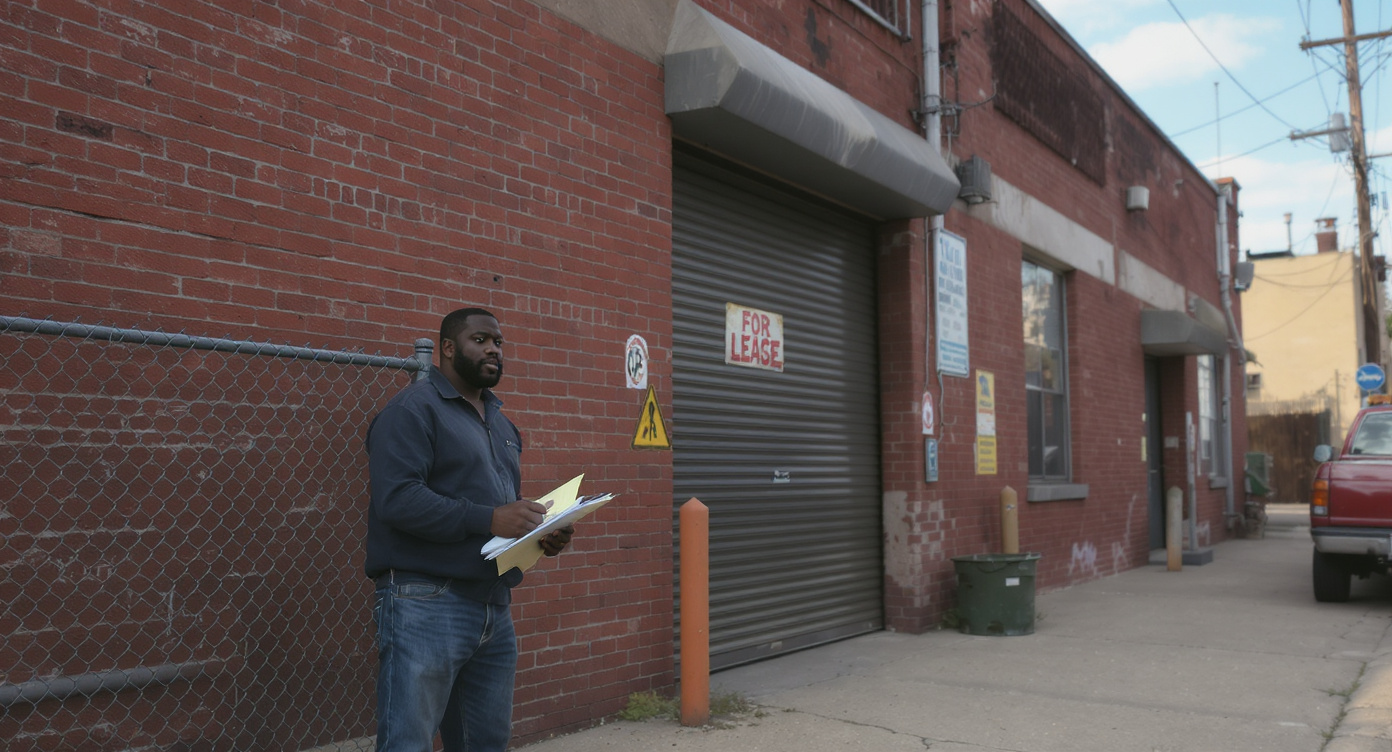
Marcus Thompson, a 52-year-old commercial property owner in Memphis, expected his insurer to cover the full $87,300 in water damage when a copper pipe burst at his Lamar Avenue warehouse last December. The carrier paid $14,200 and denied the rest. The reason wasn’t fraud or a missing endorsement. It was a calendar.
Marcus had listed the warehouse for lease in early September after his previous tenant moved out. By the time the pipe burst on December 8, the building had been empty for 91 days. His insurer applied the vacancy clause, paid a reduced amount on the partial water damage, and excluded the largest portion of the claim entirely. The mistake was not his policy. It was assuming the policy still functioned the same way once the building was unoccupied.
What the Vacancy Clause Actually Says
The vacancy clause sits in the Conditions section of most commercial property policies, including the standard ISO Building and Personal Property Coverage Form (CP 00 10). The clause does two things at once when a building has been vacant for more than 60 consecutive days before a loss.
First, it eliminates coverage entirely for six categories: vandalism, sprinkler leakage (unless the system has been protected against freezing), building glass breakage, water damage, theft, and attempted theft. Second, for losses outside those six categories, it reduces any payment by 15%.
That 15% reduction is not a deductible. It is a permanent cut from whatever the carrier would have otherwise paid. A $200,000 fire loss becomes a $170,000 payment. A $50,000 wind loss becomes $42,500. The owner absorbs the difference even after the deductible is satisfied.
What “Vacant” Means in Insurance Language
The trap is that “vacant” in policy language is not the same as “unoccupied.” A building can have furniture, equipment, inventory, and an active utility account and still meet the policy definition of vacant.
Under the ISO standard form, a building is vacant when it contains less than 31% of its total square footage being used by the owner or a lessee to conduct customary operations. A warehouse with stored pallets but no active business operations is vacant. A retail strip with two of seven units leased may or may not be vacant depending on how the math works out. A multi-tenant office building with one company holding a lease on 40% of the space is not vacant, even if half its floors are dark.
A 2022 report from the National Association of Insurance Commissioners noted that vacancy denials are among the most frequently disputed commercial property claim categories, in part because the policyholder and the adjuster usually disagree about the date the clock started.
The 60-Day Clock Starts Earlier Than Owners Think
The 60 days run continuously and immediately before the loss. The clock starts on the first full day the building meets the vacancy definition, not on the day the lease officially ends and not on the day the owner files a change-of-status notice.
If a tenant moves out on September 1 but the lease runs through September 30, the building is still considered occupied for the lease period only if the tenant is using the space for customary operations. An empty unit with a paid-up lease is generally still vacant for insurance purposes, because the policy language hinges on actual use, not contractual right.
Adjusters reconstruct the timeline using utility bills, security footage, mail records, and broker listing dates. A “For Lease” sign visible in Google Street View imagery from August can become evidence that a December claim falls inside the vacancy window.
Endorsements That Restore Coverage
The standard policy is not the only option. Three endorsement paths close the vacancy gap, and most owners learn about them only after a denied claim.
The first is a vacancy permit endorsement, which suspends the vacancy clause for a defined period, often 30 to 90 days, with the option to renew. It usually requires the owner to confirm the property is being actively monitored or marketed. Premium runs 10% to 25% of the unearned portion of the property premium for the permit period.
The second is a vacant building policy issued by a specialty carrier such as those reviewed by A.M. Best. These policies are written for buildings expected to stay empty for extended periods, with restored coverage for vandalism, water damage, and other excluded perils, and premiums that often run two to four times the standard policy rate.
The third path is a builder’s risk policy when the building is undergoing renovation. This is the appropriate form for a property that is empty because it is being rehabbed for re-leasing, since builder’s risk responds to physical loss during construction without applying the vacancy reductions. Coverage details and limits vary, but the structure replaces the standard property form entirely while work is in progress.
Frequently Asked Questions
How long can a commercial building sit empty before insurance reduces coverage? Under the standard ISO commercial property form, coverage is reduced by 15% and six categories of loss are excluded once a building has been vacant for 60 consecutive days immediately before a loss. The clock runs whether or not the owner notifies the insurer.
Does vacancy coverage reset if a new tenant signs a lease? Yes. The vacancy clock resets once a tenant resumes customary operations in at least 31% of the building’s square footage. Signing a lease alone does not reset the clock. The tenant must actually be using the space for business activities.
What is the difference between vacant and unoccupied for insurance purposes? Vacant means the building has less than 31% of its space being used for customary operations, regardless of whether furniture or equipment remains. Unoccupied means no one is physically present at the moment, which is common for retail closing hours or weekends. Unoccupied does not trigger the vacancy clause.
Can I buy a vacancy permit after my building has already been empty for 60 days? Some carriers will write a permit retroactively, but most will not. The standard approach is to buy the endorsement before or during the vacancy window. After 60 days, the typical alternative is to rewrite the policy as a vacant building policy with a specialty carrier.
Does a property manager visiting the building count as occupancy? No. Inspections and maintenance visits do not meet the threshold of customary operations. The building must be in use for the activities the policy contemplates, which is generally tenant business or owner business, not periodic checks.
Property sitting empty between tenants?
Vacancy permits and vacant building policies vary widely by carrier. Compare real options before the 60-day clock costs you a claim.
Compare Commercial Property QuotesFor deeper coverage mechanics, see the commercial property coinsurance penalty most owners learn about after a partial loss and the different types of business insurance every owner should know.
Marcus’s denied claim settled in February for the original $14,200 payment, with the remaining $73,100 absorbed personally. A vacancy permit endorsement quoted in September would have run roughly $480 for a 90-day window.