5 min read · Last updated May 22, 2026
In this article
- Why online sellers think they are covered
- What products-completed operations actually means
- Three places online-retailer BOPs carve out product liability
- What real product liability insurance costs and covers
- What to ask before buying a BOP through an online broker
- FAQ
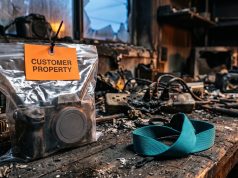
Mei Zhang, 34, runs a small artisan candle brand out of a converted garage studio outside Eugene, Oregon, shipping about 320 candles a month through Etsy and her own Shopify storefront. In November 2024, a customer in Houston lit one of her pillar candles on a kitchen counter near a hanging tea towel. The towel caught. By the time the homeowner pulled the smoke alarm and called 911, the upper cabinets and a slice of the ceiling were burning. The damage came to $87,400. The homeowner sued Mei’s LLC for product liability. Her business owner policy, which she had bought through an online broker for $61 a month, denied the claim. The products-completed operations section had been excluded by endorsement at her 2024 renewal, and she had never read the page that said so.
Why online sellers think they are covered
The business owner policy, or BOP, is marketed to small businesses as a one-stop bundle. It combines general liability, business personal property, and business income coverage in a single package, and the digital brokers that sell it lean heavily on the word “comprehensive.”
For a brick-and-mortar business, that bundle does cover the most common risk: a customer trips inside the shop, falls, and sues. That is premises liability, and standard BOPs handle it. The risk for an online seller is different. There is no shop. Almost no one ever sets foot on the seller’s premises. The exposure that matters is what happens after a product ships, which is a separate coverage area called products-completed operations.
The marketing language rarely makes that distinction clear. Sellers assume the BOP they bought for their LLC covers what their LLC actually does, which is sell physical goods to strangers. Reading the declarations page is the only way to confirm whether it does.
What products-completed operations actually means
The Insurance Services Office commercial general liability form defines products-completed operations as bodily injury or property damage that occurs away from the named insured’s premises and arises out of a product the insured sold or distributed. For an e-commerce seller, every single sale generates this exposure, because the product is by definition away from the seller’s premises by the time the buyer uses it.
The ISO form includes products-completed operations as part of the base general liability coverage. Carriers then frequently attach an endorsement, often filed under form CG 21 04 or a carrier-specific equivalent, that excludes products-completed operations entirely. When a digital broker offers to trim a renewal premium by $30 or $40 a month, this is typically the section that goes. The seller sees a lower monthly bill and does not see the endorsement that quietly removed the most relevant coverage.
Three places online-retailer BOPs carve out product liability
In 2023 and 2024, the National Association of Insurance Commissioners flagged a sharp rise in coverage disputes filed by small online sellers whose claims were denied for one of three reasons:
- A products-completed operations exclusion endorsement attached to the base policy.
- An online sales exclusion, often filed as CG 21 06 or a proprietary carrier form, that excludes any claim arising from a product sold over the internet.
- A bodily injury exclusion specific to products sold or delivered outside of a brick-and-mortar storefront, which targets fulfillment-by-Amazon and dropship sellers in particular.
Industry surveys estimate that roughly 35 percent of online seller policies sold through digital broker portals in those two years contained at least one of these three exclusions in the renewal version of the policy, even when the original new-business policy did not.
What real product liability insurance costs and covers
For a small e-commerce seller with annual revenue under $250,000, a standalone product liability policy with a $1 million aggregate limit typically costs $400 to $1,200 per year. Categories that carriers underwrite as higher risk, including candles, supplements, cosmetics, electronics that heat, and any product intended for use on or in the body, fall toward the top of that range. Restoring products-completed operations to an existing BOP, where the carrier is willing to write it, usually adds $25 to $60 per month.
The coverage funds three things that matter in a lawsuit: the legal defense costs that begin the day a complaint is filed, any settlement the parties negotiate, and any judgment a court enters if the case goes to trial. Defense costs alone often run $30,000 to $90,000 in a contested case, before any settlement number is on the table.
What to ask before buying a BOP through an online broker
Before signing a renewal or accepting a quote on a digital broker portal, get written answers to four questions:

- Is products-completed operations included in the base limit, or excluded by endorsement?
- Are online sales explicitly named as a covered operation on the declarations page?
- Is there a sublimit for product liability that is lower than the BOP’s general aggregate?
- Is there a category exclusion for any specific product the business sells?
A broker who cannot answer those four questions in writing is the wrong broker for an e-commerce business. Specialty commercial brokers who write a meaningful share of their book in e-commerce can typically restore the coverage for an additional $30 to $70 a month, which is the difference between a covered claim and a personal bankruptcy filing in a case like Mei’s.
For broader context on how the small business coverage stack fits together, the breakdown of different types of business insurance walks through which policies cover which risks. The distinction between premises liability and product liability mirrors the professional liability vs general liability split, and product-data breaches that lead to a recall often add a cyber liability consideration on top.
For Mei, the path forward was buying a standalone product liability policy at the next renewal for $740 a year. The $87,400 settlement from the Houston suit she paid through personal savings, a loan from a relative, and a structured payment plan with the plaintiff’s lawyer. Her brand survived. Most e-commerce sellers in her situation do not.
Selling online? Get a real product liability quote.
Standalone product liability policies for small e-commerce sellers run about $400 to $1,200 per year and cover legal defense, settlements, and judgments.
Compare Commercial CoverageFAQ
Does Etsy or Shopify seller protection cover product liability lawsuits? No. Etsy’s Purchase Protection program reimburses buyers for damaged or undelivered orders, and Shopify Shipping Protection covers shipping incidents. Neither addresses third-party bodily injury or property damage caused by a product after delivery, which is the heart of a product liability claim. Sellers need their own policy for that exposure.
How much does product liability insurance cost for a small e-commerce seller? A standalone $1 million aggregate product liability policy runs $400 to $1,200 per year for a small online seller with annual revenue under $250,000. Categories that carriers consider higher risk, including candles, supplements, cosmetics, and electronics, sit toward the upper end of that range. Restoring products-completed operations into an existing BOP usually adds $25 to $60 per month.
Does my general liability policy cover product claims? Only if the products-completed operations endorsement is included and online sales are not separately excluded. Many BOPs sold through digital brokers carve out one or both. Check the declarations page for a products-completed operations limit. If the limit shows $0 or the section is marked excluded by endorsement, the policy does not cover a customer injury claim arising from a product.
Am I personally liable if my LLC has no product liability coverage? The LLC structure shields personal assets from most business creditors, but courts can pierce the corporate veil when a business carried no insurance for a foreseeable risk, which product liability often is for an e-commerce seller. Some plaintiff lawyers also name the owner personally as a co-defendant. An LLC is not a substitute for product liability coverage.