5 min read · Last updated May 28, 2026
In this article
- The endorsement that quietly flips the switch
- How the depreciation math collapses your payout
- Which carriers force the cutover and at what age
- What to do before renewal and after a loss
- FAQ
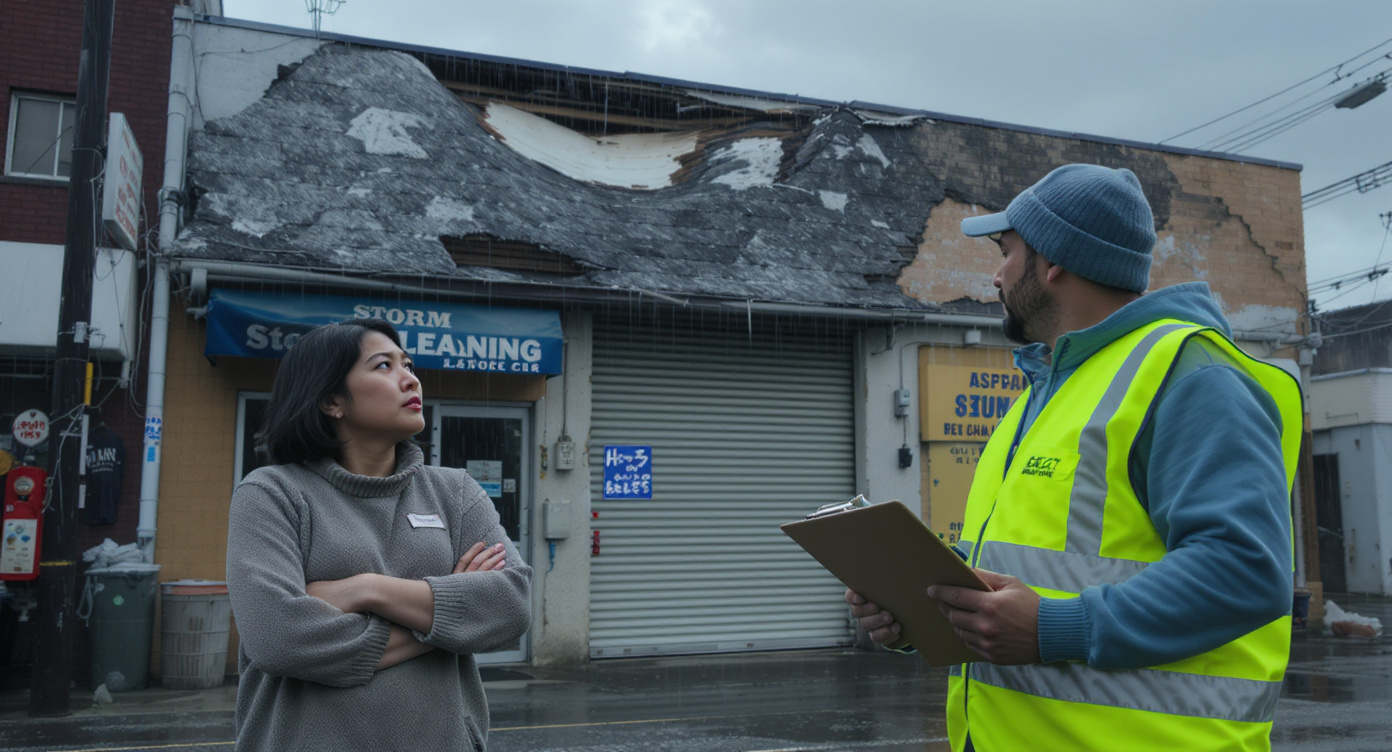
Linda Park, who has owned a dry-cleaning shop in suburban Chicago for 22 years, filed a $90,000 hail damage claim on her 17-year-old commercial roof in April. The adjuster’s check arrived three weeks later for $42,000. Her declarations page still listed replacement cost coverage. What she had not read was the roof-surfacing endorsement on page 12 that pushed any roof past 15 years to actual cash value at the time of loss. The $48,000 shortfall came out of a line of credit she had been holding for inventory.
The endorsement that quietly flips the switch
Commercial property policies use a base coverage form, most often ISO CP 00 10 or a carrier-proprietary equivalent, and a stack of endorsements that modify it. The base form typically pays losses on a replacement cost basis if the owner has selected RCV coverage on the dec page. The endorsement most owners miss is one of three forms with different names: roof-surfacing endorsement, roof age limitation endorsement, or condition-based valuation endorsement.
Each works the same way. It carves out the roof from the broader RCV coverage and routes it through a depreciation schedule keyed to the roof’s age, material, or pre-loss condition. The endorsement is not always required at policy issuance. Some carriers add it at the first renewal after the roof crosses an age threshold without flagging the change at the top of the renewal documents.
How the depreciation math collapses your payout
ACV settlement works two ways. The carrier may apply straight-line depreciation over a useful-life schedule (often 20 to 25 years for asphalt shingle, 30 to 40 years for metal, 20 years for TPO membrane) or use a condition-based approach where the adjuster’s inspection rates the roof on a 1 to 5 scale and deducts a percentage tied to that rating.
For Linda Park’s 17-year-old asphalt roof against a 20-year useful life, straight-line gives a 15 percent residual: a $90,000 replacement turns into $13,500. Her carrier used a less punishing blended method that left her closer to 47 percent of replacement, hence the $42,000 figure. Either way, the gap between the RCV she thought she had and the ACV she received was the difference between a normal recovery and a forced loan.
Which carriers force the cutover and at what age
The thresholds vary by carrier and by region. Hail-belt states (Texas, Oklahoma, Kansas, Nebraska, Colorado, the Dakotas) see the most aggressive endorsements because carrier loss ratios on commercial roofs in those states have run above 100 percent in recent hail seasons. National carriers’ commercial property forms commonly trigger the ACV switch at 15 years for asphalt shingle, 20 to 25 years for TPO and EPDM membrane, and 25 to 30 years for metal. Wood shake and slate carry their own schedules. A few regional carriers in hail states have moved the asphalt trigger to 10 years.
The exact wording varies. Some endorsements use the word “roof” without distinguishing surfacing from structure, which can pull the decking, insulation, and flashing into ACV settlement as well. Others are scoped narrowly to surfacing materials only. Read the endorsement, not the summary.
What to do before renewal and after a loss
Before renewal, pull every endorsement listed on the dec page and verify the roof-age provisions. If the endorsement exists and the roof is over 12 years old, get a current roof condition report from a licensed contractor and price out either a buy-back endorsement that restores RCV coverage on the roof (typically 10 to 20 percent of base property premium) or a roof replacement before the next storm. The math often favors buy-back on a roof with three to five years of useful life left and replacement on a roof past 15 years in a hail state. Cross-check your full property limits against the coinsurance threshold at the same time to avoid stacking penalties.
After a loss, if the dec page says RCV but the adjuster cites ACV, ask in writing for the specific endorsement form number that triggers the depreciation. Compare it against your declarations and renewal letters to verify it was disclosed. Carriers that add an ACV endorsement without proper notice can be challenged through the state insurance department. Pair the file with photos of the pre-loss roof condition, the most recent maintenance invoice, and any contractor inspection reports. Coverage disputes on roof claims hinge heavily on what was documented before the storm. If you are not sure your policy still matches your building, the steps in our guide on how to review business insurance coverage walk through the renewal-window audit. Vacancy carve-outs work the same way and often void coverage entirely on commercial property.
Compare commercial property quotes that disclose roof-age provisions up front.

See which carriers still write RCV on older roofs and how the buy-back endorsement is priced for your building.
Get business insurance quotesFAQ
What is the difference between RCV and ACV on a commercial property policy? Replacement cost value (RCV) pays the cost to rebuild or replace the damaged property with materials of like kind and quality at today’s prices, without deducting for age or wear. Actual cash value (ACV) pays RCV minus depreciation, per the International Risk Management Institute, which is calculated either on a straight-line useful-life schedule or a condition-based inspection scale. The same loss can settle for very different amounts depending on which method applies.
At what age do carriers usually switch a commercial roof from RCV to ACV? Asphalt shingle: 15 years is the most common trigger, with some regional carriers moving it to 10 years in hail states. TPO and EPDM membrane: 20 to 25 years. Metal: 25 to 30 years. Wood shake and slate roofs use their own schedules. The exact age lives in the endorsement form, not the dec page.
Can I buy back replacement cost coverage on an older commercial roof? Many carriers offer a buy-back endorsement that restores RCV on a roof past the age threshold, typically priced at 10 to 20 percent of base property premium. Eligibility usually requires a current roof inspection report and no open claims on the building. The buy-back is worth pricing against the cost of a full roof replacement if the roof still has useful life remaining.
Does the depreciation calculation use the original roof cost or the current rebuild cost? Most ACV settlements depreciate the current replacement cost figure rather than the historical cost. The adjuster prices today’s replacement, then applies the depreciation percentage. Inflation in roofing materials over the past three years has widened the gap between RCV and ACV payouts on the same claim.
What should I document before filing a roof claim on a commercial policy? Pre-loss roof condition photos, the most recent maintenance and inspection invoices, and any contractor reports from the last five years. After the storm, take immediate post-loss photos before any temporary repairs, preserve all damaged materials for the adjuster’s inspection, and request the specific endorsement form number that controls the settlement method in writing.