10 min read · Last updated June 04, 2026
In this article
- What dwelling coverage actually pays
- Extended replacement cost: the 25, 50, 100 percent buffer
- Guaranteed replacement cost: no cap, with conditions
- The replacement-cost-valuation trap
- Which endorsement to ask for and what it costs
- FAQ
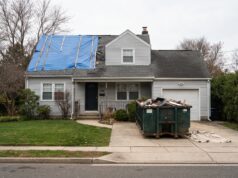
The Patel family lost their five-bedroom home to a kitchen-fire blaze in February. Their policy carried $480,000 in dwelling coverage, which had been the appraised replacement cost when they bought the home in 2021. The 2026 rebuild estimate, after lumber price increases, electrical-code upgrades, and a regional shortage of qualified contractors, came back at $672,000. The carrier paid the $480,000 dwelling limit, the $96,000 ordinance and law coverage that was attached as a separate endorsement, and the additional living expenses during the rebuild. The remaining $96,000 of the rebuild cost came from the family’s savings and a home equity loan against the lot value. Their policy did not include an extended replacement cost endorsement. The contractor shortage that inflated their rebuild estimate also stretched the timeline past a year, and most ALE coverage stops paying for temporary housing on a 12-month clock regardless of whether the rebuild is finished, which added a second gap on top of the dwelling shortfall.
What dwelling coverage actually pays
The dwelling coverage limit, also called Coverage A on most homeowner policies, is the maximum the carrier will pay to repair or rebuild the home’s primary structure after a covered loss, using the replacement cost method rather than market value. It does not include the land, the foundation in most policies, separate structures like detached garages (those go under Coverage B), or personal property (Coverage C).
The limit is set at policy inception based on a replacement cost estimator the carrier or agent runs. The estimator considers square footage, construction quality, age, regional labor and material costs, and any custom features. A typical 2,400-square-foot single-family home in a Midwest metro might come in at $380,000 to $480,000 of replacement cost. The carrier then writes the policy with the dwelling limit at, or sometimes just above, that figure.
The problem is the limit does not automatically keep pace with rising construction costs. Annual inflation-guard endorsements adjust the limit 2 to 4 percent a year on most policies, which has tracked historical construction inflation but failed badly during the 2021 to 2024 period when residential construction costs rose 30 to 45 percent in many regions. A policy written in 2021 at $400,000 with a 3 percent inflation guard would be at roughly $463,000 today. The actual 2026 rebuild cost on that same home might be $560,000 or more. The gap is the homeowner’s responsibility unless an endorsement closes it.
Extended replacement cost: the 25, 50, 100 percent buffer
Extended replacement cost (ERC) is the most common solution. The endorsement adds a fixed percentage buffer above the dwelling limit that the carrier will pay if the actual rebuild cost exceeds Coverage A.
The common buffer tiers carriers offer:
- 25 percent ERC. On a $500,000 dwelling limit, the carrier will pay up to $625,000 toward the rebuild. Available on most standard carriers including State Farm, Farmers, Liberty Mutual, Travelers, and Nationwide.
- 50 percent ERC. On a $500,000 dwelling limit, the carrier will pay up to $750,000. Available on Allstate, USAA, and many regional carriers. Sometimes called “expanded replacement cost” in product names.
- 100 percent ERC. On a $500,000 dwelling limit, the carrier will pay up to $1,000,000. Available on a smaller list of carriers, primarily Erie and some Berkshire Hathaway products. Often marketed as “replacement cost plus” or similar product names.
The endorsement typically adds 3 to 8 percent to base homeowners premium for 25 percent ERC, and 7 to 15 percent for 50 percent ERC. The 100 percent ERC tier prices closer to 12 to 20 percent above base premium and is sometimes restricted to homes that meet underwriting criteria around age, roof condition, and prior claims.
In plain language: ERC is a fixed-percentage safety buffer. It does not eliminate the risk that rebuild costs run over the dwelling limit, but it absorbs typical post-loss cost inflation and the underestimation built into most replacement cost estimators at inception.
Guaranteed replacement cost: no cap, with conditions
Guaranteed replacement cost (GRC) goes further. The endorsement removes the percentage cap entirely and obligates the carrier to pay whatever the actual rebuild costs, even if that figure exceeds Coverage A by 200 or 300 percent.
GRC is offered by a much smaller list of carriers. The primary US carriers offering true GRC on homeowners products in 2026 include:
- Chubb. Standard on its Masterpiece homeowners product for homes meeting underwriting criteria, typically homes valued above $750,000.
- AIG Private Client Group. Offered on the Private Client Select product for high-net-worth homeowners.
- Cincinnati Insurance. Offered on its Executive Homeowners product, available through independent agents in most states.
- Auto-Owners. Offered as an optional endorsement in selected states.
Conditions attached to GRC are stricter than ERC. Most GRC policies require the home to be insured to 100 percent of an updated replacement cost estimator at every renewal. Some require the homeowner to notify the carrier of any structural changes that affect replacement cost, including additions and major remodels. Failure to meet these conditions can downgrade the policy to extended replacement cost or to a strict Coverage A limit at the time of loss.
GRC premium runs 15 to 30 percent above base homeowners premium on most carriers, and the underwriting criteria can exclude homes in wildfire zones, high-coastal-exposure zones, or homes more than 75 years old without a recent rebuild.
| Factor | Extended Replacement Cost (ERC) | Guaranteed Replacement Cost (GRC) |
|---|---|---|
| Percentage cap above dwelling limit | Fixed buffer: 25%, 50%, or 100% | No cap; pays actual rebuild cost in full |
| Carrier availability | Most standard and preferred carriers (State Farm, Allstate, USAA, Farmers, Travelers, Liberty Mutual, Nationwide) | Limited list: Chubb, AIG Private Client, Cincinnati, Auto-Owners (select states) |
| Premium impact | 3% to 20% above base homeowners premium, depending on buffer tier | 15% to 30% above base homeowners premium |
| Underwriting conditions | Modest: dwelling limit set to 100% replacement cost at inception | Strict: annual replacement-cost updates required, exclusions for wildfire zones, high-coastal exposure, and homes 75+ years old without recent rebuild |
| Best for | Most homeowners on standard carriers, especially those in stable construction-cost regions | High-value homes, custom construction, or homes where rebuild cost overruns above 50% are plausible |
The replacement-cost-valuation trap
Both ERC and GRC depend on the dwelling limit being set at 100 percent of replacement cost at policy inception. If the limit was set too low, neither endorsement responds correctly.
Here is the trap: an underinsured dwelling limit does not just reduce the maximum payout. On most policies it also triggers a coinsurance penalty that reduces the loss settlement by the percentage by which the home was underinsured. An ERC endorsement attached to an underinsured policy still applies its percentage buffer, but the buffer is calculated against the reduced settlement, not the actual rebuild cost.
The fix is annual replacement cost reviews with the agent or carrier. A 360-photo walk-through, an updated square footage measurement, and a current contractor estimate for the local market are the three inputs most replacement cost estimators rely on. Most carriers will perform this review at no cost if the homeowner requests it.
The “hand on the shoulder” framing: if the dwelling limit has not been reviewed in three or more years, request a replacement cost valuation update from the agent before the next renewal. Construction cost data has shifted enough since 2021 that most policies written before that year are now meaningfully underinsured.

Which endorsement to ask for and what it costs
Three specific questions for an agent or broker at the next renewal:
1. Is an extended replacement cost endorsement on my policy right now? At what percentage? Most policies do not include ERC by default. Adding 25 percent ERC is a routine endorsement on most standard carriers. 2. Does my carrier offer 50 percent or 100 percent ERC, and what does the upgrade cost? A 25 percent buffer is the floor. For homes in high-rebuild-cost regions or homes with custom finishes, 50 or 100 percent is closer to the right level. 3. Is guaranteed replacement cost available to me, and what are the conditions? Most homeowners will not qualify for GRC, but high-value homes and homes in stable underwriting zones often do.
These three questions take 10 minutes during the renewal review. They prevent the post-loss conversation that the Patels had with their contractor: “the carrier paid the limit, and the rebuild costs $96,000 more, and we need to figure out how to fund that this month.” Reading the policy declarations page and the endorsement schedule before the next renewal is the lowest-cost way to find this gap.
FAQ
What is the difference between replacement cost and actual cash value?
Replacement cost pays the cost to rebuild or replace damaged property with new materials of like kind and quality, with no deduction for depreciation. Actual cash value pays the replacement cost minus depreciation, which can reduce a roof or appliance settlement by 50 percent or more. Most modern homeowners policies are written on a replacement cost basis for the dwelling, but always confirm on the declarations page.
Is extended replacement cost the same as guaranteed replacement cost?
No. Extended replacement cost adds a fixed percentage buffer above the dwelling limit, typically 25, 50, or 100 percent. Guaranteed replacement cost has no percentage cap and pays whatever the actual rebuild costs. GRC is rarer, more expensive, and carries stricter underwriting conditions.
Does the inflation guard endorsement do the same thing?
No. The inflation guard endorsement automatically increases the dwelling limit by a fixed percentage each year, typically 2 to 4 percent. It is a slow drift, not a buffer against a single rebuild event. When construction costs rise faster than the inflation guard percentage, the limit falls behind real replacement cost, and the homeowner needs ERC or GRC to close the gap.
If my home is underinsured, will the endorsement still protect me?
Partially. Both ERC and GRC require the dwelling limit to be set at 100 percent of replacement cost at policy inception. If the limit is too low, the carrier may apply a coinsurance penalty that reduces the loss settlement, and the endorsement’s percentage buffer applies to the reduced figure, not the actual rebuild cost.
Which carriers offer guaranteed replacement cost in 2026?
The primary US carriers offering true guaranteed replacement cost on homeowners products in 2026 include Chubb, AIG Private Client Group, Cincinnati Insurance, and Auto-Owners in selected states. Availability and underwriting criteria vary by state, home value, and risk factors.
Compare homeowners quotes with extended replacement cost built in
Not every carrier prices the same ERC tier the same way. See side-by-side quotes that show the buffer percentage, the dwelling limit, and the total premium for each carrier.
Compare Homeowners Quotes →