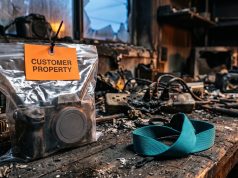
When the fire marshal cleared Marcus out of his restaurant after the grease fire, the rebuild estimate came in at $340,000, and his business owner’s policy paid $210,000, because he had never updated his limits after his second kitchen expansion.
Marcus had done everything right when he first opened. He bought a Business Owner’s Policy, covered his building and equipment, and paid his premiums without missing a year. He just never told his insurer the business had grown. Three years after the original policy was issued, he had added a walk-in cooler, replaced his primary commercial range, and built out a second kitchen prep area. His premium went up modestly at each renewal, which he assumed meant his insurer was adjusting his coverage accordingly. It wasn’t. When the grease fire destroyed the new expansion, the policy paid the limits set in year one. The $130,000 shortfall came out of his savings and a second business loan.
Your insurer covers the business you described to them. That may be three years of growth ago. Your limits don’t update themselves.
Why Businesses End Up Underinsured
The most common reason small businesses end up underinsured is not neglect. It’s a reasonable but wrong assumption. Most business owners equate a premium increase at renewal with a coverage update. In reality, BOP renewals reflect market-wide rate adjustments, claims experience in your industry, and underwriting changes at the insurer level. They do not reflect the commercial oven you installed last October, the two employees you hired in the spring, or the storage addition you built onto the back of your building.
Your insurer doesn’t do a physical inspection of your business at renewal. They’re pricing based on the information on file from your original application, plus whatever changes you’ve explicitly reported. If you’ve never called your broker to update your policy, the coverage from your first year is almost certainly what you’re still carrying today.
There’s also the coinsurance clause problem, which most business owners have never encountered. Many commercial property policies include a provision that requires you to insure your building and equipment to at least 80% of their actual replacement value at the time of a loss. If you’re below that threshold, your payout is reduced proportionally, even on a partial loss. A business that has grown significantly since the policy was written can fail this test without ever knowing it was being measured.
Step 1: Inventory Your Physical Assets
Pull your current BOP declarations page and find the limits for business personal property and building coverage. Then walk through your space and write down what it would actually cost to replace each item today, not its depreciated value. Do this for every major asset.
Commercial kitchen equipment, point-of-sale systems, specialized tools, furniture, display cases, signage, and leasehold improvements all belong on that list. Leasehold improvements are easy to forget because you don’t own the building, but the money you spent finishing out a leased space is your asset and your loss if it’s destroyed. If the total replacement cost of your physical assets exceeds your current policy limit by more than 20%, you’re exposed.
One category that business owners almost always undercount is inventory. If your inventory fluctuates seasonally, the coverage limit should reflect your peak inventory value, not your average. A retailer who carries $80,000 in holiday merchandise in November but only $20,000 in January needs a limit that protects the high-water mark.
Step 2: Check Your Business Income Coverage
Business income (also called business interruption) coverage pays your operating expenses and replaces lost revenue while your business is unable to operate after a covered loss, according to the Insurance Information Institute. Most BOPs include it as a standard component, but the coverage period defaults to 12 months.
The problem is that serious losses don’t always resolve in 12 months. A restaurant fire that requires structural permits, contractor scheduling, and health department reinspections can take 18 to 24 months to return to full operation. A manufacturing facility with specialized equipment on backorder can be down even longer. For a deeper look at how this coverage works and what it actually pays, see <a href=”https://dailyinsurance.news/business-interruption-insurance-guide”>Business Interruption Insurance: A Complete Guide</a>.
Calculate your actual monthly operating expenses: rent, payroll, utilities, insurance, loan payments, and any fixed vendor contracts. Multiply that number by the most realistic recovery window for your type of business. Then compare it to what your current policy would actually pay over the coverage period. If the math doesn’t work, that shortfall is your personal financial exposure.
If your recovery takes 18 months and your policy covers only 12, the six-month gap comes out of your pocket while your business is still dark.
Step 3: Match Your Liability Limits to Your Current Exposure
The general liability limit you set when you started your business reflected your exposure at that time. If you’ve grown since then, the exposure has grown with you.
A solo consultant who started with $300,000 in general liability coverage was probably adequately covered for the risks of one person working on client sites. A 10-person landscaping company with three crews, daily work at residential and commercial properties, and a physical office faces a fundamentally different risk profile. More employees mean more opportunities for third-party injury claims. Higher revenue makes you a more attractive litigation target. A physical location open to the public adds premises liability exposure that didn’t exist when you first bought the policy.
This is also the moment to revisit whether a BOP still makes sense, or whether your business has grown to the point where a commercial package policy gives you more precisely structured protection. If you’re unsure how much coverage your business actually needs, <a href=”https://dailyinsurance.news/how-much-business-insurance-coverage-do-you-really-need”>How Much Business Insurance Coverage Do You Really Need</a> walks through the variables. Most businesses that have operated for three or more years without a policy review have already outgrown their current policy.
Questions to Ask Your Broker Before Your Next Renewal
- Has my building coverage been updated to reflect any renovations, additions, or significant equipment purchases since the policy was first written?
- Does my policy include a coinsurance clause, and if so, am I currently meeting the required coverage threshold?
- What is the business income coverage period on my current policy, and does it match the realistic recovery window for my type of business?
- Are my general liability limits still appropriate for my current number of employees and annual revenue?
- Are there coverage gaps specific to my industry that my BOP doesn’t address: professional liability, cyber, equipment breakdown, or hired and non-owned auto?
A coverage audit takes less than two hours with a broker who knows your business. The alternative is finding the gaps after a loss, which is the worst possible time to negotiate.
Does your policy still match the business you’re running today?
Marcus’s rebuild cost $340,000. His policy covered $210,000. The difference came from limits he set three years earlier and never updated.