6 min read · Last updated July 13, 2026
- Renters insurance covers named perils like fire and theft, not a mover dropping your television, so most moving-day damage is not a covered claim.
- Interstate movers default to Released Value Protection, which caps their liability at just 60 cents per pound per item unless you choose otherwise.
- A 30-pound TV worth $1,900 is worth $18 under released value. Weight, not value, decides the payout.
- Full Value Protection is the automatic option under federal rules unless you sign away your rights, so the fix is often free or cheap.
In this article
- What your renters policy covers during a move, and what it doesn’t
- The 60-cents-a-pound trap
- Released value versus full value protection
- How to close the gap before moving day
- Frequently asked questions
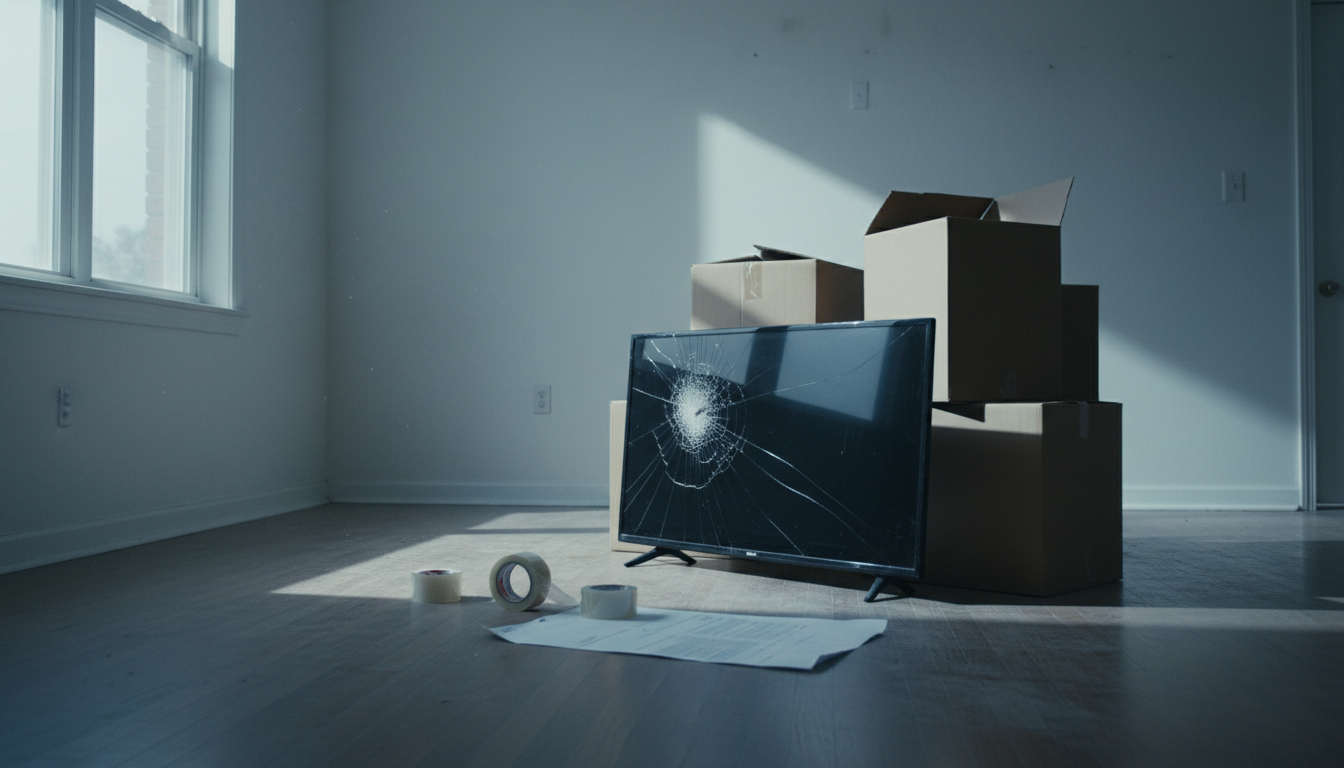
Dana Ruiz moved apartments in June and hired a licensed interstate mover. On delivery day, one of the crew set her 55-inch television down hard on a concrete step and the screen cracked. The TV had cost her $1,900. She filed a claim on her renters insurance, sure that was what the policy was for. It was denied. Then the moving company offered its settlement: $18. The TV weighed 30 pounds, and the mover was liable for 60 cents a pound. Dana had unknowingly agreed to that limit when she signed the paperwork.
What your renters policy covers during a move, and what it doesn’t
Renters insurance is not general damage insurance. It pays when a specific list of perils damages your property: fire, theft, windstorm, vandalism, water discharge from plumbing, and a handful of others. Your belongings are covered away from home too, which is why the policy follows you during a move. But the peril still has to be on the list. A mover dropping a box, a dolly tipping over, or a scratch from careless handling is not a covered peril. It is ordinary breakage caused by someone else’s negligence, and renters insurance does not cover that.
If the moving truck caught fire or was broken into, that would be different. Fire and theft are covered perils, and your policy would respond, though it would pay actual cash value or replacement cost depending on your policy type. Everyday handling damage, which is the most common thing that goes wrong on a move, is simply not an insured event.
The 60-cents-a-pound trap
That throws the loss onto the moving company, and here federal rules control what the mover owes. Every interstate mover must offer two liability options. The cheap one is Released Value Protection. It costs you nothing, and in exchange the mover is liable for no more than 60 cents per pound per article.
Notice what that formula ignores: value. It pays by weight. Your heavy, cheap items are overpaid and your light, expensive items are barely paid at all. Here is how that looks across a typical apartment load:
| Item | Weight | Released value payout (60 cents/lb) | Cost to replace |
|---|---|---|---|
| 55-inch television | 30 lbs | $18.00 | $1,900 |
| Laptop | 4 lbs | $2.40 | $1,300 |
| Sofa | 120 lbs | $72.00 | $1,400 |
| Box of dishware | 40 lbs | $24.00 | $600 |
| Totals | 194 lbs | $116.40 | $5,200 |
Released value versus full value protection
The second option is Full Value Protection. Under it, the mover is liable for the repair or replacement value of whatever it loses or damages. It costs extra, and the price varies by how much you declare, but it is the difference between the mover owing $18 for Dana’s TV and owing $1,900.
The rule that most people miss works in the renter’s favor. Under federal rules, Full Value Protection is the automatic default on an interstate move. You get the weaker released-value limit only if you sign a specific statement on the bill of lading choosing it. Dana lost $1,882 of value because of one signature she did not understand.
How to close the gap before moving day
Do three things before the truck arrives. First, do not sign away Full Value Protection unless you have read exactly what it changes. If a form asks you to accept 60 cents per pound, that is the released-value waiver. Second, list high-value items in writing. Movers can limit liability on items worth more than $100 per pound, such as jewelry and electronics, unless you specifically declare them on the shipping documents. Third, photograph your valuables before packing so you can prove condition and value if you have to file.
If you are covering costs while you are between apartments, your renters policy may still help through loss of use coverage if a covered peril forces you out, and students moving to campus should know how off-campus coverage gaps work before they load the car. The policy is real protection. It just was never designed to cover a dropped box.
Frequently asked questions
Does renters insurance cover my stuff while I’m moving?
Your belongings are covered away from home, but only against the policy’s named perils like fire and theft. Damage from a mover dropping or mishandling your items is not a covered peril, so those losses usually fall to the moving company instead.
Why did the moving company only offer me a few dollars for a broken item?
You likely accepted Released Value Protection, which caps the mover’s liability at 60 cents per pound per article. Payout is based on weight, not value, so a light but expensive item like a TV or laptop returns very little.
What is the difference between released value and full value protection?
Released value costs nothing and limits the mover to 60 cents per pound. Full Value Protection costs extra but makes the mover liable for the repair or replacement value of what it damages. On interstate moves, full value is the default unless you sign to waive it.
Should I buy separate moving insurance?
Consider it for a high-value load. Full Value Protection through the mover, or a separate trip-transit or moving-insurance policy, closes the gap that both your renters policy and released value leave open. Declare high-value items in writing either way.
Can I file a renters claim if the moving truck is stolen or catches fire?
Yes. Theft and fire are covered perils, so your renters policy can respond if the truck is broken into or burns. It is only ordinary handling damage, which is not a peril, that the policy excludes.
Moving soon? Make sure your renters policy and its limits actually fit your belongings.
Compare renters insurance quotes and check your off-premises limits and replacement-cost terms before the truck shows up.
Compare Renters Insurance Quotes