
6 min read · Last updated July 22, 2026
- A standard renters policy (the HO-4 form) covers water damage from a burst pipe or an overflowing appliance, but never from flooding, meaning water that rises from outside and enters your unit.
- Flooding is excluded on every standard renters and homeowners policy in the country. The fix is a separate flood policy, most often through the federal National Flood Insurance Program (NFIP).
- Renters can buy contents-only NFIP coverage on their belongings up to $100,000, and premiums in lower-risk areas can start around $100 a year.
- More than 20% of NFIP flood claims come from properties outside high-risk flood zones, so “I’m not in a flood zone” is not the same as “I’m safe.”
In this article
- What renters insurance treats as a covered water loss
- Why flooding is the one water source your policy excludes
- The fix renters skip: an NFIP contents-only policy
- Where you live decides how badly this bites
- What to do before the next storm
- FAQ
Daniela Reyes rented a ground-floor apartment near a creek that had never given her trouble. One August night, a slow-moving storm dumped several inches of rain in a few hours. The creek jumped its banks, and by morning her unit had taken on about eight inches of water. Her sofa, mattress, TV, laptop, and most of her clothes were destroyed. She added it up at roughly $19,000. She filed a claim on her renters policy and the adjuster used one word she did not expect: excluded.
What renters insurance treats as a covered water loss
A renters policy does cover a lot of water damage. If a pipe bursts in the wall, if the upstairs neighbor’s dishwasher overflows and comes through your ceiling, or if a water heater ruptures, your belongings are covered under the standard HO-4 renters form. The Insurance Information Institute notes that renters insurance covers your personal property against a list of named perils, and sudden accidental water discharge from plumbing is on that list.
The key is the source of the water. Water that escapes from a system inside the building, a pipe, an appliance, a fixture, is generally covered. That is why a renter with a burst pipe from an upstairs neighbor usually has a payable claim. Daniela’s water did not come from inside the building. It came from the creek.
Why flooding is the one water source your policy excludes
Flooding has a specific meaning in insurance: water that rises and covers normally dry land, whether from an overflowing creek, storm surge, or heavy rain that has nowhere to drain. Every standard renters and homeowners policy in the United States excludes it. This is not a fine-print trick specific to one insurer. It is a universal exclusion, and it exists because flood risk is concentrated and catastrophic, so it is handled by a separate market instead.
Before you assume a big storm is covered, know that the exclusion applies no matter how the water arrived, as long as it rose from outside and touched the ground first. The same rule drives the flood exclusion on homeowners policies. If you want your belongings protected against rising water, you have to buy that protection separately, before the storm.
The fix renters skip: an NFIP contents-only policy
Most renters do not know they can buy flood insurance at all. They can. The National Flood Insurance Program (NFIP), the federal flood program run by FEMA, sells a “contents-only” policy built for tenants. You do not insure the building, because you do not own it. You insure your personal property against flood, up to a maximum of $100,000 of contents coverage under NFIP residential limits.
The cost is lower than people expect. According to FloodSmart, the NFIP’s consumer program, premiums vary with your flood risk, and coverage in lower-risk areas can run around $100 a year. Here is how the water sources sort out once a contents-only flood policy is in place.
| Water source | Standard renters policy (HO-4) | NFIP contents-only flood policy |
|---|---|---|
| Burst pipe inside the wall | Covered | Not needed |
| Overflowing appliance or fixture | Covered | Not needed |
| Sewer or drain backup | Only with a backup endorsement | Limited coverage |
| Rising creek, storm surge, flash flood | Excluded | Covered up to $100,000 of contents |
Note the 30-day catch: an NFIP policy usually has a 30-day waiting period before it takes effect. You cannot buy it as the storm approaches and expect it to pay. This is coverage you line up in calm weather, the same way you would any other named-peril protection on your belongings.
Where you live decides how badly this bites
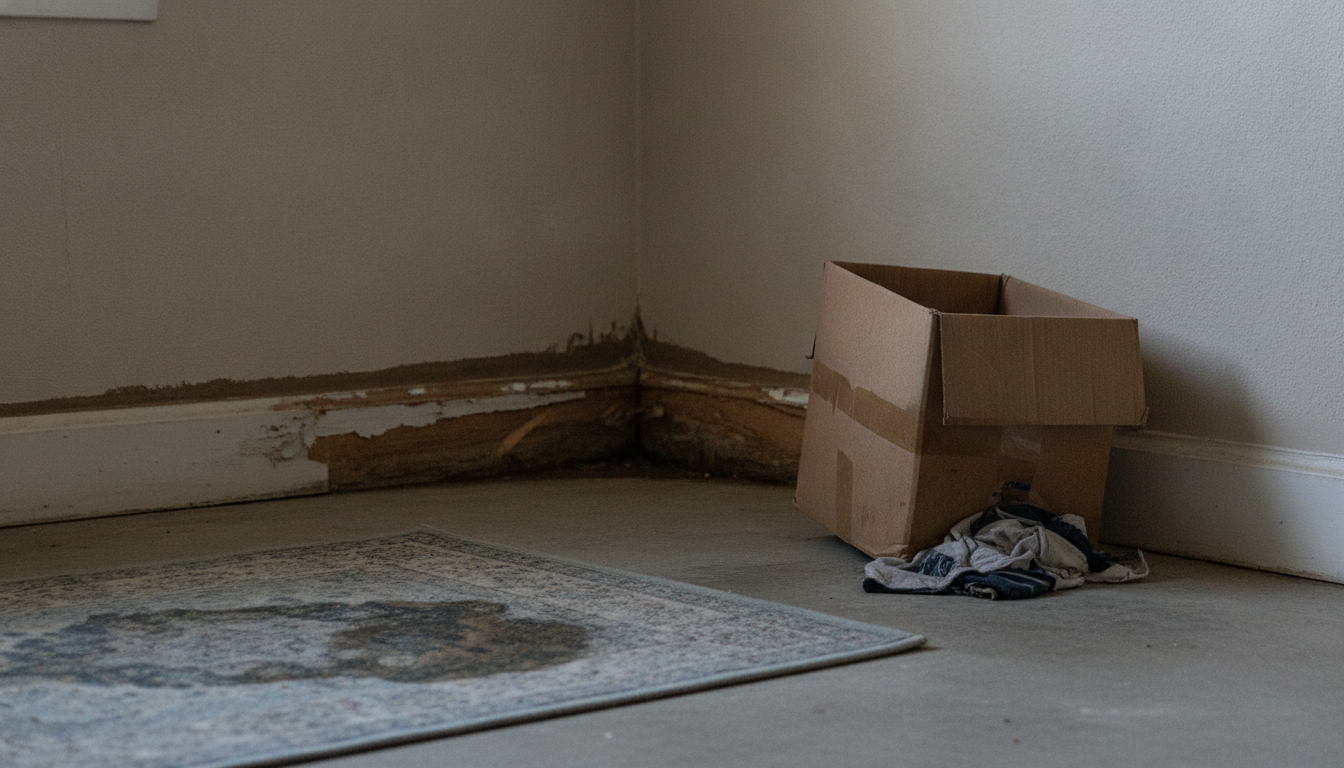
Risk is not evenly spread, but it is also not confined to the coast. FEMA reports that more than 20% of NFIP flood claims come from properties outside designated high-risk flood zones. A ground-floor unit near any creek, a low-lying street, or a neighborhood prone to flash flooding carries real exposure even with no “flood zone” label on the address.
If you rent below grade, on a first floor, or anywhere water has pooled during past storms, the honest question is not whether you are required to carry flood coverage. Renters are almost never required to. The question is whether $100 a year is worth protecting the $19,000 of belongings you would otherwise replace out of pocket. For Daniela, that math was clear only after the loss.
What to do before the next storm
Check your address on FEMA’s flood map to see your zone, then price an NFIP contents-only policy through an agent, since the NFIP does not sell directly. Buy it at least 30 days before you need it. Keep a photo inventory of your belongings so a contents claim is easy to prove. And do not let a “low-risk” label talk you out of it, because one in five flood claims comes from exactly those areas.
Frequently asked questions
Does renters insurance cover flood damage to my stuff? No. Every standard renters policy excludes flooding, meaning water that rises from outside and enters your unit. It does cover water from an internal source like a burst pipe or an overflowing appliance. For rising-water protection you need a separate flood policy.
Can renters even buy flood insurance? Yes. The National Flood Insurance Program sells a contents-only policy designed for tenants. It insures your personal belongings against flood up to $100,000, without covering the building, which your landlord insures separately.
How much does contents-only flood insurance cost for a renter? It depends on your flood risk, but coverage in lower-risk areas can start around $100 a year, according to FloodSmart. Higher-risk locations cost more. An insurance agent can quote NFIP coverage, since the program does not sell policies directly to consumers.
I am not in a flood zone. Do I still need it? Possibly. FEMA reports more than 20% of flood claims come from properties outside high-risk zones. A ground-floor unit, a spot near a creek, or an area that has flooded before all carry real risk regardless of the zone label.
How fast does flood coverage start? An NFIP policy usually has a 30-day waiting period before it takes effect. You cannot buy it as a storm approaches and expect same-week coverage, so it must be purchased well ahead of any weather.
Protect your belongings before the next storm
Compare renters insurance options and see how contents coverage and add-ons fit your apartment and budget.
Compare Renters Insurance →