9 min read · Last updated November 19, 2026
- A standard renters policy, known in the industry as a Homeowners Form 4, or HO-4, pays personal-property claims against 16 specifically named perils. Insects, vermin, and rodents are not on that list, so bed bug damage and treatment costs are never covered, by omission rather than by any single exclusion clause.
- Additional Living Expense (ALE), the loss-of-use benefit that pays for a hotel while your unit is unlivable, is blocked too. It only activates when “a Peril Insured Against” caused the damage, and bed bugs never qualify as one.
- In Ludlow Properties, LLC v. Young, a New York court called a persistent bed bug infestation an “intolerable condition” and awarded the tenant a 45% rent abatement, under the state’s implied warranty of habitability, Real Property Law Section 235-b.
- New York’s Real Property Law Section 235-j requires a landlord who learns of an infestation to notify neighboring units within 72 hours, and New York City’s Local Law 69 requires an annual bed bug history report to the Department of Housing Preservation and Development, but neither law reimburses a tenant for a ruined mattress.
Renters insurance does not cover bed bugs. The standard policy’s list of 16 covered causes of loss never included insects or vermin, so there is no claim path for the exterminator’s bill, a ruined mattress, or a hotel stay while the unit is treated.
In this article
- Why renters insurance doesn’t cover bed bugs
- What that cost Colton Ashworth
- Why the vacate order doesn’t help either
- What New York law actually makes the landlord do
- What a tenant can realistically recover
- Frequently asked questions
Why renters insurance doesn’t cover bed bugs
A renters policy does not insure personal property against every possible cause of loss. It insures against a specific, numbered list. The standard Insurance Services Office (ISO) form filed in most states, Homeowners Form 4 (commonly called “HO-4”), covers Coverage C personal property only for direct physical loss caused by one of 16 named perils:
- Fire or lightning
- Windstorm or hail
- Explosion
- Riot
- Aircraft
- Vehicles
- Smoke
- Vandalism
- Theft
- Falling objects
- Weight of ice or snow
- Accidental water discharge
- Sudden tearing or bulging of a heating system
- Freezing
- Sudden electrical damage
- Volcanic eruption
Insects, vermin, and rodents never appear on that list.
That is the whole mechanic.
A reader searching for “the bed bug exclusion” expects to find a sentence that carves infestation damage back out of an otherwise broad policy. There isn’t one, because an HO-4 form never promised broad coverage to begin with.
It is a named-peril contract, and anything not named is simply outside it. The result is identical to an exclusion in practice, zero coverage, but the legal mechanism is omission, not denial under a specific clause.
That omission reaches everything connected to the infestation. The exterminator’s invoice is a service cost, not property damage, so it was never going to fit inside Coverage C regardless of the peril list. A mattress, box spring, or couch ruined beyond use by an infestation is property damage, but it was damaged by a peril that was never insured against, so the claim fails at the first question an adjuster asks: which of the 16 perils caused this loss?
What that cost Colton Ashworth
Bite marks for the third night running meant one thing: bed bugs had gotten into the mattress in a Queens studio apartment. Colton Ashworth called a licensed exterminator the same week. A professional heat treatment for his unit, a chemical-free option, runs $2,000 to $6,000 depending on square footage and severity, and his bill came to $2,800.
His mattress, box spring, and a nightstand had to be thrown out and replaced, adding another $650. Colton’s total out-of-pocket cost: $3,450.
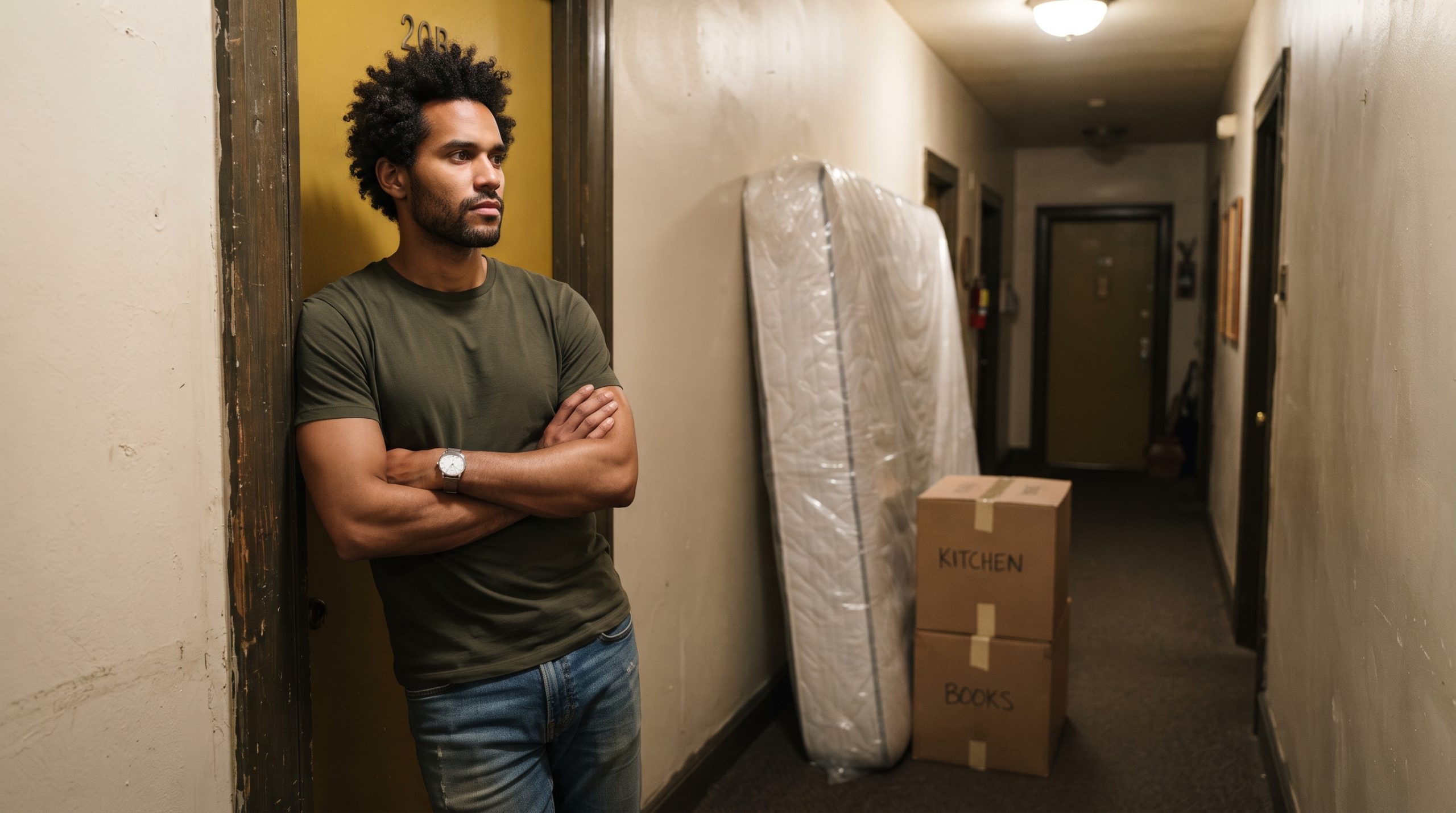
He filed a claim anyway. His renters insurer denied both pieces in a single letter, citing the same mechanic above: insect and vermin damage is not one of the perils the policy covers, so neither the treatment cost nor the destroyed furniture qualifies as a covered loss. Colton’s renters insurance paid him $0.
| Colton’s cost | Amount | Renters insurance pays |
|---|---|---|
| Professional heat treatment | $2,800 | $0 |
| Destroyed mattress, box spring, nightstand | $650 | $0 |
| Total out of pocket | $3,450 | $0 |
Why the vacate order doesn’t help either
Some renters assume that even if the infestation itself isn’t covered, the loss-of-use benefit, Additional Living Expense (ALE), should still pay for a hotel if the unit becomes unlivable during treatment. It does not, and the reason is the same mechanic working a second time.
The Loss of Use section of a standard renters policy opens with a condition: it pays “if a loss by a Peril Insured Against under this policy to covered property or the building containing the property makes the residence premises not fit to live in.” Additional Living Expense is downstream of the same 16-peril list that already excluded the infestation.
Since bed bugs were never a Peril Insured Against, an order to vacate for treatment, whether it comes from the landlord or a local health authority, never satisfies that opening condition. The benefit simply never turns on.
A separate piece of Loss of Use, Civil Authority Prohibits Use, covers up to two weeks of expenses when a civil authority bars you from your own unit because of direct damage to a neighboring building, as DailyInsurance.news has covered for evacuation scenarios. That provision also requires the triggering damage to come from a Peril Insured Against, and it applies to damage next door, not an infestation inside your own apartment. It offers no route here either.
What New York law actually makes the landlord do
With the policy exhausted, the only remaining route runs through the landlord. Every New York residential lease carries an implied promise, the warranty of habitability under Real Property Law Section 235-b: the landlord is deemed to warrant that the unit is “fit for human habitation and for the uses reasonably intended by the parties,” and that tenants won’t face conditions dangerous to their life, health, or safety. A lease clause trying to waive this promise is void.
New York courts have applied that warranty directly to bed bugs. In Ludlow Properties, LLC v. Young, decided by the Civil Court of the City of New York in 2004, the court held that a persistent infestation “constituted an intolerable condition, notwithstanding the landlord’s efforts to exterminate them,” and awarded the tenant a 45% rent abatement for the six-month period the condition continued.
Trying to exterminate was not enough; the landlord still had to credit the tenant for the months the apartment was diminished in value.
New York also imposes real procedural duties on landlords that don’t exist in most states. Statewide, Real Property Law Section 235-j requires a landlord who learns of an infestation to give written notice to the units immediately above, below, and adjacent to it “within seventy-two hours.” In New York City specifically, Local Law 69 of 2017 requires owners of buildings with three or more units to try to collect each unit’s bed bug history and file an Annual Bedbug Report with the Department of Housing Preservation and Development (HPD) every December, and the city’s Housing Maintenance Code requires owners to “address bed bug infestations promptly” using a pest-control professional licensed by the state Department of Environmental Conservation (DEC).
What a tenant can realistically recover
None of those laws hand Colton a check for his $3,450. A habitability claim and a renters insurance claim are two entirely separate buckets, and conflating them is where tenants get disappointed twice. The warranty of habitability dispute is about what the apartment was worth to live in during the infestation, not about reimbursing the mattress or the exterminator’s invoice.
The remedy is a rent abatement, a credit or reduction against rent owed, and it only applies at all if Colton can show the landlord knew, or should have known, about the infestation and didn’t act with reasonable speed. His own prompt call to an exterminator that he paid for himself doesn’t trigger it; what matters is the landlord’s record.
Say Colton’s building shows exactly that kind of record: a prior tenant in the unit below filed a complaint eight months earlier, and the landlord’s own Local Law 69 filing documents a re-infestation. If a Housing Court applies the Ludlow 45% figure to Colton’s $2,800 monthly rent over the two months his landlord took to finish treatment, that is a $2,520 credit against $5,600 in rent for that period.
That credit is a separate reduction in what he owed for the apartment itself, not reimbursement for the mattress or the exterminator’s invoice. Netting the two buckets together, Colton is still out roughly $930 once the whole ordeal is over, and only after documenting the landlord’s knowledge and filing in Housing Court, not as an automatic payment the way an insurance claim would be.
Frequently asked questions
Does renters insurance ever cover bed bugs? Not under a standard HO-4 policy. Personal property is covered only against 16 specifically named perils, and insects, vermin, and rodents aren’t among them, so neither the extermination bill nor damaged furniture qualifies, regardless of your deductible or coverage limit.
Why doesn’t loss-of-use coverage pay for a hotel during treatment? Loss of Use, including Additional Living Expense, only activates when a Peril Insured Against caused the damage that makes your unit unlivable. Since bed bugs were never one of the 16 named perils, an order to vacate for treatment never satisfies that condition, so the hotel bill stays with you.
Can I sue my landlord for bed bugs in New York? You can raise a breach of the implied warranty of habitability under Real Property Law Section 235-b, either as a lawsuit or as a defense if the landlord sues you for unpaid rent. Courts have found a persistent, uncontrolled infestation can breach that warranty, but you generally need to show the landlord knew or should have known and didn’t respond promptly.
How much is a bed bug rent abatement worth? It varies by case and depends on how long the condition persisted and how severe it was. In Ludlow Properties, LLC v. Young, the court awarded a 45% reduction in rent for the period the infestation continued. A rent abatement reduces what you owed for the unit; it does not reimburse destroyed property or treatment costs separately.
Does my landlord have to disclose a bed bug history before I move in? In New York, landlords must notify neighboring units within 72 hours of learning of an infestation under state law, and New York City landlords must file an annual bed bug history report with the city. Check your own state and city, since disclosure and notice rules vary widely outside New York.
Compare renters insurance before a bed bug claim like Colton’s costs you $3,450