8 min read · Last updated November 4, 2026
- The Ivans Index for Q3 2026 shows five of six major commercial lines renewing at smaller increases than Q2 2026, but only workers’ compensation is actually falling in price, down 1.17%.
- Umbrella liability is still the most expensive line to renew: up 6.88% in Q3 2026, even after slowing from 7.96% the quarter before.
- Marsh’s large-account index shows U.S. commercial rates fell 1% in the same quarter small businesses saw their business owners policy (BOP) renewals rise 5.61% on the agency-placed book Ivans tracks. A Fortune 500 renewal and a small business renewal are reading two different markets this quarter.
- A softening market usually means a smaller increase, not a lower bill. Only one of the six tracked lines actually dropped in price this quarter.
Commercial insurance rates are still rising for most small businesses in Q3 2026, just more slowly than before. Five of the six major lines the Ivans Index tracks posted smaller increases than Q2. Only workers’ compensation actually fell, down 1.17%.
In this article
- What “softening” actually means on your renewal
- Where every commercial insurance line stands in Q3 2026
- Umbrella is still the line that costs the most
- Two different markets, same quarter
- What this means for your next renewal
- Frequently asked questions
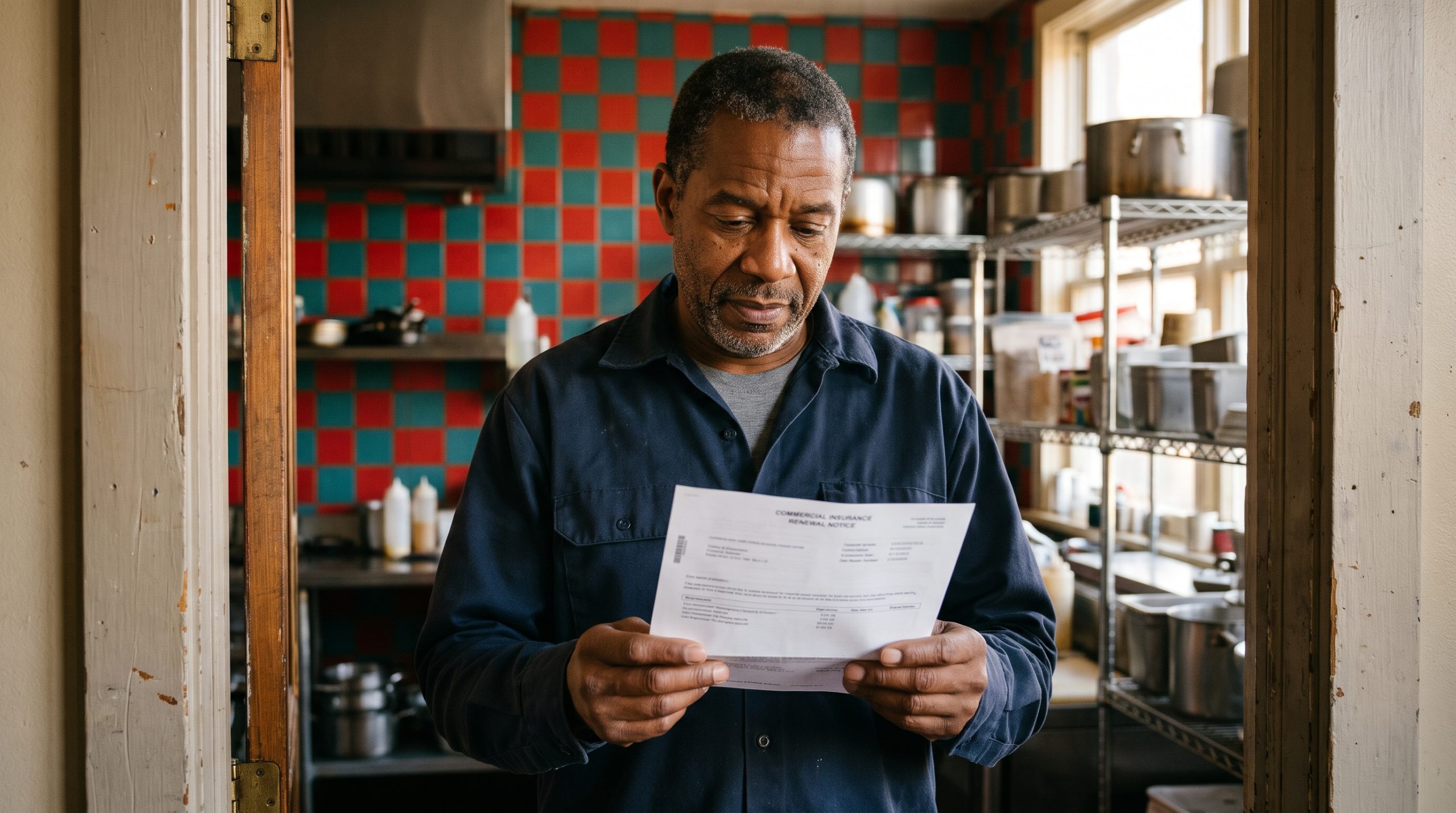
When Felix Harrow opened his restaurant’s October renewal packet, he expected the relief the trade press had been promising all year. His BOP line did come in lower than last year’s increase, a few hundred dollars gentler.
Then he reached the line for his one delivery van, and it was up again. His umbrella policy, the $2 million layer his landlord’s lease requires, was up almost 7%. Workers’ comp for his eleven employees was the only line that actually dropped.
What “softening” actually means on your renewal
Start with the translation, because this is where most owners get tripped up.
When trade reports and brokers say commercial rates are “softening,” they mean the rate of increase is slowing, not that premiums are dropping. A line that rose 8% last year and 6% this year has “softened” while still costing more at renewal. Only a negative number, like this quarter’s workers’ comp figure, means the renewal is cheaper than the one before it.
Two indices track this, and they measure different things. The Ivans Index pulls renewal rate changes directly out of the agency management systems independent agents use to service policies, so it reflects what a renewing small business is actually quoted.
Marsh’s Global Insurance Market Index (GIMI) tracks large corporate accounts placed through global brokers instead. Same overall market, two very different customer bases.
Where every commercial insurance line stands in Q3 2026
The Ivans Index for Q3 2026, released October 28, is the freshest read on what agency-placed small and mid-size businesses are actually renewing at. Every one of the six tracked lines eased further than Q2. Only workers’ compensation crossed into negative territory.
| Line of business | Q3 2026 renewal rate change | Q2 2026 | Direction |
|---|---|---|---|
| Umbrella | +6.88% | +7.96% | Rising, but slower |
| Commercial property | +5.65% | +6.40% | Rising, but slower |
| Business owners policy (BOP) | +5.61% | +6.16% | Rising, but slower |
| General liability | +4.12% | +5.44% | Rising, but slower |
| Commercial auto | +3.63% | +4.93% | Rising, but slower |
| Workers’ compensation | -1.17% | -1.37% | Falling, but less than Q2 |
Run the table against Felix’s own four lines and the pattern holds. His BOP premium of $11,600 renews at 5.61% higher, about $12,251, and his one delivery van, carried as commercial auto at $3,100, renews 3.63% higher, about $3,213. His $2,850 umbrella layer renews 6.88% higher, about $3,046.
His $9,400 workers’ comp line is the one genuine decrease, 1.17% lower, about $9,290.
Add the four together and his total renewal climbs from $26,950 to roughly $27,800. That is an increase of about $850, or 3.2% overall, even with one real decrease sitting right in the middle of it.
Umbrella is still the line that costs the most
Umbrella liability has now sat at the top of the Ivans table for multiple quarters running, and Q3 2026 is no exception. At 6.88%, it is still rising faster than any other tracked line, even after slowing from 7.96% in Q2. If your lease, loan agreement, or a client contract requires a $1 million or $2 million umbrella layer the way Felix’s landlord does, budget for this line specifically.
A general “soft market” headline will not bring it down on its own.
Workers’ compensation is the one genuine bright spot. The Ivans release frames it plainly: “the third quarter results of 2026 showed premium renewal rate change for all major commercial lines of business, except Workers’ Compensation, are up year over year.”

That means five of six lines cost more today than they did a year ago. Workers’ comp is the lone exception, and even its decrease is shrinking: -1.73% in Q1 2026, -1.37% in Q2, -1.17% now.
Two different markets, same quarter
Marsh’s Q3 2026 Global Insurance Market Index tracks large corporate accounts placed through global brokers. Its U.S. breakout shows the overall composite falling 1% in Q3 2026, with property down a full 10%. That is a real, falling market, for that customer base.
It is not the market a small business sees at its own renewal.
| Measure | Who it measures | Q3 2026 |
|---|---|---|
| Ivans Index, BOP | Small and mid-size businesses, agency-placed | +5.61% |
| Marsh GIMI, U.S. composite | Large corporate accounts, globally brokered | -1% |
| Marsh GIMI, U.S. casualty ex-workers’ comp | Large corporate accounts, globally brokered | +9% |
| Ivans Index, general liability | Small and mid-size businesses, agency-placed | +4.12% |
Notice the liability line stays stubborn at both ends of the market. Marsh’s own U.S. casualty figure, excluding workers’ comp, rose 9% for large corporate accounts even as their overall composite fell.
Marsh attributes the gap to heavy competition and carrier appetite specifically in workers’ comp, which pulls the blended casualty number down without liability itself actually softening. A small business reading “commercial insurance rates fall” in a wire story is very often reading about the large-account market Marsh measures, not the agency-placed renewal sitting on its own desk.
What this means for your next renewal
A softening market, even an uneven one, is still a better time to shop than a hardening one. When carriers compete for new business, an incumbent that raised your umbrella 7% is vulnerable to a competitor willing to hold closer to flat. Felix took his umbrella and commercial auto lines, the two that moved the most, to a second carrier at his next renewal and kept the overall increase under 2%.
Two moves apply broadly to any small business: get competing quotes on umbrella and commercial auto specifically, since those are the lines still rising fastest and carriers price the same risk very differently.
Review your business owners policy and commercial umbrella coverage while the market still has some competitive room left in it. If you carry commercial auto for even one vehicle, confirm your current limits still match what your lease or contracts require.
Frequently asked questions
Are commercial insurance rates still going up in 2026? For most lines, yes. The Q3 2026 Ivans Index shows umbrella, commercial property, BOP, general liability, and commercial auto all still renewing higher than a year ago, just at smaller increases than earlier in the year. Only workers’ compensation is actually falling, and that decrease is shrinking each quarter.
Why is my commercial insurance renewal going up if the market is softening? Softening means the rate of increase is slowing, not that premiums are falling. A line renewing 6% higher after renewing 8% higher the year before has softened while still costing you more. Only a genuinely negative number, like workers’ compensation’s current -1.17%, means your bill is actually lower than before.
What is the difference between the Ivans Index and Marsh’s Global Insurance Market Index? The Ivans Index measures renewal rate changes for small and mid-size businesses through independent agents, reflecting what a typical renewing small business is quoted. Marsh’s index tracks large corporate accounts placed through global brokers. They cover different customer bases, which is why Marsh can show a falling market in the same quarter Ivans shows most small-business lines still rising.
Which commercial insurance line is rising fastest right now? Umbrella liability, up 6.88% in the Q3 2026 Ivans Index, is the highest renewal increase among the six tracked lines, ahead of commercial property, BOP, general liability, and commercial auto. If your lease or a client contract requires a specific umbrella limit, this is the line to shop hardest at renewal.
Is workers’ compensation insurance getting cheaper? It is the one commercial line currently falling in price, down 1.17% in Q3 2026 after falling 1.37% in Q2. But the decrease has been shrinking each quarter since the start of the year, so it is not a trend to assume will continue indefinitely.
Renewing while the market is still uneven?
Compare business insurance quotes across carriers and see whether switching beats a Q3 2026 renewal increase.
Compare Business Insurance Quotes