9 min read · Last updated October 28, 2026
- The standard commercial property form, the Insurance Services Office (ISO) Building and Personal Property Coverage Form (CP 00 10), excludes vehicles “operated principally away from the described premises,” which is exactly what a loaded delivery van becomes the moment it pulls out of the lot.
- Many editions of that form carry a coverage extension for property temporarily off-premises, commonly capped at $10,000, but per Rough Notes’ analysis of the ISO wording, that extension “does not apply to property in or on a vehicle.”
- A separate Inland Marine Transit coverage form insures a retailer’s own goods in the retailer’s own vehicle regardless of fault. A Motor Truck Cargo (MTC) policy instead insures a hired carrier’s legal liability as a bailee for goods it’s hauling for someone else.
- Commercial property renewal rates are still climbing, up 6.40% in the second quarter of 2026 per the Ivans Index, so a retailer paying more for the base property policy is paying more for a line of coverage that was never going to reach the highway.
A standard commercial property policy, built on the Insurance Services Office (ISO) Building and Personal Property Coverage Form (CP 00 10), only covers a retailer’s inventory while it sits inside the building named on the declarations page. Once that inventory is loaded onto a vehicle and driven away, a separate Inland Marine Transit or Motor Truck Cargo policy is what actually pays for it.
In this article
- Does commercial property insurance cover goods in transit?
- Transit coverage, inland marine, and motor truck cargo
- Carmen’s shipment: the math
- Frequently asked questions
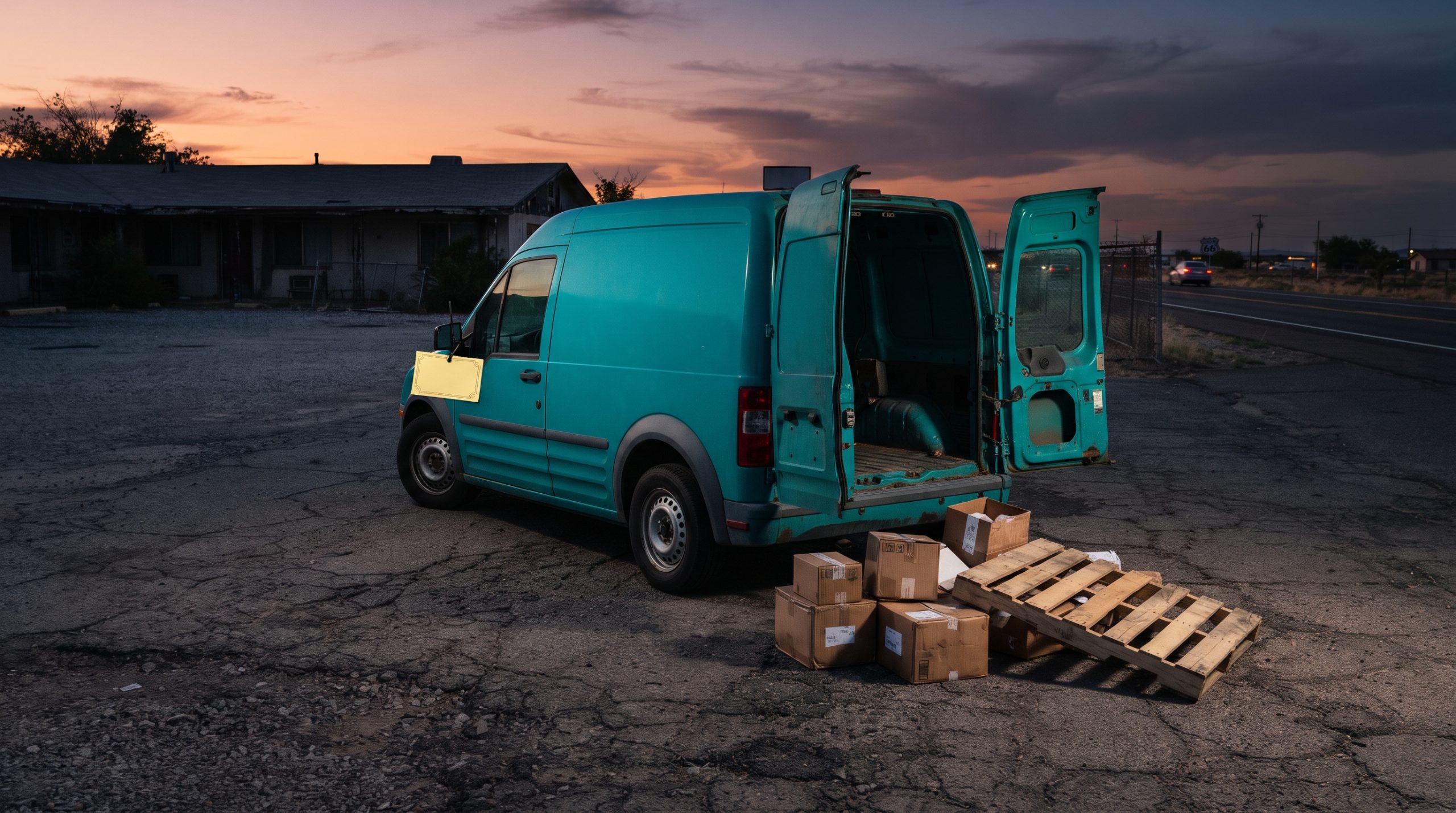
Carmen Villareal’s delivery van was broken into overnight in a motel parking lot an hour outside Austin, on the way to a weekend vendor show. It was carrying $38,000 of her boutique’s inventory: hand-poured candles, ceramics, and linen throws. Both the van and the inventory were gone by sunrise.
Her commercial property policy, the kind built on the industry-standard form that covers a retailer’s inventory only at the address printed on the declarations page, paid none of it. The moment that inventory left the building and sat inside a vehicle, the base policy stopped responding entirely. At most, a small, named-dollar coverage extension applied, and it explicitly excludes property on a vehicle.
Does Commercial Property Insurance Cover Goods in Transit?
Carmen’s policy was built on the Insurance Services Office (ISO) Building and Personal Property Coverage Form. Carriers know it by its form number, CP 00 10, and it’s the industry-standard form attached to most commercial property policies. The International Risk Management Institute (IRMI), an insurance-industry reference publisher, describes it as the key direct-damage form.
IRMI says it covers “buildings, business personal property, and personal property of others,” but only “subject to the limits shown in the declarations.” Those declarations name a location, not a moving vehicle.
The form’s Property Not Covered section goes further than simply staying silent on vehicles. Insurance Journal’s coverage-analysis column quoted the actual CP 00 10 language from a real claim dispute. It excludes vehicles and self-propelled machines “[that] are licensed for use on public roads” or “[that] are operated principally away from the described premises.”
A loaded delivery van on a two-hour drive to a vendor show is both of those things at once. The exclusion makes no exception for theft versus a collision versus a simple breakdown.
Some editions of the form soften this slightly with a coverage extension for property temporarily away from the premises, commonly capped at $10,000. But per Rough Notes’ own analysis of that extension, “It does not apply to property in or on a vehicle.” That extension exists for off-premises property, and its own wording excludes the exact situation Carmen was in.
The same base form carries other narrowly scoped add-ons that owners assume are broader than they are. The agreed value option that keeps a coinsurance penalty from kicking in works the same way, since letting it lapse reopens a gap most owners never see coming. The mechanic is identical: a standard property policy only reaches as far as its own fine print, and the fine print rarely reaches the highway.
Transit Coverage, Inland Marine, and Motor Truck Cargo: The Difference That Actually Matters
Filling that gap means buying a form built for property that moves, not property that sits still. IRMI describes inland marine coverage as “property insurance for property in transit over land,” along with other mobile and off-premises exposures. It notes that many inland marine forms are written as “floater” policies that “provide coverage without regard to the location of the covered property.”
A Transit coverage form, one type of inland marine floater, is scheduled to the retailer’s own vehicle. It pays for the retailer’s own goods regardless of whose fault the loss was, within whatever causes of loss the form lists.
A different mechanic applies when a retailer hires someone else to do the hauling. A common or contract carrier that takes possession of someone else’s goods becomes what the industry calls a bailee. IRMI defines a bailee as “a person or organization to which possession of the property of others has been entrusted,” usually for a limited purpose like transport, storage, or repair.
The same IRMI entry notes that “most property policies specifically prohibit coverage for benefit of a bailee.” That’s why the carrier’s own commercial property policy will not pick up a shipper’s cargo.
The carrier instead typically carries Motor Truck Cargo (MTC) coverage. IRMI defines MTC as “an inland marine form covering loss of property in the course of transit, either by common carrier or on the insured’s own vehicles, depending on the form used.”
For a shipper relying entirely on a hired carrier’s MTC policy, the payout is capped by the carrier’s own legal liability and its own policy limit. It isn’t capped by what the goods are actually worth. A carrier can often disclaim liability for causes outside its control, too.
A retailer who wants first-party protection no matter which party was at fault still needs her own transit policy, even when someone else is doing the driving. Our earlier look at the bailee exposure retailers themselves carry covers the mirror-image version of this problem, when a retailer is the one holding someone else’s property.

| Coverage | What it covers | Typical limit | Best for |
|---|---|---|---|
| Base commercial property (ISO CP 00 10) | Buildings and business personal property only at the described premises; a narrow off-premises extension in many editions explicitly excludes property on a vehicle | Off-premises extension commonly capped at $10,000, per IRMI and Rough Notes commentary on the form | Inventory that never leaves the four walls |
| Inland marine Transit coverage (retailer’s own vehicle) | The retailer’s own goods while loaded in the retailer’s own scheduled vehicle, regardless of fault, for the causes of loss the form lists | Scheduled to the value the retailer typically carries per trip or vehicle | A retailer running its own delivery van or truck |
| Motor Truck Cargo (hired common or contract carrier) | The hired carrier’s own legal liability, as a bailee, for cargo lost or damaged while in its care, custody, or control | Set by the carrier’s own policy and bill-of-lading terms, not by the shipper | A retailer shipping through a hired trucking company instead of its own vehicle |
Carmen’s Shipment: The Math
Carmen’s commercial property policy carried a $250,000 combined building and business personal property limit, plus the standard off-premises extension capped at $10,000. None of it applied. Her agent confirmed the adjuster’s read within a week.
The $38,000 in stolen inventory was property “operated principally away from the described premises” at the moment of the theft. The off-premises extension, her only shot at even a partial recovery, excludes property in or on a vehicle outright. The claim was denied in full.
The $38,000 came out of Carmen’s own cash reserves. The stolen van itself, which she leased rather than owned, became a separate claim against her commercial auto policy, not her property policy.
A Transit coverage form scheduled to that van would have changed the outcome entirely. It would have paid the $38,000 inventory loss, subject to its own deductible and the causes of loss it lists (theft is a standard inclusion).
There would have been no off-premises asterisk to trip over.
Pricing is based on the value Carmen typically carries per run and the radius she drives. The whole purpose of the form is that the goods stay covered wherever the van goes. Carmen now carries one, scheduled to $45,000 to leave room for a full van load plus whatever unsold stock comes back on the return trip.
This is happening while the base commercial property line itself keeps getting more expensive, not less. Ivans Index data puts commercial property renewal rates at +6.40% in the second quarter of 2026, easing slightly from +6.83% in the first quarter. That’s still a real increase on every renewal.
A retailer paying roughly 6% more for a property policy that was never going to cover a loaded van is paying more for a protection gap, not buying it closed. The fix isn’t a bigger property limit.
It’s a separate line built for property that leaves the building.
Frequently asked questions
Does commercial property insurance cover stolen inventory in a delivery van? Generally no. The standard commercial property form, ISO’s CP 00 10, excludes vehicles operated away from the insured’s premises, and its small off-premises coverage extension, where included, specifically excludes property in or on a vehicle. A separate Inland Marine Transit coverage form, scheduled to the delivery vehicle, is what actually pays for inventory stolen or damaged in transit.
What’s the difference between inland marine transit coverage and motor truck cargo insurance? Transit coverage, a type of inland marine floater, insures a retailer’s own goods while they’re in the retailer’s own vehicle, regardless of fault. Motor Truck Cargo (MTC) coverage instead insures a hired carrier’s legal liability as a bailee for cargo it’s transporting, so it only pays when the carrier is legally responsible and only up to the carrier’s own policy limit.
Why doesn’t my business owner’s policy cover goods in transit? A business owner’s policy is typically built around the same ISO Building and Personal Property Coverage Form used in a standalone commercial property policy, which only covers property at the described premises. Goods loaded onto a vehicle and driven away fall outside that definition, which is why a separate transit or cargo form, not a higher property limit, is the actual fix.
How much does inland marine transit coverage cost for a small retailer? Cost is priced to the value of goods typically carried per trip, the delivery radius, and the type of merchandise, rather than set as a flat percentage of inventory value. A retailer scheduling a single delivery van against a modest inventory value usually pays far less than the cost of replacing one stolen shipment out of pocket.
Carmen’s $38,000 Loss Was Preventable. Is Yours?
See what a commercial insurance policy built for today’s risks, not just the building, actually covers.
Compare Business Insurance Options