7 min read · Last updated July 1, 2026
In this article
- Why his business income coverage did not apply
- What contingent business interruption actually covers
- The dependent property gap most online sellers miss
- What to confirm before your next renewal
- Frequently asked questions
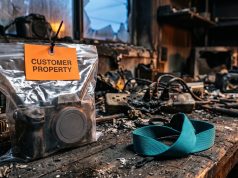
Marcus Ellis ran a home fitness equipment brand that did about $45,000 a month across Shopify and Amazon, and he stored every unit of inventory at a third-party fulfillment warehouse two states away. In March, an electrical fire tore through that warehouse overnight. His inventory, roughly $140,000 worth, was destroyed, and the building was closed for months. His orders stopped shipping the same day. It took 11 weeks to move to a new fulfillment partner and rebuild stock. When he filed a business income claim to recover the sales he lost during that shutdown, the denial letter came back fast. The fire was not at his insured location, so his policy did not respond.
Marcus had done the responsible thing and bought a business owners policy. He just did not know that the shutdown he actually faced was the exact kind his policy left out.
Why his business income coverage did not apply
Business income coverage, sometimes called business interruption, is built on one trigger: direct physical loss or damage to the property described on your policy. In plain terms, something has to physically damage your insured location, and that damage has to be from a covered cause like fire or a storm. When that happens, the policy replaces the income you lose while you repair and reopen. The mechanics of that trigger are spelled out in our explainer on how business interruption insurance requires direct physical loss.
Marcus worked from a spare bedroom. His insured location was his home office, and nothing there burned. The fire hit a warehouse he did not own, insure, or control. So even though the fire wiped out his ability to operate, his business income coverage had no trigger. This is the single most common blind spot for online sellers: the policy is anchored to your address, but your revenue depends on buildings that belong to other companies.
What contingent business interruption actually covers
The coverage that responds to Marcus’s exact situation is called contingent business interruption, also known as dependent property coverage. It pays for the income you lose when a business you depend on suffers a covered physical loss, even though your own location is untouched.
Insurers usually split dependent property into a few categories. A supplier or manufacturer that provides your goods is a contributing property. A customer that buys a large share of your output is a recipient property. A warehouse or fulfillment center that stores and ships your inventory falls into this dependent-property family too. When one of them is shut down by a covered peril like fire, dependent property coverage steps in to replace the income you cannot earn. For a fuller picture of how these pieces fit into a small business program, see our guide to the business owners policy for small business.
The key point is that this is not automatic. Dependent property coverage is either an endorsement you add or a small default limit already sitting inside your policy that you have to increase.
The dependent property gap most online sellers miss
Here is where most sellers get hurt even when they technically have the coverage. Many business owners policies include a token amount of dependent property coverage by default, often $5,000, $10,000, or $25,000. That sounds like protection until you compare it to a real shutdown. Marcus lost about $45,000 in monthly sales for nearly three months. A $25,000 sublimit would have covered less than three weeks of a loss that ran eleven.

There is a second trap. The stock stored at that warehouse needs its own protection, usually through inland marine or stock throughput coverage, because your fulfillment contract rarely makes the warehouse fully responsible for your goods. Sellers often assume that because their inventory was insured, their income was too. It was not. The same split-coverage confusion shows up in product claims, which is why we broke down the separate product liability gap for e-commerce businesses. Read your policy for two distinct things: the limit on the physical goods, and the limit on the income you earn from selling them.
What to confirm before your next renewal
Ask your agent three direct questions in writing. Does my policy include contingent business interruption or dependent property coverage, and what is the limit? Does it cover fulfillment warehouses and key suppliers by name, or only properties I physically occupy? What is my restoration period, meaning how many months of lost income the policy will pay while I recover?
If your dependent property limit is a low default, ask what it costs to raise it to cover at least three to six months of your average revenue. If your fulfillment center or a dominant supplier is critical, ask whether they can be scheduled by name so there is no argument later about whether they qualify. Confirm your inventory is separately insured while it sits in someone else’s building. Marcus rebuilt his business, but he funded eleven weeks of zero income out of savings and a line of credit. The sellers who survive a supply chain shutdown are the ones who insured the income, not just the inventory, before the building they depend on ever caught fire.
Frequently asked questions
Does business interruption insurance cover a shutdown at my supplier or warehouse? Standard business income coverage does not, because it requires physical damage to your own insured location. The coverage that pays when a supplier, customer, or fulfillment center is damaged is called contingent business interruption or dependent property coverage, and it is usually a separate endorsement you have to add or increase.
What is contingent business interruption coverage? It is a form of business income coverage that pays for the money you lose when a business you depend on suffers a covered physical loss. That can be a supplier that makes your product, a warehouse that stores it, or a major customer. Your own building does not have to be damaged for the coverage to respond.
If my inventory is insured at a third-party warehouse, is my income also protected? No. Insuring the physical goods, usually through inland marine or stock coverage, only pays to replace the damaged inventory. Replacing the income you lose while you cannot ship is a completely separate coverage. You need both, and buying stock coverage does not include business income.
How much dependent property coverage should an online seller carry? A reasonable starting point is enough to replace three to six months of your average revenue, since a serious warehouse or supplier loss can take that long to work around. Compare that target to your policy’s default limit, which is often only $5,000 to $25,000, and raise it if there is a gap.
Does my fulfillment partner’s insurance cover my lost sales? Rarely in full. Their policy protects their building and operations, and your storage contract usually limits their liability for your goods and says nothing about your lost income. Relying on their coverage instead of your own leaves your revenue exposed if they are shut down.
See whether your policy covers a shutdown you did not cause
Compare small-business policies and confirm your contingent business interruption limit is high enough to survive a warehouse or supplier loss.
Compare Business Insurance Options →