7 min read · Last updated July 27, 2026
- Tenant improvements and betterments (TIB), the build-out you paid for in a space you rent, sit inside your Business Personal Property limit on a businessowners policy, not under building coverage.
- Most owners set that limit against equipment and inventory only, which leaves the build-out uninsured and triggers a coinsurance penalty on the whole claim.
- If you do not repair the damage, the policy pays your unamortized cost, calculated from the lease time remaining, not what it would cost to rebuild.
- Businessowners policy renewal rates rose 6.16% in Q2 2026 per the Ivans Index, which pushes owners to shave limits at the exact moment build-out values are climbing.
In this article
- Your build-out is business personal property, not building coverage
- The limit you picked for equipment now has to carry the build-out too
- If you do not rebuild, the policy pays your unamortized cost
- What to do before your next renewal
- Frequently asked questions
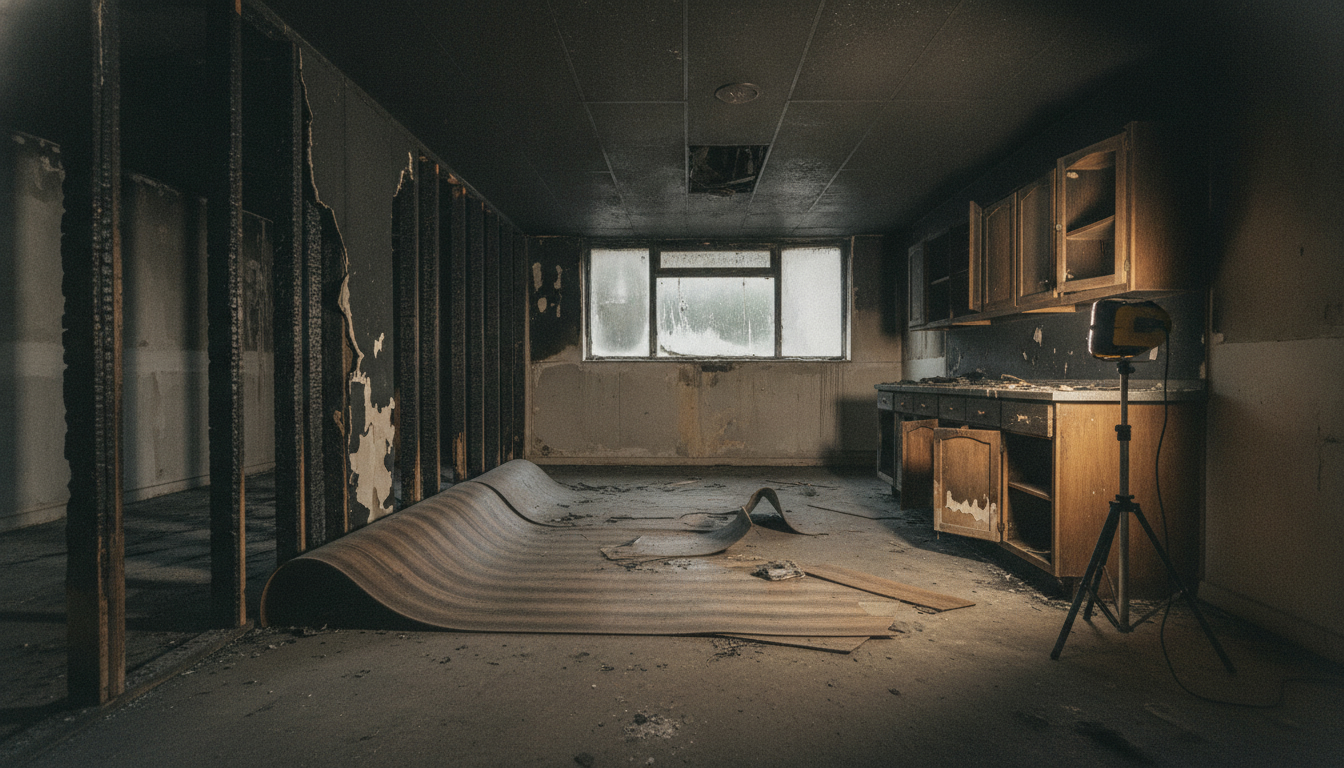
Danielle Foster spent $96,000 building out an 1,800-square-foot salon in a strip center outside Charlotte: plumbing for six wash stations, upgraded electrical, partition walls, flooring, and built-in cabinetry. Six years into a 10-year lease, a breakroom fire destroyed most of it. She did not reopen in that space. Her businessowners policy paid roughly $23,000 on a $96,000 build-out.
Your build-out is business personal property, not building coverage
Tenant improvements and betterments are the fixtures, alterations, installations, and additions you make to a space you occupy but do not own, paid for out of your pocket, and which you cannot legally remove when the lease ends. Wash stations plumbed into the floor qualify. So do partition walls, recessed lighting, built-in millwork, and the commercial-grade flooring you had installed.
Here is the part that catches owners. On a businessowners policy (BOP), that build-out is not covered under building coverage, because you do not own the building. It is folded into Business Personal Property (BPP), the same limit that carries your equipment and your inventory. Insurance reference publisher IRMI describes the tenant’s stake as a “use interest” in improvements and betterments, and that use interest is business personal property in the eyes of the form.
The landlord’s property policy covers the shell. It has no obligation to rebuild what you installed, and the lease almost always says so. The Small Business Administration’s guidance on getting business insurance puts the responsibility for your own business property squarely on you, and a build-out is your business property even when it is bolted to someone else’s wall.
The limit you picked for equipment now has to carry the build-out too
Danielle set her BPP limit at $75,000. She arrived at that number the way most owners do: she added up the styling chairs, dryers, product inventory, and point-of-sale equipment, landed around $60,000, and rounded up for cushion.
That calculation was missing $96,000. Her real insurable business personal property was $156,000, not $60,000.
That matters because BOP property coverage almost always carries a coinsurance clause, commonly set at 80%. Coinsurance requires you to insure to a stated percentage of full value. Fall short, and the insurer pays the same fraction of your loss that your limit bears to the limit you should have carried. We covered the mechanic in detail in our guide to the commercial property coinsurance penalty, and it applies here with full force.
| Step | Figure |
|---|---|
| Equipment and inventory | $60,000 |
| Tenant improvements and betterments | $96,000 |
| True insurable business personal property | $156,000 |
| Limit required at 80% coinsurance | $124,800 |
| Limit actually carried | $75,000 |
| Recovery factor ($75,000 divided by $124,800) | 60.1% |
Read the bottom row again. That 60.1% does not apply only to the build-out. It applies to the whole property claim, including the chairs and the inventory she did remember to insure.
If you do not rebuild, the policy pays your unamortized cost
The second cut is the one nobody sees coming, and it turns on a decision you make after the fire.
Repair the improvements promptly and the policy generally values them on a replacement-cost basis, subject to your limit. Walk away instead, and the form switches methods. It pays your unamortized cost: the share of what you originally spent that you have not yet used up over the life of the lease. IRMI states the formula as original cost multiplied by the lease time remaining, divided by the total lease term.
Danielle was six years into a 10-year lease, so four years remained. Her $96,000 build-out was valued at $96,000 times 48 months divided by 120 months, or $38,400. Apply the 60.1% coinsurance factor to that and the recovery lands near $23,100 before her deductible.
| Lease time remaining when the loss happens | Unamortized value of a $96,000 build-out |
|---|---|
| 9 years of a 10-year lease | $86,400 |
| 7 years | $67,200 |
| 5 years | $48,000 |
| 4 years (Danielle’s case) | $38,400 |
| 2 years | $19,200 |
| 1 year | $9,600 |

If your lease includes renewal options you control, those added years generally count toward the total term, which raises the unamortized value. That single detail is worth confirming with your broker before a loss, not after.
What to do before your next renewal
Start by pricing the build-out. Pull the contractor invoices from when you took the space, add anything you have installed since, and hand that number to your agent as a separate line item. It belongs in your business personal property limit, or scheduled on its own so it stops competing with your equipment for the same dollars.
Then check the coinsurance percentage on your declarations page and do the multiplication yourself. If 80% of your true property value is higher than your current limit, you already have a penalty waiting on your next claim, no matter how small.
Timing matters here. BOP renewal rates rose 6.16% in the second quarter of 2026 according to the Ivans Index Q2 2026, the third-steepest increase of any commercial line that quarter, behind umbrella at 7.96% and commercial property at 6.40%. A rising renewal is exactly when owners trim limits to hold the premium flat, and it is exactly the wrong limit to trim. If your business has outgrown the package entirely, that is a separate conversation covered in our piece on BOP eligibility and non-renewal.
Finally, read the restoration clause in your lease before you decide not to rebuild. Many commercial leases obligate the tenant to restore the premises after a casualty. If yours does, walking away can leave you owing the landlord for work your policy just declined to fully fund. For the sequence a property claim actually follows, see our walkthrough of the commercial property insurance claim process, and for the basics of what a package policy does and does not include, start with what a businessowners policy covers.
Frequently asked questions
What are tenant improvements and betterments in insurance? They are the fixtures, alterations, installations, and additions you make to a rented space that you paid for and cannot legally remove, such as plumbed wash stations, partition walls, built-in cabinetry, or commercial flooring. Your interest in them is called a use interest, and it is insured as business personal property under your own policy rather than as building coverage.
Does my landlord’s insurance cover my build-out? Generally no. The landlord’s property policy insures the building structure. Improvements you paid for are your business property, and most commercial leases confirm that the tenant is responsible for insuring them. Assuming otherwise is the single most common way a build-out ends up uninsured.
Are tenant improvements included in the business personal property limit? On a standard businessowners policy, yes. That is why the limit you set against equipment and inventory is usually too low. Some carriers will schedule improvements and betterments as a separate limit, which keeps the build-out from competing with your other property for the same dollars.
How is a build-out valued if I do not repair it? By unamortized cost. The insurer multiplies your original cost by the lease time remaining and divides by the total lease term, so a $96,000 build-out with four years left on a 10-year lease is valued at $38,400. Repairing promptly generally moves the settlement to a replacement-cost basis instead.
How do I avoid a coinsurance penalty on my BOP? Insure to the percentage of full value your policy requires, usually 80%, and make sure the build-out is inside the value you calculated. Check the coinsurance clause on your declarations page, total your equipment, inventory, and improvements, and confirm your limit clears the required threshold before renewal.
Check your business personal property limit against your real build-out cost
Compare businessowners policy quotes and see how carriers schedule tenant improvements before your renewal locks the limit in.
Get Business Insurance Quotes