7 min read · Last updated July 31, 2026
- A margin clause caps recovery at a set percentage of the value you reported for that specific building on your statement of values, typically 110% to 125%, no matter how large your blanket limit is.
- Marcus Ellery reported one building at $600,000. Its actual replacement cost at the time of the fire was $980,000. At a 110% margin, the most his policy could pay for that building was $660,000.
- A per-occurrence limitation of liability provision does the same job with no cushion at all, converting a blanket limit into per-location limits equal to the reported values.
- Ivans put commercial property renewals up 6.40% in the second quarter of 2026, which is exactly the pressure that pushes owners to trim reported values to hold the premium down.
In this article
- How a blanket limit is supposed to work
- What a margin clause actually does
- Marcus’s numbers, line by line
- Why owners shave values right when rates are rising
- How to check your statement of values before renewal
- Frequently asked questions
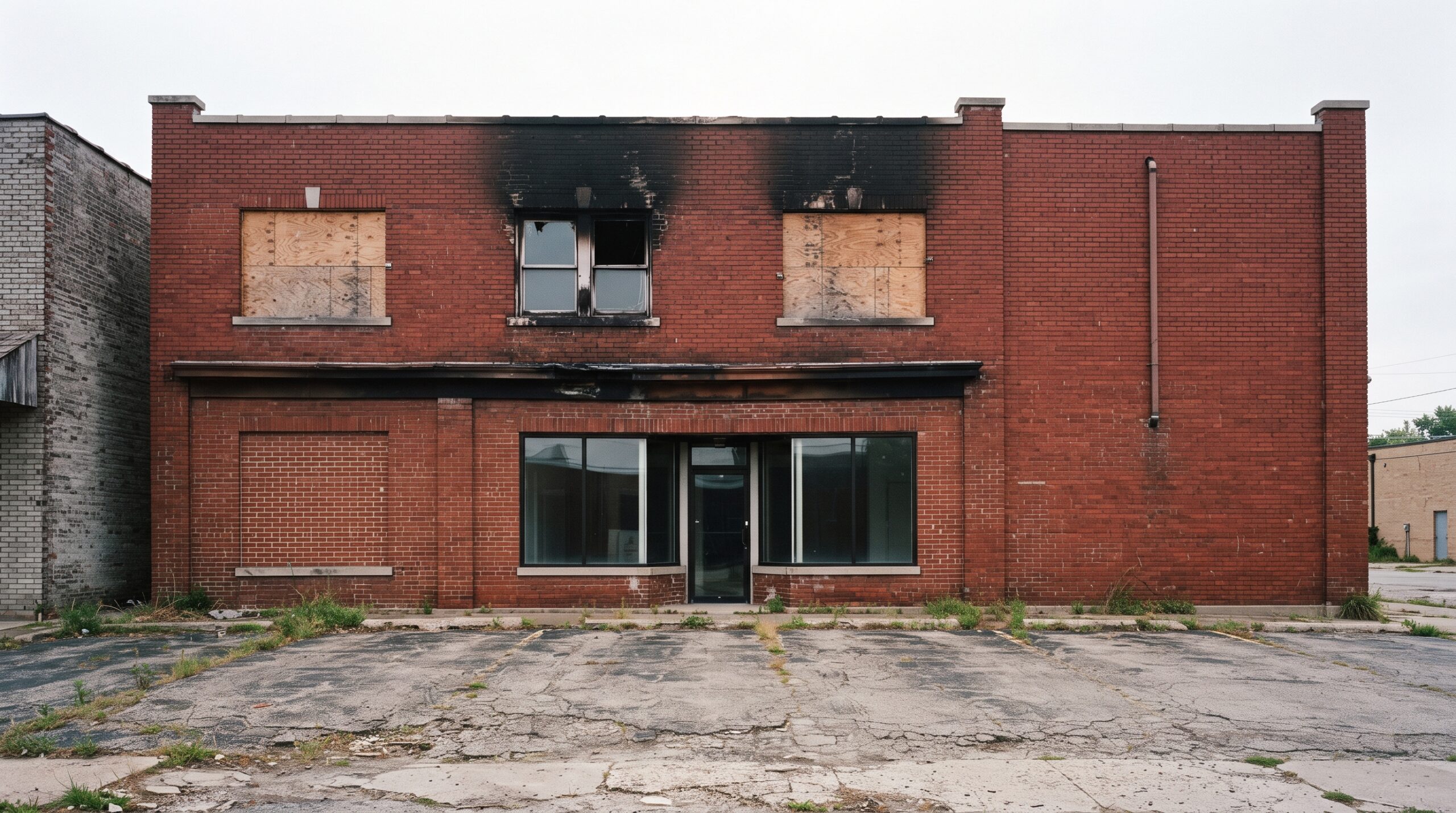
Marcus Ellery carried a $2.4 million blanket property limit across three small industrial buildings outside Toledo. In November 2025 a fire started in the electrical panel of the middle building and took the structure down to the slab. The replacement cost came back at $980,000. His insurer paid $660,000. The other $1.74 million of blanket limit sat untouched, and the adjuster was right to leave it there.
How a blanket limit is supposed to work
A blanket limit is a single amount of insurance that applies across every building and every location listed on the policy. The appeal is flexibility. If you insure three buildings for $2.4 million blanket and one of them turns out to be worth more than you thought, the full $2.4 million is theoretically available to rebuild it, because the limit was never carved up building by building.
That is the version most owners have in their heads, and for a plain blanket policy it is accurate. The problem is that a large share of blanket policies are no longer plain. They carry an endorsement that quietly rebuilds the per-building limits the owner thought they had escaped.
What a margin clause actually does
The industry reference publisher IRMI defines a margin clause as a nonstandard commercial property provision with one job. The most you can collect for a loss at a given location is a specified percentage of the values you reported for that location on your statement of values. The statement of values, usually shortened to SOV, is the spreadsheet your agent collects each year listing every building, its square footage, and what you say it is worth. Typical margin percentages run 110% or 125%.
Its harsher cousin is the per-occurrence limitation of liability provision, which IRMI describes as essentially converting blanket limits to specific, per-location limits. That version caps you at 100% of the reported value with no cushion at all.
This is not obscure language buried in a manuscript form. The Underwriters Rating Board publishes a filed endorsement titled Blanket Limit With Margin Clause, form SF-35. It states the rule in one sentence. For property subject to a blanket limit, the maximum loss payable is computed by multiplying the margin clause percentage by the building’s value shown in the latest statement of values. The form’s own illustration uses a building reported at $125,000 with a 115% margin and arrives at a maximum payable of $143,750. It also spells out the part owners miss, which is that the margin calculation cannot increase or exceed the blanket limit. The margin clause can only ever take away.
Marcus’s numbers, line by line
Marcus’s SOV listed the middle building at $600,000. He had set that figure four years earlier and rolled it forward each renewal without repricing it. Construction costs moved. The building did not.
His policy carried a 110% margin clause. Here is what that single percentage did to a $980,000 total loss, and what the other common margin percentages would have done instead.
| Provision on the policy | Maximum payable on the building | Uninsured shortfall on a $980,000 loss |
|---|---|---|
| Plain blanket limit, no margin clause | Up to the full $2,400,000 blanket limit | $0 |
| Blanket limit with 125% margin clause | $750,000 | $230,000 |
| Blanket limit with 115% margin clause | $690,000 | $290,000 |
| Blanket limit with 110% margin clause (Marcus) | $660,000 | $320,000 |
| Per-occurrence limitation, no margin | $600,000 | $380,000 |
Every margin row in that table is calculated the same way: reported value multiplied by the margin percentage. Not one of those rows looks at the $2.4 million. Marcus had under-reported that building by $380,000 on his statement of values, which left him $320,000 short at claim time while $1.74 million of blanket limit sat unused. Both of those things were true at the same moment.
Understating values can also drag a coinsurance penalty onto the same claim, which reduces the payment again on a separate calculation. The two provisions stack. One caps the ceiling, the other shaves what is under it.
Why owners shave values right when rates are rising
Commercial property is still renewing upward. The Ivans Index for the second quarter of 2026 put commercial property renewal rate change at 6.40%, down slightly from 6.83% in the first quarter but firmly positive. Broker surveys tell a softer story for the first quarter, because the Council of Insurance Agents and Brokers measures surveyed premium change rather than renewal rate movement, and premium reflects negotiated limits and deductibles as well as rate. Two indices, two methods, one direction of travel for the owner writing the check.

When a renewal quote lands 6% higher, trimming a building’s reported value is the fastest lever an owner has. It works. Premium follows reported values, so the quote drops. What also drops, invisibly, is the ceiling on every future claim at that address. You are not buying less insurance in some abstract sense. You are pre-setting the maximum your policy will pay on a building you still expect to rebuild in full.
How to check your statement of values before renewal
Pull your declarations page and look for the words margin clause, occurrence limit of liability, or a percentage such as 110% or 125% near the blanket limit. If any of those appear, your blanket limit is decorative and your SOV is the operative document.
Then do this before you sign the renewal. Take each building’s reported value and divide it by the square footage. If that number is materially below what a contractor in your market quotes per square foot to build that type of structure today, the gap is your exposure, and it gets multiplied by the margin percentage rather than fixed by it. Ask your agent in writing for the margin percentage and the current SOV on file, and correct any building where the figure predates your last major improvement. Owners who have added a build-out, a new roof, or new equipment since the last update are usually the furthest behind.
One more line to check while you have the policy open: ordinance or law coverage, because code upgrades on a rebuild are priced on top of replacement cost, not inside it, and the margin clause does not care that the building code forced the overage. If a claim is already open, the sequence and the documentation both matter, and the commercial property claim process runs on the values the insurer already has on file.
Frequently asked questions
What is a margin clause in commercial property insurance?
It is a policy provision that caps what you can collect for a loss at any one location at a set percentage of the value you reported for that location on your statement of values. Common percentages are 110% and 125%. It applies whether or not your blanket limit has room left.
Does a margin clause apply if I have a blanket limit?
Yes, and that is the entire point of the endorsement. The margin clause exists specifically to attach to blanket policies and put per-location ceilings back on them. On the URB SF-35 form the margin calculation is capped by the blanket limit, so it can reduce your recovery but never increase it.
How do I find out if my policy has a margin clause?
Read your declarations page and your endorsement schedule for the phrases margin clause, margin clause percentage, or occurrence limit of liability. If you cannot find them, email your agent and ask for the margin percentage and a copy of the statement of values currently on file. Get the answer in writing before renewal.
What happens if my statement of values is too low?
The insurer computes your maximum payable from the low figure, so a total loss pays the reported value times the margin percentage and you fund the rest. An understated SOV can also trigger a coinsurance penalty, which reduces the payment further on a separate calculation.
Can I fix an understated building value mid-term?
Ask your agent to submit an updated statement of values and endorse the policy. Insurers generally accept a mid-term value correction and charge additional premium for it. Waiting until renewal leaves the low figure operative for every day in between, and the replacement cost basis on older building components can shrink the payout again on top of that.
Marcus rebuilt, using $320,000 of his own capital and a line of credit he had earmarked for a fourth building. The policy did what it said it would do. The only document that had ever mattered was a spreadsheet he had not opened in four years.
Reported values four years stale? Reprice the coverage.
Compare commercial property quotes and see what current replacement values do to your premium before your next renewal locks the old figures in.
Compare business insurance quotes