7 min read · Last updated July 17, 2026
- A standard business owners policy (BOP) property form excludes food spoilage caused by a mechanical or refrigeration breakdown. It is not a covered peril by default.
- Two endorsements close the gap: a spoilage endorsement (often limited to $10,000 or less) and equipment breakdown coverage with a spoilage extension.
- Once food sits above 40°F for more than two hours, the FDA and local health codes require you to discard it, which turns a repairable cooler into a total inventory loss.
- Business income coverage pays lost profit while the kitchen is down, but only if the shutdown traces to a covered cause of loss.
In this article
- Why your property policy won’t pay for spoiled food
- What actually covers a walk-in failure: two endorsements
- The health-department rule that turns a repair into a total loss
- What business income coverage adds when the kitchen goes dark
- How to price and stack the coverage before you need it
- Frequently asked questions
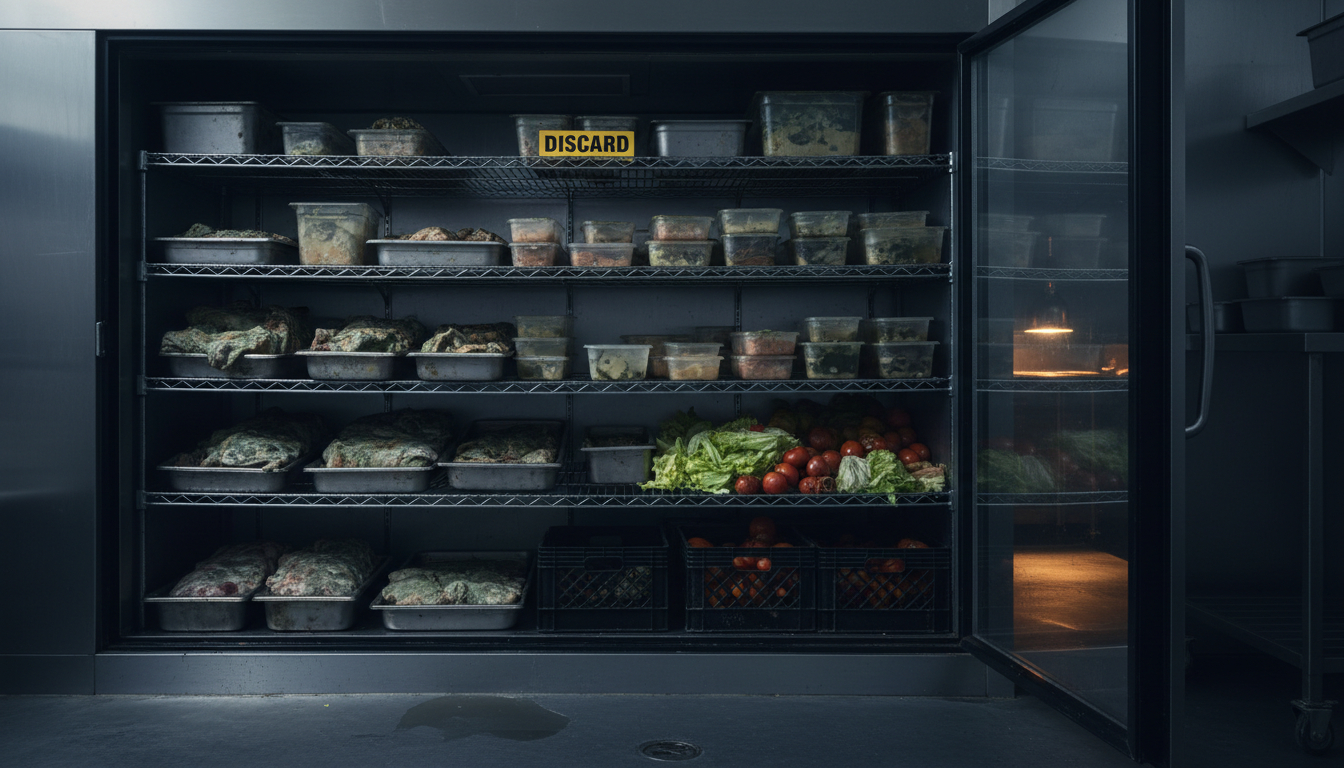
Marcus Rivera unlocked his taqueria at 6 a.m. and heard silence where the walk-in cooler’s compressor should have been humming. The unit had failed sometime after midnight. Inside sat roughly $18,000 of carne asada, cotija, produce, and prepped salsa, all of it now resting above 50 degrees. He called his health inspector, who told him what he already feared: every container had to go in the dumpster. Then he called his insurance agent, expecting a claim. What he got instead was a lesson in how his policy actually worked.
Why your property policy won’t pay for spoiled food
A business owners policy covers your building and business personal property against named or open perils like fire, theft, and vandalism. Food inventory is business personal property, so owners assume it is covered when it goes bad. The problem is the cause. The property form pays when a covered peril damages your property directly. It does not pay when your property spoils because a machine stopped running.
Refrigeration breakdown, power failure originating inside your equipment, and mechanical failure are standard exclusions on the property section of most commercial policies. The Insurance Information Institute describes the BOP as bundling property and liability, but the spoilage peril is not part of that base bundle. Unless you added coverage for it, the answer at claim time is no.
What actually covers a walk-in failure: two endorsements
There are two ways to buy the protection Marcus assumed he already had.
The first is a spoilage endorsement. It covers perishable stock that spoils due to a change in temperature or humidity from a covered equipment or power interruption. The catch is the sublimit. Many spoilage endorsements cap out at $10,000 or less, which would have left Marcus paying $8,000 out of pocket even if he had bought it.
The second is equipment breakdown coverage (sometimes called boiler and machinery) with a spoilage extension. This is the stronger option for a food business. It covers the physical repair of the failed compressor and, through the spoilage extension, the perishable stock lost because of the breakdown. Equipment breakdown coverage also tends to carry higher spoilage limits than a standalone endorsement, often $25,000 to $50,000.
The distinction matters. A spoilage endorsement without equipment breakdown may pay for the food but not the compressor repair. Equipment breakdown with a spoilage rider pays for both. For a restaurant that lives and dies by its walk-in, the second structure is worth the extra premium.
The health-department rule that turns a repair into a total loss
Here is the part owners underestimate. A compressor is a repairable machine. A tray of raw chicken that has been at 50 degrees for six hours is not repairable. It is trash by law.
The FDA guidance on food safety during power outages is blunt: perishable food held above 40°F for more than two hours should be thrown out. Local health codes enforce the same standard, and an inspector who finds temperature-abused food on your shelves can shut you down. That two-hour window is why an overnight failure is almost always a total inventory loss, not a partial one. By the time you discover it in the morning, the clock ran out hours ago.
This is also why “I’ll just repair the cooler and refreeze everything” is not an option a health inspector will accept, and it is why the dollar figure on a spoilage claim climbs so fast.
What business income coverage adds when the kitchen goes dark
Losing the food is the first hit. The second is the days you cannot open while you replace inventory, sanitize the unit, and pass reinspection. That lost revenue is what business income coverage is built for.
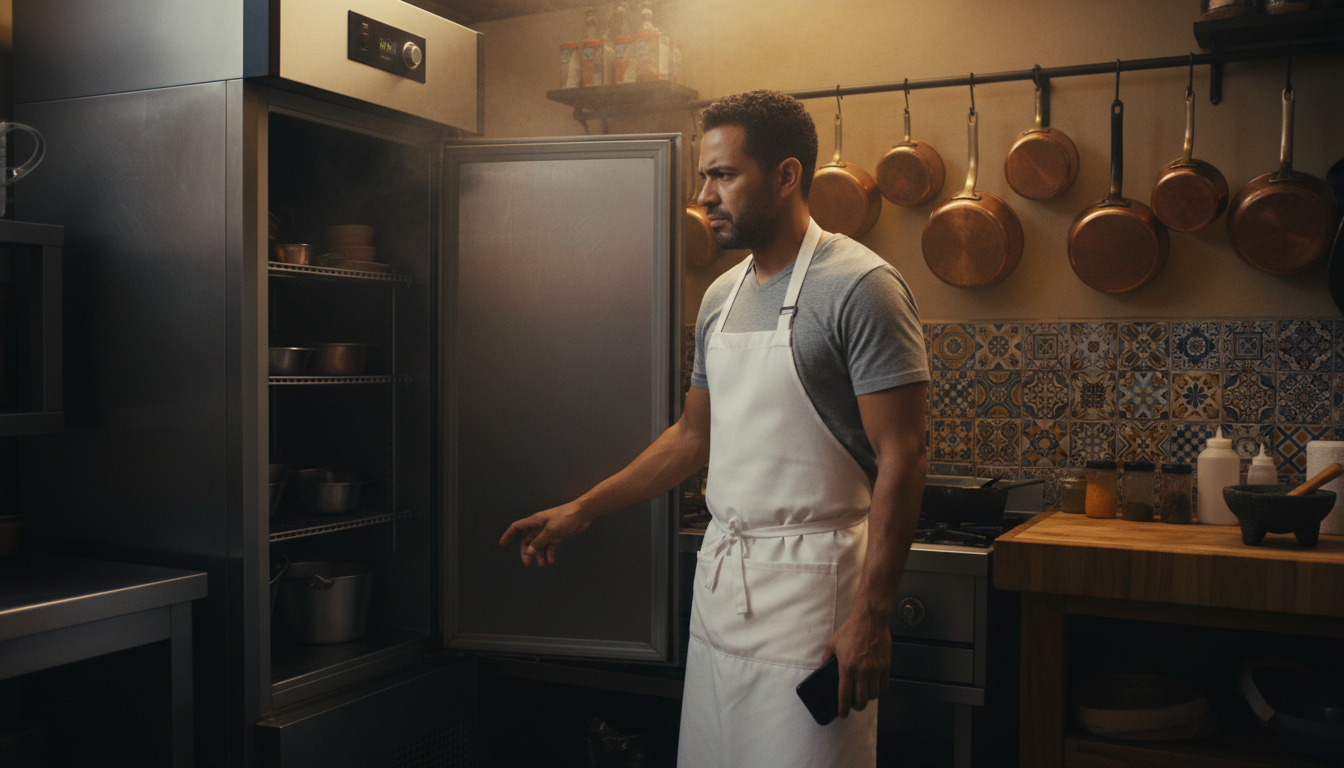
But business income has the same trigger problem as spoilage. It pays only when the shutdown results from a covered cause of loss. If the underlying event, an equipment breakdown, is not a covered peril on your policy, the business income coverage will not respond either. Buy them together. Equipment breakdown coverage plus a business income extension is the pairing that keeps a mechanical failure from becoming a month of unpaid rent.
How to price and stack the coverage before you need it
The table below shows how the three options compare for a small restaurant. Talk to your agent about which structure fits your actual walk-in value, not a generic package.
| Coverage | Standard BOP property | Spoilage endorsement | Equipment breakdown + spoilage |
|---|---|---|---|
| Covers spoiled food from a breakdown | No | Yes | Yes |
| Covers the compressor repair | No | No | Yes |
| Typical spoilage limit | $0 | Often $10,000 or less | $25,000 to $50,000 |
| Pairs with business income | No trigger | Sometimes | Yes |
| Best for | Businesses with no perishable stock | Cafes with modest inventory | Full-service restaurants with a large walk-in |
Before you renew, do three things. Read your declarations page for the words “equipment breakdown” and “spoilage,” and if they are not there, they are not covered. Price the endorsement against one month of your inventory value, because that is your real exposure. And review the rest of your restaurant program while you are at it, from your commercial policy structure to your equipment breakdown limits and your business interruption terms. A single walk-in failure should not be the event that teaches you what your policy left out.
Frequently asked questions
Does my business owners policy cover food that spoils when the cooler breaks? Usually not. The property section of a standard BOP excludes spoilage from mechanical or refrigeration breakdown. You need a spoilage endorsement or equipment breakdown coverage with a spoilage extension for the loss to be covered.
What is the difference between a spoilage endorsement and equipment breakdown coverage? A spoilage endorsement pays for perishable stock lost to a temperature change, usually with a low sublimit. Equipment breakdown coverage pays to repair the failed machine and, with a spoilage extension, the food lost because of the breakdown. Equipment breakdown is the stronger option for a restaurant.
Why do I have to throw out food if the cooler is fixed the same day? Health codes follow the FDA standard that perishable food held above 40°F for more than two hours must be discarded. Once the temperature window is exceeded, the food is unsafe regardless of whether the cooler is repaired, so an overnight failure is typically a total inventory loss.
Will insurance also pay for the days I am closed? Only if you carry business income coverage and the shutdown traces to a covered cause of loss. If the equipment breakdown itself is not covered, the business income coverage will not respond. Buy the two together.
How much spoilage coverage should a small restaurant carry? Match the limit to your typical walk-in inventory value plus a buffer. If your cooler routinely holds $18,000 in stock, a $10,000 spoilage sublimit leaves you badly underinsured. Equipment breakdown limits of $25,000 to $50,000 are common for full-service kitchens.
Is your walk-in worth more than your spoilage limit?
Compare business insurance options that include equipment breakdown and spoilage coverage for restaurants.
Compare Business Coverage