8 min read · Last updated June 12, 2026
In this article
- How permissive use coverage normally works
- What a step-down provision does to your limits
- Step-down versus a named driver exclusion
- Who counts as a permissive user, and who does not
- What to check on your own policy
- FAQ
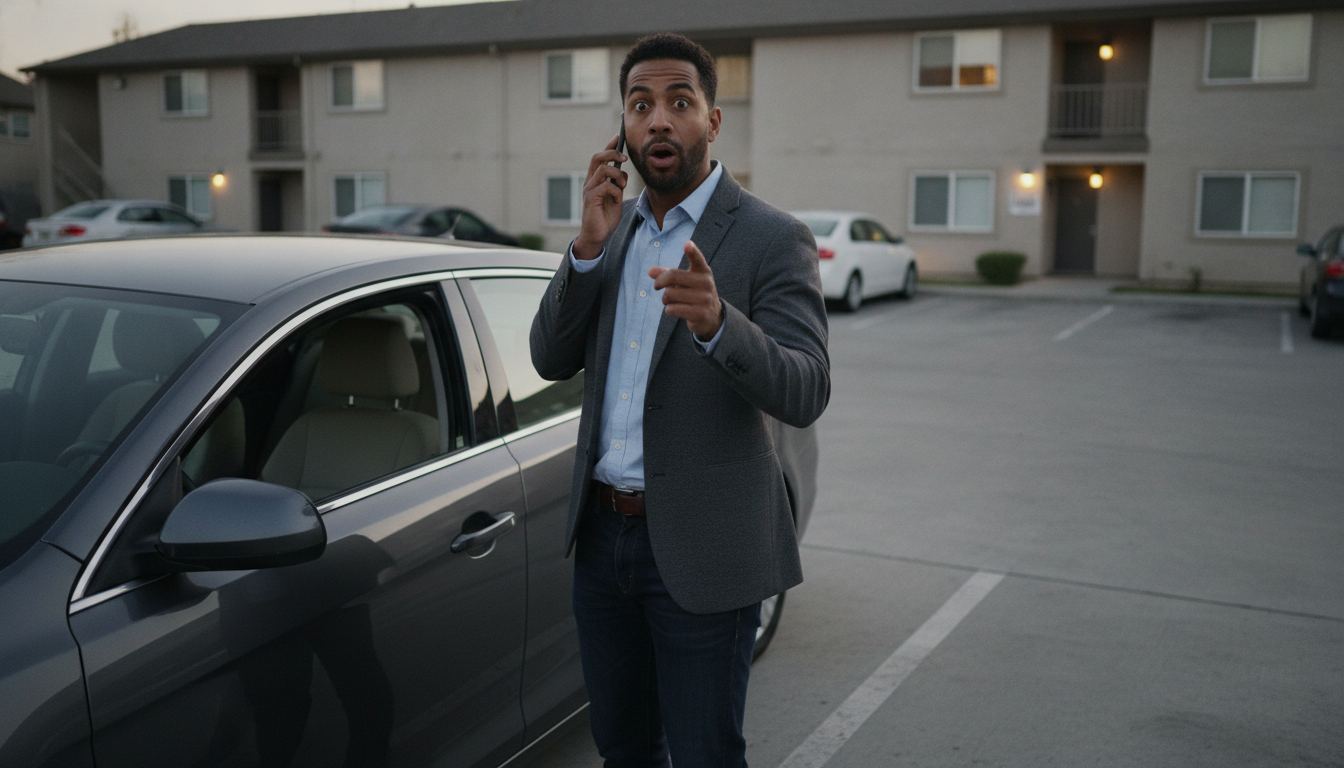
Marcus Lee lent his car to a coworker for an afternoon so the coworker could pick up a couch. The coworker ran a red light and seriously injured a pedestrian. The injury claim came in at $300,000. Marcus carried what he thought was solid coverage, $250,000 per person in bodily injury liability. He assumed his policy would respond up to that limit. It did not. His policy contained a step-down provision: when a driver who was not listed on the policy operates the vehicle, the liability limit drops to the state financial-responsibility minimum, which in his state was $25,000 per person. The insurer paid $25,000. Marcus and his coworker were jointly pursued for the remaining $275,000, and Marcus’s wages were garnished after a judgment.
How permissive use coverage normally works
The default rule in auto insurance is that liability coverage follows the vehicle. Your policy covers the car, and anyone you give permission to drive it is generally a covered “permissive user.” If your neighbor borrows your car with your okay and causes an accident, your liability coverage normally responds first, up to your limits.
This is why lending your car is riskier than most people assume. An at-fault accident by the person you lent it to usually goes on your insurance record and against your limits, not theirs. Their own policy, if they have one, typically sits as secondary coverage behind yours.
For most drivers, in most situations, permissive use works the way you would expect: full limits apply, the claim is paid, and the only lasting effect is a possible rate increase at renewal. Understanding what makes up an auto insurance policy helps you see why the liability section, not the driver list, is what controls coverage when you hand over the keys.
The problem is that some policies modify this default with a step-down provision that most drivers never read.
What a step-down provision does to your limits
A step-down provision is policy language that reduces, or “steps down,” your liability limits to the state minimum when the driver is someone other than a named insured or listed driver on the policy. The full limits you purchased apply only when you or a listed driver are driving. The moment a non-listed permissive user takes the wheel, the coverage drops to the statutory floor.
These provisions are most common on non-standard and budget auto policies, the kind marketed on price to high-risk drivers. They are far less common on standard and preferred carriers, but they do appear, and they are legal in many states.
Here is the consequence in numbers. Suppose you carry $250,000 per person in bodily injury liability, and your state minimum is $25,000. You lend your car to a friend who causes a $300,000 injury. With normal permissive use, the policy pays up to $250,000 and you face a $50,000 gap. With a step-down provision, the policy pays only $25,000, and the gap balloons to $275,000. Same accident, same friend, ten times the personal exposure, because of one clause.
Courts in several states have limited or struck down step-down provisions as contrary to public policy, while others enforce them as written. Because the outcome depends on your state and your specific policy language, you cannot assume a step-down clause would be unenforceable where you live.
Step-down versus a named driver exclusion
These two get confused, and the difference matters.
A step-down provision reduces coverage to the state minimum for non-listed permissive drivers. There is still some coverage, just far less than you bought.
A named driver exclusion removes coverage entirely for a specific person you have named and excluded. If you signed an exclusion for a household member, often to keep a high-risk driver off your policy and lower the premium, and that excluded person drives your car and crashes, there is zero liability coverage. We cover this in detail in the article on the named driver exclusion in auto insurance.
The hand-on-the-shoulder version: if you have ever signed paperwork to exclude a household member to lower your rate, understand that letting that person drive your car, even once, in an emergency, can leave you with no coverage at all. A step-down at least pays the state minimum. An exclusion pays nothing.
Both of these provisions exist to let carriers price risk more precisely, and both transfer risk back to you in ways that are invisible until a claim. The different types of auto insurance coverage each have their own conditions, and liability is the one where these driver-based reductions hide.
Who counts as a permissive user, and who does not
Permissive use means you gave the person permission to drive, expressly or by implication. A friend you hand the keys to is a permissive user. A family member who regularly drives the car with your knowledge is a permissive user, even if you never said the words out loud.
Non-permissive use is different. If someone takes your car without permission, including a thief or a person who explicitly was told not to drive, they are generally not a permissive user, and your liability coverage may not extend to them for at-fault damage they cause to others, though your own collision and comprehensive coverage can still apply to your car.
Two situations regularly trip people up. First, a household resident who is not listed on the policy. Many carriers expect every licensed driver in the household to be listed, and driving by an unlisted resident can trigger a step-down or a coverage dispute. Second, using the car for a purpose the policy excludes, such as delivery or rideshare on a personal policy. That is a different gap, but it stacks on top of the permissive-use question.

In plain language: the safest assumption is that everyone who lives in your home and is licensed should be listed on your policy, and that lending your car to anyone outside the home is worth a quick check of your policy language first.
What to check on your own policy
Three things to verify, and you can do most of it in ten minutes with your policy documents:
1. Search your policy for “step-down,” “permitted user,” or reduced limits for non-listed drivers. The language lives in the liability and definitions sections, not on the declarations page. If you cannot find it, call the carrier and ask directly: “If I lend my car to a friend who is not on my policy and they cause an accident, do my full limits apply or do they step down to the state minimum?” 2. Confirm every licensed driver in your household is listed. An unlisted resident driver is the most common trigger for a coverage reduction or dispute. 3. Know whether you have signed any named driver exclusions. If you have, treat that excluded person as someone who must never drive your car, because there is no coverage if they do.
These checks cost nothing and take less time than the couch run that cost Marcus $275,000. The clause that hurt him was in his policy the whole time, and a single phone call before he handed over the keys would have surfaced it.
FAQ
If I lend my car to a friend, whose insurance pays if they crash?
Usually yours. Auto liability coverage generally follows the vehicle, so your policy responds first when a permissive user crashes your car. Your friend’s own policy typically acts as secondary coverage behind yours. The accident also usually affects your insurance record, not just theirs.
What is a step-down provision in auto insurance?
It is policy language that reduces your liability limits to the state minimum when a driver who is not listed on your policy operates the vehicle. You keep your full limits when you or a listed driver are driving, but coverage drops to the statutory floor for a non-listed permissive driver.
Is a step-down provision the same as a named driver exclusion?
No. A step-down provision reduces coverage to the state minimum for non-listed drivers, so some coverage remains. A named driver exclusion removes coverage entirely for a specific excluded person, so there is no liability coverage at all if that person drives and crashes.
Are step-down provisions legal?
It depends on the state. Courts in some states have limited or struck down step-down provisions as contrary to public policy, while others enforce them as written. Because enforceability varies, you cannot assume the clause would be unenforceable where you live. Check your policy and your state’s rules.
Does everyone in my household need to be on my auto policy?
Most carriers expect every licensed driver in the household to be listed. An unlisted resident driver is a common trigger for a coverage reduction, a step-down, or a claim dispute. List every licensed household driver, or confirm with your carrier how an unlisted resident is treated.
Compare auto policies without hidden step-down limits
Step-down provisions are most common on budget non-standard policies. Compare carriers that apply your full liability limits to permissive drivers, not just the state minimum.
Compare Auto Insurance Quotes →