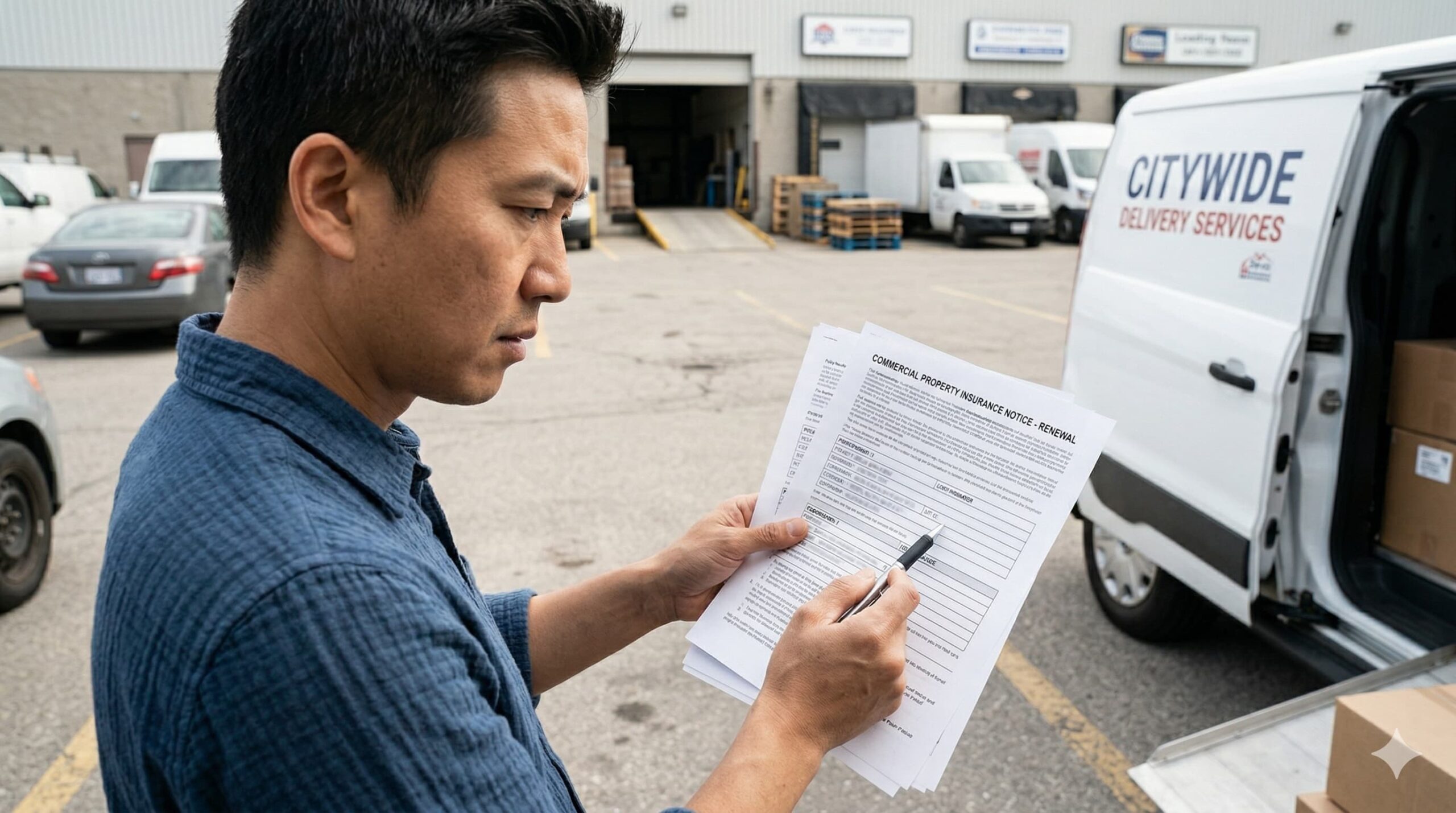
When one of David’s delivery drivers rear-ended a sedan on the way to a client site, David assumed his employee’s personal auto policy would cover the damage. The injured driver’s attorney filed suit against David’s business six weeks later.
David ran a small floral distribution company with four employees who used their personal vehicles for deliveries and supply runs. One driver, Marcus, rear-ended a sedan at an intersection while returning from a vendor pickup, sending the other driver to the hospital with a herniated disc. Marcus’s personal auto policy paid its $50,000 bodily injury limit. Medical bills, lost wages, and ongoing treatment totaled $215,000. The plaintiff’s attorney established that Marcus was acting within the scope of his employment and added David’s business as a co-defendant. David’s general liability policy had a clear auto exclusion. His commercial auto policy covered only the company-owned van, not employee-owned vehicles used for work. He had no Hired and Non-Owned Auto coverage. After 14 months in litigation, David settled for $142,000 out of pocket.
Your general liability policy almost certainly has an auto exclusion. If your employees drive their personal vehicles for work and you don’t have HNOA coverage, your business is the defendant with no coverage.
Why Your Business Shares Legal Responsibility
There is a legal doctrine that most small business owners encounter for the first time when they receive a lawsuit: respondeat superior, Latin for “let the master answer.” Under this principle, an employer can be held legally liable for harm caused by an employee acting within the scope of their employment. Making a delivery, driving to a client meeting, picking up supplies, depositing a check: all of these are work-related activities, and any accident that occurs during them can become your legal problem.
The fact that the employee owned the vehicle personally does not limit your exposure. Courts look at what the employee was doing when the accident happened, not who held the title to the car. If the answer is “something work-related,” your business can be named in the lawsuit. This is not a technicality or an unusual legal theory. It is standard tort law that regularly produces business liability judgments, and most small business owners have no idea it applies to them until a claim arrives.
Why the Employee’s Personal Auto Policy May Not Help
Most employees and employers assume that the employee’s personal auto policy is the last line of defense in any accident involving that vehicle. That assumption is often wrong. Personal auto policies frequently contain commercial use exclusions that limit or void coverage when the vehicle is being used for business purposes. A driver making deliveries or running work errands for your company may fall squarely within that exclusion, leaving their policy unable to respond.
Even when the personal policy pays, the limits are often insufficient. A standard policy might carry $100,000 per person in bodily injury coverage. A single hospitalization, surgery, and physical therapy course can push well past that figure. When the employee’s policy is exhausted, the remaining balance transfers to whoever else a court finds responsible, and in employment-related accidents, that almost always includes the business. The Insurance Research Council has documented that serious injury claims from auto accidents regularly exceed $100,000. David’s driver was carrying a $50,000 policy against a $215,000 claim. The business absorbed the rest.
What Hired and Non-Owned Auto Coverage Is
Hired and Non-Owned Auto (HNOA) coverage directly closes this gap. “Hired” coverage applies to vehicles your business rents or leases: a rental car used on a work trip, a vehicle leased for temporary delivery needs. “Non-Owned” coverage applies to vehicles owned by employees or others that are used for business purposes at the direction of the employer. Together, they provide the liability protection that a general liability policy excludes and that an employee’s personal policy may not cover.
HNOA coverage is typically added as an endorsement to a Business Owner’s Policy or a Commercial General Liability policy. For most small businesses with moderate employee driving activity, the annual cost runs $200 to $400. The coverage does not pay to repair the employee’s personal vehicle after an accident; that remains the employee’s responsibility under collision coverage. HNOA covers the business’s liability exposure when an employee’s work-related driving results in a claim against the company.
HNOA coverage typically costs $200 to $400 per year as a policy endorsement. A single uninsured liability claim from an employee accident can exceed $100,000. The endorsement is one of the most cost-effective protections a small business can carry.
Which Businesses Are Most at Risk
The businesses with the most unaddressed HNOA exposure are often the ones that don’t think of themselves as driving businesses. A cleaning service whose technicians drive their own cars to job sites. A property management company that sends employees in personal vehicles to handle maintenance calls. A marketing agency where account managers drive to client presentations in their own cars. A small distributor with employees making local deliveries. A contractor who asks team members to pick up materials on the way to a job.
None of these businesses operate a fleet. None of them consider employee driving a core operational risk. All of them have employees who use personal vehicles for tasks that directly serve the business, and all of them have liability exposures that a standard BOP or GL policy does not address. If any of your employees regularly use their own vehicles for work-related purposes, even occasionally, your business has HNOA exposure. Whether you have coverage for it is a question worth answering before a lawsuit forces the issue.
For a deeper look at how business liability coverage works across different policy types, see <a href=”https://dailyinsurance.news/different-types-of-business-insurance-explained”>the different types of business insurance explained</a> and <a href=”https://dailyinsurance.news/understanding-liability-insurance”>understanding liability insurance</a>.
Questions to Ask Your Broker Before Someone Gets Hurt
- Does our current Business Owner’s Policy or GL policy include Hired and Non-Owned Auto coverage, or does it contain an auto exclusion?
- If excluded, can HNOA be added as an endorsement, and what would it cost, given our employee driving activity?
- Does the coverage extend to employees who drive their personal vehicles only occasionally, or only to regular drivers?
- What liability limits does the HNOA endorsement provide, and would a commercial umbrella policy be needed to supplement them?
- Should we require employees who drive for work to maintain minimum personal auto liability limits as a condition of their employment?
Are your employees covered when they drive for work?
One uninsured liability claim from an employee accident can cost $100,000 or more. HNOA coverage often costs less than $400 a year.