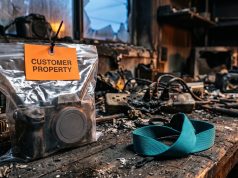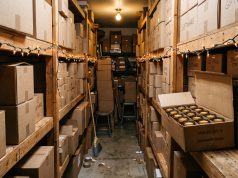
Rachel ran a candle-making business from her garage, stored $12,000 in supplies and finished inventory on shelving units along the back wall, and found out her homeowners’ policy wouldn’t pay a dollar when a water heater leak destroyed everything.
She had been selling online and at local craft fairs for two years. The water heater failed on a Tuesday morning, sending two inches of water across the garage floor. Wax blocks, fragrance oils, wicks, and 300 finished candles were ruined. Rachel filed a homeowner’s claim, expecting full coverage. The adjuster’s email arrived three days later: “Property used primarily for business purposes is not covered under personal property coverage.” The claim was denied in full. A $350/year Business Owner’s Policy would have covered every dollar.
The Business Pursuits Exclusion
Every standard homeowners policy contains a business pursuits exclusion. The ISO HO 00 03 form, used by most carriers, defines “business” broadly and excludes coverage for “property used at any time or in any manner for any business purpose” from personal property coverage. The liability section mirrors this, excluding bodily injury or property damage arising from business activities conducted on the property.
This means your homeowners’ policy won’t cover a client who slips on your icy walkway during a scheduled appointment. It won’t cover a delivery driver who trips on your porch steps picking up wholesale orders. It won’t cover your $6,000 photography setup or your $3,500 in retail inventory if a fire, theft, or water damage destroys them. The exclusion isn’t hidden in fine print. It’s a named, standard carveout that applies the moment your home doubles as a workplace.
Step 1: Identify Your Actual Exposure
Start by listing everything at risk. Business personal property includes inventory, raw materials, equipment, and tools stored at your home. If you have clients, vendors, or delivery drivers visiting your property, you have premises liability exposure. If you sell a product, you have product liability exposure. If you provide professional advice or services, you have professional liability exposure.
A freelance graphic designer working from a spare bedroom has relatively low property exposure but may need professional liability coverage. A dog groomer who sees 10 clients a week in a converted garage has significant premises liability exposure. An Etsy seller storing $15,000 in handmade jewelry inventory needs business personal property coverage with limits that match the value of the stock. The shape of your exposure determines which coverage option fits.
Step 2: Understand Your Three Coverage Options
The first option is a homeowner’s in-home business endorsement (HO 07 01 or carrier equivalent). This adds $1,000 to $5,000 in business personal property coverage and limited liability to your existing homeowners policy for $25 to $75 per year. It’s the cheapest fix, but the caps are low. If you have more than a few thousand dollars in equipment or inventory, or if clients visit your home regularly, the endorsement alone is not enough.
The second option is a Business Owner’s Policy, or BOP, which the Small Business Administration describes as bundling typical coverage options into one package. For a home-based business with no employees, a BOP typically costs $300 to $600 per year and bundles general liability ($1 million per occurrence, $2 million aggregate), business personal property coverage ($10,000 to $50,000 or more), and business interruption coverage. This is the right fit for most home-based businesses with inventory, equipment, or regular client visits.
The third option is a standalone commercial general liability policy. This covers only the liability side, typically at $400 to $800 per year, and makes sense if your property exposure is minimal but your client-facing risk is high. A personal trainer who sees clients at their home gym, for instance, needs strong liability limits but may not have significant equipment to insure.
Step 3: Match the Option to Your Risk Level
If you work from home on a laptop with no clients visiting and no inventory stored, the homeowner’s endorsement is probably sufficient. It closes the personal property gap for your computer and office equipment at minimal cost.
If you store inventory, see clients at your home, or use specialized equipment worth more than $5,000, a BOP is the right choice. The liability component covers a client injury on your property, the property component covers your inventory and equipment, and the business interruption component covers lost income if a covered event shuts down your operation.
If you provide professional services where your advice could cause a client financial harm, add professional liability (errors and omissions) coverage, which is not included in a standard BOP or GL policy. Consultants, bookkeepers, designers, and coaches all carry this exposure. A single bad recommendation without E&O coverage means you’ll fund the lawsuit yourself.
Step 4: Get the Right Limits and Check for Remaining Gaps
Set your business personal property limit to match the replacement cost of everything you would need to buy again to restart. Underinsuring by $5,000 to save $40 per year is a losing trade. Set your general liability limit at $1 million per occurrence and $2 million aggregate as a baseline.
Check for gaps that a standard BOP won’t fill. Product liability is included in most BOPs, but if you manufacture or sell consumable products like food, candles, or supplements, confirm your policy specifically covers product liability claims. If you store customer data or process online payments, consider a cyber liability policy. If you use your personal vehicle for business deliveries, your personal auto policy likely excludes business use, and your BOP won’t cover auto accidents.
Questions to Ask Your Agent
- Does my current homeowners’ policy have a business pursuits exclusion, and does it apply to my specific business activity?
- What is the maximum business personal property coverage available through an endorsement versus a standalone BOP?
- Does the BOP include product liability coverage for the items I manufacture or sell?
- Am I covered for business liability if a client, vendor, or delivery driver is injured on my property?
- Do I need professional liability coverage in addition to general liability for the services I provide?
Your business insurance needs depend on the specific risks of your operation, but the first step is always the same: confirm your homeowners policy isn’t covering what you think it is.
Rachel’s $12,000 loss was preventable for less than $1 per day. If you run any kind of business from your home, the gap between what you assume is covered and what actually is covered is where the financial damage happens. Close it before you have a claim to file. Renters face the same gap under their own policy form: see how a renters policy’s business property sublimit and liability exclusion work.
Does your homeowners’ policy actually cover your home business?
Rachel lost $12,000 in inventory because of a standard exclusion. A $350/year policy would have covered every dollar.