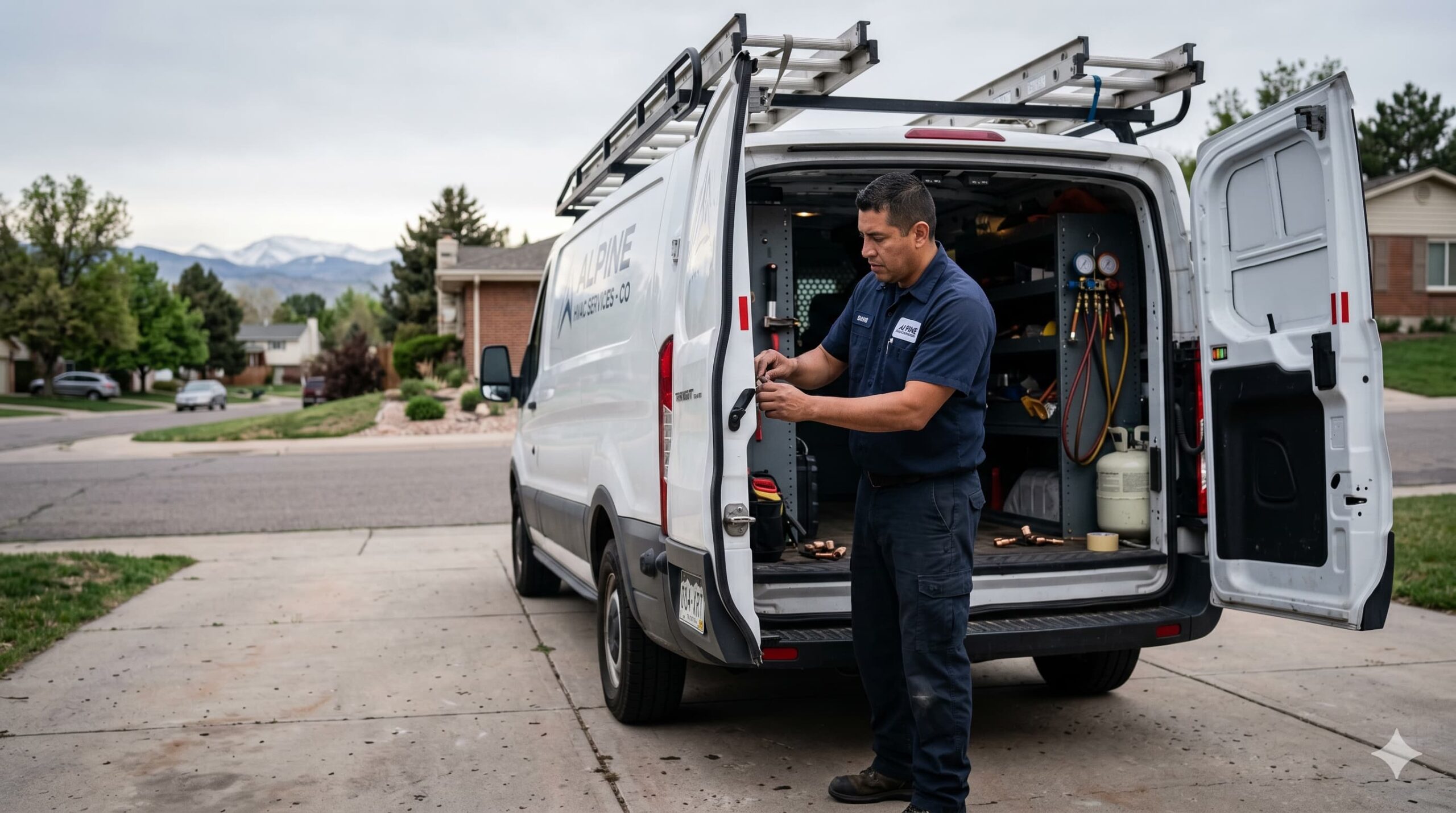
A Denver HVAC contractor woke up to find his work van pried open in the driveway, roughly $14,800 in power tools, copper line sets, and diagnostic equipment gone, and his commercial auto insurer denying the theft claim because tools are not part of the vehicle. The insurer paid to replace the latch, repaint the rear door, and reset the cargo alarm. That was it. His agent had never added inland marine coverage, and his general liability policy only covers business personal property on premises, which means it stops working the moment the tools leave the shop. He was out of work for 11 days while he rebuilt his kit, lost three jobs to competitors, and absorbed the full $14,800 himself.
Commercial Auto Stops at the Vehicle
Commercial auto policies are built around three things: the vehicle itself, liability arising from driving or operating it, and the people inside it. That is the entire product. Property stored in the vehicle is treated as a courtesy add-on, capped at $500 to $2,500 for “business personal property in transit,” and even that language is narrow. It usually covers property while it is physically moving between job sites, not property parked in your driveway overnight. When your van is stationary, that limited coverage often does not apply at all.
The gap was designed into the policy. Tool and equipment exposure is handled through a different product line, inland marine, which carriers price and underwrite separately because the risk profile is completely different from a vehicle. A work truck sits in driveways, parking lots, and job sites. Tools inside it live by a different set of rules, and the insurer wants to price those rules on their own merit instead of lumping them into an auto quote. That separation is efficient for the carrier and confusing for the contractor, who sees “commercial” on the policy and assumes coverage follows the work.
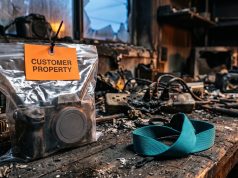
It does not. If your tools, materials, customer parts, or rented equipment are stolen, damaged, or destroyed, the commercial auto policy is not the product that pays.
What Inland Marine Actually Covers
Inland marine is the product that covers movable business property wherever it goes. The name is an accident of history, it came from marine insurance for cargo that traveled inland on rivers and canals, and it stuck. Today it covers tools, equipment, computer gear, customer property in your care, and anything else that does not sit still in one location. For a trade contractor, it is the single most important policy after general liability and workers comp, and most small operators do not know it exists until after the first break-in.
There are three common ways it is written. Scheduled coverage lists each major item by serial number with an individual value, which gives you clean replacement without argument but requires you to keep the list current. Unscheduled blanket coverage gives you a total pool, say $25,000, with a per-item cap, typically $2,500 to $5,000, which is simpler but kills claims on higher-value gear. The third structure covers equipment you lease or rent from a supply house, which matters the week you rent a $9,000 refrigerant recovery machine and somebody drives off with it.
The premium for a $25,000 tool schedule typically runs $350 to $650 per year with a $250 to $500 deductible. That is less than one decent cordless combo kit. A contractor who annualizes the premium against the average tool-theft loss in a residential work vehicle is buying coverage at roughly 3 to 5 cents on the dollar of exposure, which is why this coverage exists and why carriers underwrite it without drama.
Where Blanket Coverage Quietly Fails
The trap in unscheduled blanket coverage is the per-item cap. A thermal imaging camera runs $3,800. A Milwaukee M18 combustion analyzer runs $4,200. A laser level with a rotating head runs $2,400. A refrigerant recovery unit runs $1,800 to $2,600. Every one of those items lives in a service van, and every one of them is over or near the typical $2,500 per-item cap on blanket policies. When the van gets emptied, you collect full value on the hand tools and the drills, and you lose the spread on the expensive gear.
A good agent will walk the van with you before binding and pull the five to ten highest-value items onto a schedule, then let the rest sit under a blanket. That hybrid structure gives you clean coverage on the items that move the needle and simple coverage on the rest. If your agent has not asked about specific equipment by name, your quote is almost certainly generic, and your claim almost certainly has a hole in it.
The other quiet failure is the territory clause. Some inland marine policies cover only the United States and Canada. If your crew crosses the border to handle a commercial install in Mexico, or if you store equipment on a project site in the Caribbean for a season, the policy may not follow. Read the territory language before you sign, and read it again before any out-of-country work.
Questions to Ask Your Broker Before the Next Job
- What is the exact limit on business personal property in transit under my commercial auto policy, and does it apply when the vehicle is parked overnight at my home?
- Do I have inland marine or contractors equipment coverage, and is it written as scheduled, blanket, or a hybrid?
- What is my per-item cap on blanket coverage, and which of my current tools exceed it?
- Am I covered for tools at a customer job site, in my locked garage, and in transit, or only one of those locations?
- Does the policy include coverage for leased or rented equipment, and what documentation do I need to keep to file a claim on it?
Before you renew anything, pull the annual coverage review out of the drawer and walk through it with your broker. The same policy audit that catches a missing general liability limit catches a missing inland marine endorsement, and a contractor who runs the review once a year does not have the conversation after a theft that this article started with.
The Cost of Closing the Gap
The Denver contractor’s final numbers looked like this: $14,800 in stolen tools, $4,900 in lost revenue from the three jobs he could not reach, $480 in vehicle repair costs covered by his auto policy, and $0 paid out on the tools themselves. His inland marine quote when he finally bought the coverage came in at $540 a year with a $500 deductible for a $30,000 scheduled limit. He would have paid $540 instead of $14,800. That is the entire argument.
Tool theft is the single most common non-collision loss on a service van, and it is the single most under-insured exposure in the trades. The coverage is cheap, the claim is clean, and the process takes one phone call. Call the same broker who handles your workers comp and ask for a standalone inland marine quote this week.
Is your toolkit really covered when the van is parked in the driveway?
A $540 inland marine policy would have saved this contractor $14,800. Compare business insurance quotes in minutes.
Get Business Insurance Quotes →