7 min read · Last updated June 26, 2026
In this article
- What commercial auto physical damage actually covers
- Why the cargo is a separate policy
- The businesses that get caught by this gap
- How to close the cargo gap before a claim
- Frequently asked questions
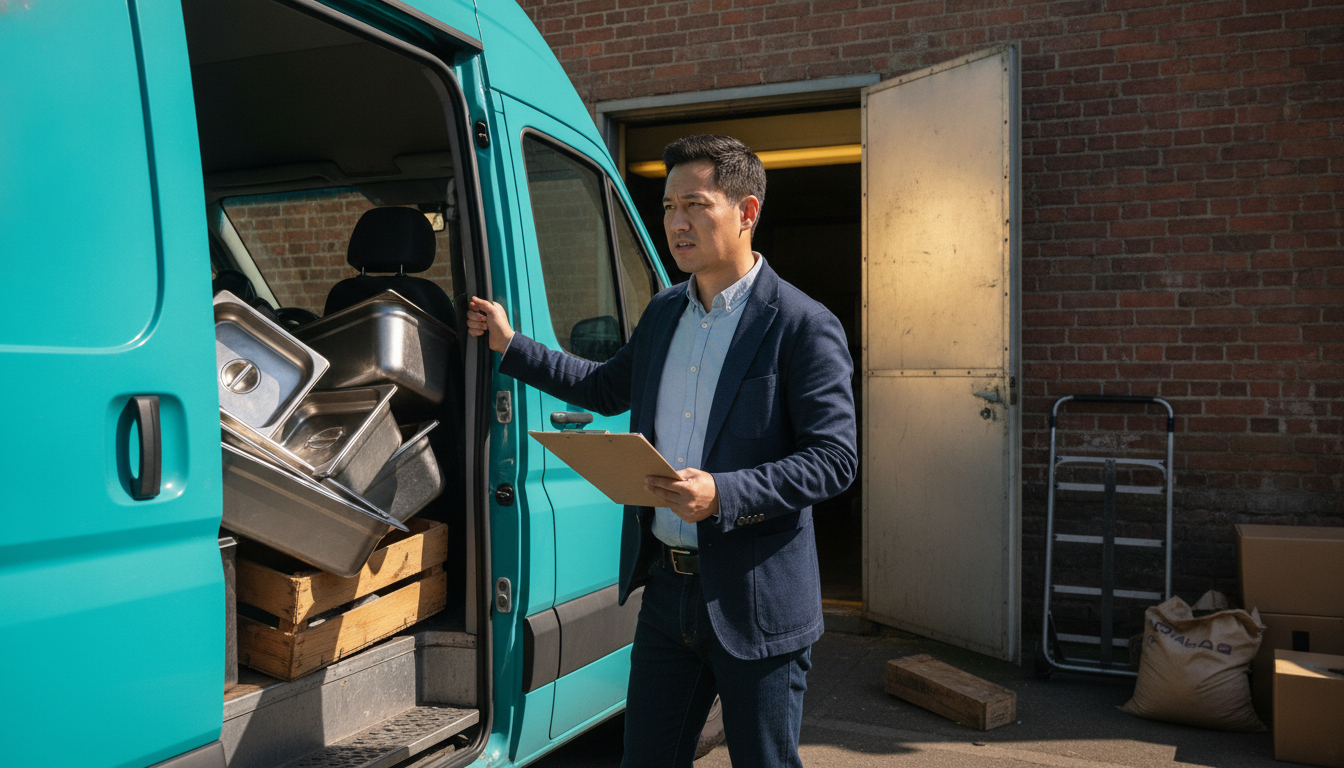
David Chen ran a catering company out of a leased commercial kitchen and carried a commercial auto policy on his delivery van. In May, a driver ran a red light and rear-ended the van on the way to a wedding. The van took $7,400 in damage and the insurer approved the repair without argument. Inside the van, $9,000 worth of plated dinners, rentals, and a custom cake were destroyed in the impact. David filed for the food and equipment too. That part of the claim was denied. His commercial auto policy covered the van. It said nothing about what the van was carrying.
The denial was not an error. It was the standard structure of an auto policy. David simply never knew the cargo needed its own coverage, and the day of the accident was the worst possible time to learn it.
What commercial auto physical damage actually covers
A commercial auto policy is built around the vehicle. Its physical damage section has two parts: collision, which pays when your vehicle hits something or is hit, and comprehensive, which pays for fire, theft, vandalism, and weather. Both are about the vehicle itself, its body, frame, engine, and permanently attached equipment.
The liability section of the same policy pays for injuries and damage you cause to other people. None of it reaches the property sitting in the cargo area. In insurance terms, the food trays, the rented chairs, the tools, or the boxed inventory are “cargo,” and a standard auto policy treats cargo as outside its scope.
This catches owners because the brochure language sounds total. A policy that promises to cover your “business vehicle” feels like it should cover the business being done with that vehicle. It does not. The same logic shows up across small-business coverage, where a policy that sounds complete still has named limits, as anyone who has read a beginner’s guide to commercial auto insurance learns quickly. Coverage is a stack of specific promises, and the load is simply not one of them.
Why the cargo is a separate policy
Insurers price the cargo risk separately because it behaves differently from the vehicle risk. The odds that a van is damaged, and the cost to fix it, are predictable from the make, model, and use. The odds that a load is ruined, and the value of that load, swing wildly by what you carry. A florist’s cargo on Valentine’s Day, a caterer’s load on a Saturday, and a contractor’s tools on a job day are all different exposures.
So the coverage lives in its own contract. For trucking and delivery operations it is called motor truck cargo insurance. For businesses that haul their own goods rather than freight for hire, the same protection often comes as an inland marine floater, sometimes labeled a “goods in transit” or “business personal property off-premises” endorsement. The names vary by carrier, but the function is the same: it pays for the property while it is moving in or on your vehicle.
Each version has its own limit, its own deductible, and its own list of covered causes. Some cover only named perils like collision and fire. Others are broader. A refrigerated load adds another wrinkle, because spoilage from a breakdown of the cooling unit is usually excluded unless you add equipment breakdown protection, the same category of coverage explained in equipment breakdown coverage for a small business.
The businesses that get caught by this gap
The owners most exposed to this gap are rarely trucking companies, who usually know they need cargo coverage. The ones caught off guard are the everyday service businesses that move valuable goods as a side effect of the job.
Caterers carrying food and rentals. Florists with refrigerated arrangements. Contractors hauling materials bought for a specific job. Retailers making their own deliveries. Medical couriers, equipment rental shops, and mobile repair operations. In each case the vehicle is insured and the owner feels covered, while the most valuable thing in the vehicle on any given day, the load, sits uninsured.

A related blind spot is the vehicle the business does not own at all. When an employee or owner uses a personal car or a borrowed truck for business deliveries, the exposure shifts again, which is why hired and non-owned auto coverage for a business matters alongside cargo. The throughline is the same. Owners insure the obvious thing, the vehicle they see in the lot, and leave the moving value uncovered. Mapping your full exposure is the point of reviewing the different types of business insurance rather than buying one policy and assuming it reaches everything.
How to close the cargo gap before a claim
Start by writing down the highest dollar value you ever have in the vehicle at one time, not the average. That single-load peak is the limit you actually need. A caterer who usually carries $3,000 but hits $12,000 for a large event should insure to the peak, because the accident does not wait for a slow day.
Then ask your agent three direct questions and get the answers in writing. Does my policy cover the property I carry, and under what name. What is the per-load limit and the deductible. What causes of loss are covered, and is spoilage or refrigeration breakdown included. If the answer to the first question is no, you need to add motor truck cargo or an inland marine floater before the next big job, not after.
A ruined load is one of the few business losses you can almost count on facing eventually if you move goods for a living. It is also one of the cheapest gaps to close. The owners who stay whole are the ones who insured the load, not just the truck, because the day of the accident is the day the carrier reads the policy back to you exactly as it was written.
Frequently asked questions
Does commercial auto insurance cover the cargo inside my vehicle? Usually no. A commercial auto policy covers the vehicle through its collision and comprehensive sections, plus liability for damage you cause others. The property you are hauling is treated as cargo and falls outside the auto policy. You cover it with a separate motor truck cargo policy or an inland marine floater.
What is the difference between motor truck cargo and inland marine coverage? Motor truck cargo is designed for trucking and delivery operations that haul freight. Inland marine floaters, sometimes called goods-in-transit or off-premises property coverage, fit businesses that move their own goods, like caterers and contractors. Both insure property while it is in transit, but they are sold and priced for different operations.
How much does cargo coverage cost for a small delivery business? For a small operation it often runs a few hundred dollars a year, depending on the limit, the deductible, and what you carry. That is far less than the cost of a single ruined load, which can run several thousand dollars and is denied outright under a standard auto policy.
Will cargo insurance pay if my refrigerated load spoils after a breakdown? Only if your coverage specifically includes it. Many cargo policies exclude spoilage caused by a refrigeration unit failing. To cover that risk you usually need to add equipment breakdown or a refrigeration endorsement. Confirm in writing whether spoilage is covered before you rely on it.
Does cargo coverage apply if I use my personal vehicle for business deliveries? Not automatically, and your personal auto policy likely excludes business use entirely. A business that uses personal or borrowed vehicles needs hired and non-owned auto coverage for the liability, plus a cargo or inland marine arrangement for the goods. Check both before sending anyone out with a load.
Insure the load, not just the truck
Compare small-business policies and confirm cargo or inland marine coverage is in place before your next delivery.
Compare Business Insurance Options →