8 min read · Last updated June 15, 2026
In this article
- What product recall insurance actually covers
- Why product liability is not the same thing
- What a recall actually costs an online seller
- How sellers buy recall coverage
- What to check before your next product launch
- FAQ
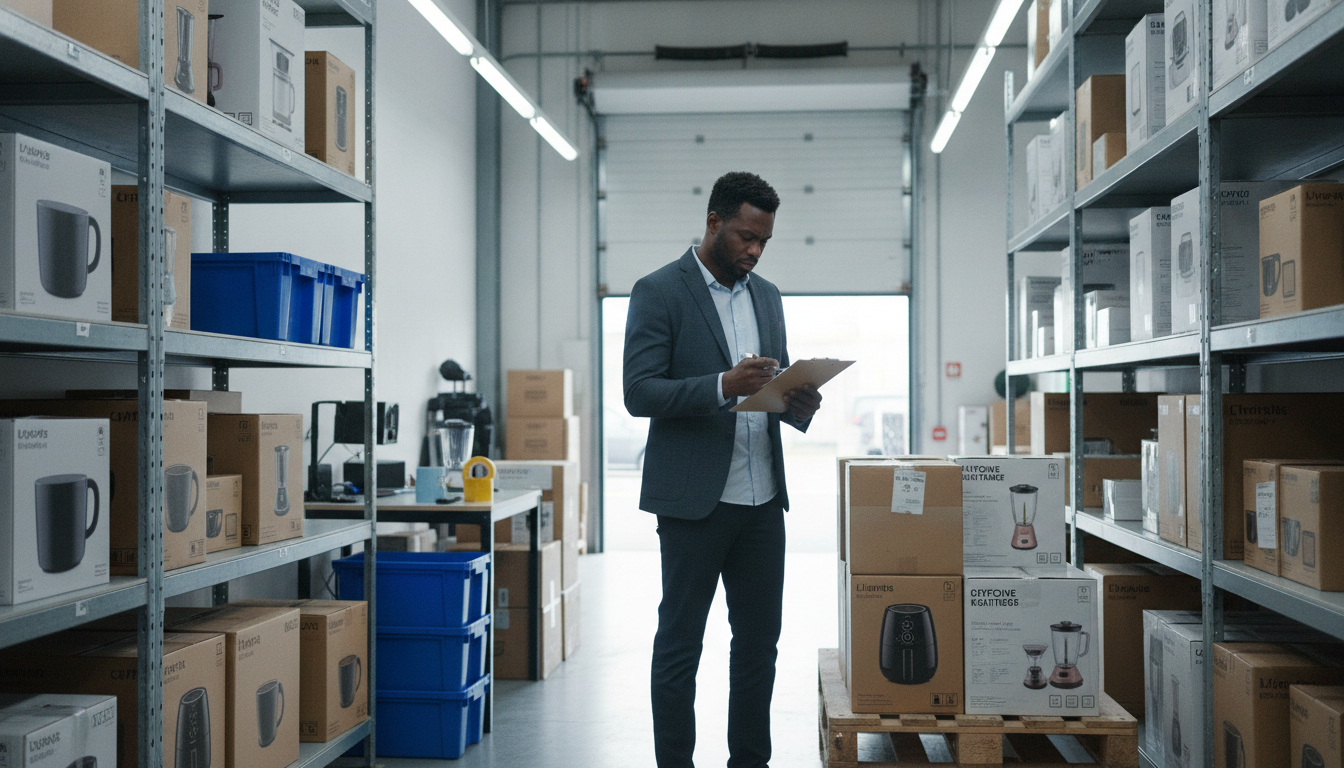
Marcus Bell sold kitchen appliances through his own Shopify store and a busy Amazon listing. In March, the CPSC flagged a wiring defect in a batch of his immersion blenders after two reports of overheating. No one was hurt. But Marcus had to notify every buyer, post a public recall notice, pay return shipping on roughly 1,900 units, and destroy the defective stock. The bill came to $94,000. He called his insurance broker certain his product liability policy would respond. It did not. That policy only covered injury claims, and no one had been injured. The cost of the recall itself was excluded. Marcus paid out of his line of credit and nearly lost the business.
What product recall insurance actually covers
Product recall expense insurance pays the direct costs of removing a defective or dangerous product from the market. The covered expenses usually include customer notification, communication and advertising of the recall, return shipping and transportation, warehousing of returned stock, disposal or destruction of the recalled units, and the cost to replace or refund them.
Better policies also cover business interruption tied to the recall and the expense of hiring a crisis or public relations firm to manage the fallout. Some extend to the cost of re-establishing the product’s market position after the recall, which is often where the real long-term damage lands.
In plain terms: if a regulator, a retailer, or your own testing forces you to take a product back, recall insurance pays for the logistics and the cleanup. It is the policy that pays to fix the problem, separate from the policy that pays a person who got hurt by it.
Why product liability is not the same thing
This is the distinction that surprised Marcus and surprises most sellers. Product liability coverage, which is built into most general liability policies, responds when a defective product causes bodily injury or property damage to a third party. If a blender catches fire and burns someone’s hand, product liability defends and pays that injury claim.
But the recall itself, the act of contacting buyers, shipping units back, and destroying inventory, is a first-party business cost, not a third-party injury. The general liability form (the standard ISO CG 00 01) does not treat recall expense as a covered loss. In fact, most general liability policies contain a specific “recall of products” exclusion, sometimes called the sistership exclusion, that removes any coverage for withdrawing a product from the market.
So a seller can carry a $1 million product liability limit and still have zero coverage for a $94,000 recall. The two exposures look related, and they often happen together, but they are insured by two different products. Sellers who already understand the product liability gap that catches e-commerce businesses still routinely miss the recall side of it.
For a fuller picture of how the standard coverages fit together, see the breakdown of the different types of business insurance and what each one actually does.
What a recall actually costs an online seller
The reason recall coverage matters more for online sellers than people expect is volume and traceability. When you sell direct to consumers, you have every buyer’s contact information, which regulators expect you to use. That makes the notification step both mandatory and expensive.
A recall for a small seller typically breaks down across several cost buckets:
| Recall cost component | What it covers | Typical range for a small seller |
|---|---|---|
| Customer notification | Emails, mailed notices, public recall posting | $3,000 to $15,000 |
| Return shipping and logistics | Prepaid return labels, freight, handling | $10,000 to $60,000 |
| Disposal or destruction | Certified destruction of unsafe units | $2,000 to $20,000 |
| Refunds or replacements | Money back or replacement product | $15,000 to $80,000 |
| Best for | Any seller of physical consumer products | Recall coverage pays these first-party costs |
The CPSC, which oversees most consumer products, recorded more than 300 recalls in a recent year. A recall does not require an injury to trigger. A defect report, a failed compliance test, or a banned chemical in a supplier’s component can all force a withdrawal. And regulators generally require you to pull the entire affected production run, not only the units that malfunctioned.
How sellers buy recall coverage
Product recall coverage comes in two main forms. The first is an endorsement added to a commercial package or business owners policy. This is the most common route for small sellers and usually carries a sublimit, often $25,000 to $100,000, which may not be enough for a large recall. The second is a standalone product recall policy with higher limits, written for businesses with meaningful manufacturing or import exposure.
A few things to confirm on any quote. Check whether the coverage is “first-party” recall expense (your costs) versus “third-party” recall liability (a customer’s costs, such as a retailer that has to pull your product from its shelves). Many sellers need both. Check the trigger language, because some policies only respond to a government-ordered recall and not a voluntary one you initiate after your own testing. And check the sublimit against a realistic worst case for your unit volume.
Sellers who carry a business owners policy as their core small-business coverage should specifically ask whether recall expense is included, excluded, or available as an add-on. The default on most BOP forms is excluded.
What to check before your next product launch

Three questions for your broker before you ship your next batch:
1. Do I have product recall expense coverage at all, or only product liability? If the answer is product liability only, you have Marcus’s gap. Ask for the recall coverage to be quoted as an endorsement and as a standalone. 2. What is the sublimit, and does it match my unit volume? Multiply your typical production run by your return-shipping and refund cost per unit. If that number is bigger than your sublimit, the limit is too low. 3. Does the policy cover voluntary recalls, or only government-ordered ones? Most responsible sellers pull a product on their own testing before a regulator gets involved. A policy that only pays for government-ordered recalls leaves you exposed for exactly the recall you want to do quickly.
These three questions take fifteen minutes. They are the difference between treating a recall as a manageable insured event and treating it as the cost that ends the business.
FAQ
Does product liability insurance cover the cost of a recall?
No. Product liability covers bodily injury or property damage claims when a defective product hurts someone. The cost of recalling the product, including notification, return shipping, and disposal, is a separate first-party cost that most general liability policies specifically exclude. You need product recall expense coverage for that.
How much does product recall insurance cost for a small business?
Premiums vary widely by product type and sales volume, but small e-commerce sellers often add recall expense as an endorsement for a few hundred to a couple thousand dollars a year, with a sublimit. Standalone policies with higher limits cost more. Pricing depends on the product category, unit volume, and recall history.
What triggers a product recall?
A recall can be triggered by an injury report, a defect or compliance failure found in testing, a banned material in a component, or a regulator like the CPSC requiring a withdrawal. An injury is not required. A failed safety test or a supplier problem can force you to pull the entire affected production run.
Do I need recall insurance if I just resell products I did not manufacture?
Often yes. Sellers and importers can be named in a recall even when they did not make the product, especially when they are the brand of record or the importer. If your name or logo is on the listing, regulators and customers treat you as responsible for the recall logistics.
What is the difference between first-party and third-party recall coverage?
First-party recall coverage pays your own costs to pull and replace the product. Third-party recall liability pays the costs a customer or retailer incurs because of your product, such as a store that has to clear your item from its shelves. Many sellers need both, so confirm which one a quote includes.
Compare product recall and liability coverage for your store
A product liability policy will not pay the cost of pulling a defective product. Get matched with carriers that write recall expense coverage alongside your general liability.
Compare Business Insurance Quotes →