7 min read · Last updated July 27, 2026
- Collision coverage is first-party coverage, so your deductible applies no matter who caused the crash. You pay it at the shop and wait for it back.
- When your insurer pursues the at-fault driver’s carrier, it must include your deductible in the demand, and it must tell you whether it intends to pursue recovery at all.
- Recovery is proportional. If your insurer recovers 65% of what it paid, you get 65% of your deductible back, and legal or collection fees are apportioned between you and the insurer.
- Filing directly against the at-fault driver’s property damage liability coverage carries no deductible at all, which is the trade-off nobody explains at the scene.
In this article
- Why your deductible applies even when someone else caused it
- What subrogation is, and why your deductible rides along
- Partial recovery means a partial refund
- The path that skips the deductible entirely
- Frequently asked questions
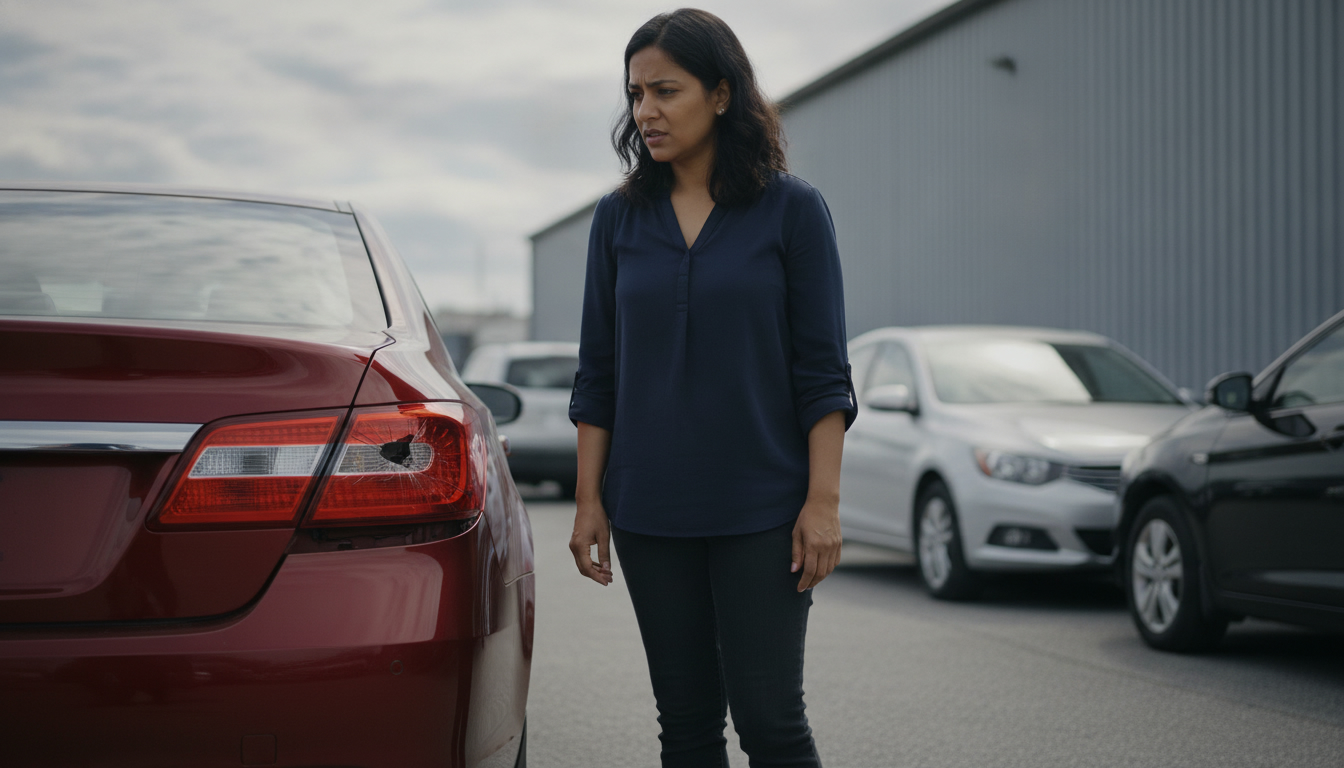
Anjali Rao was stopped at a red light in Columbus when a pickup hit her from behind. The other driver admitted fault at the scene and the police report said the same thing. Her repairs came to $6,400, her insurer paid the body shop $5,400, and Anjali wrote a check for the $1,000 collision deductible on a crash she had no part in causing. Five months passed before any of it came back.
Why your deductible applies even when someone else caused it
Collision coverage is first-party coverage. It is a contract between you and your own insurer, and it pays for damage to your car regardless of who was responsible. The deductible is simply the share of every collision loss you agreed to keep when you bought the policy. It is written into that contract without any reference to fault.
So the sequence at the shop is fixed. Your insurer pays the repair cost minus your deductible, you pay the rest, and the car goes back on the road. Whether the other driver was texting, drunk, or perfectly stationary makes no difference at that counter. The fault question gets settled later, between two insurance companies, on a timeline you do not control. The broader sequence is covered in our walkthrough of what happens when you file a car insurance claim.
What subrogation is, and why your deductible rides along
Once your insurer has paid, it steps into your shoes and goes after the party that caused the loss. California’s Department of Insurance defines it directly: subrogation is “the right of the insurance company to recover from a third party the amount of damages it paid to you.”
Your $1,000 is part of that demand. Washington’s Office of the Insurance Commissioner states the obligation plainly: your company must include your deductible in its subrogation demand to the at-fault party. Your insurer is not collecting only the $5,400 it spent. It is collecting the full $6,400 loss, and your share of any recovery comes back to you.
You are also entitled to know what your insurer plans to do. Under California’s guidance, the company must advise you whether or not it will pursue subrogation. If it declines, that is not the end of your claim. You can pursue the at-fault driver for the deductible yourself, though you should tell your insurer before you do, so you do not undercut a recovery it is still working on.
Most of these disputes never see a courtroom. Insurers resolve them between themselves through inter-company arbitration, which is why a straightforward rear-end claim can still take months to close out. Nothing about that delay means your claim was handled badly.
Partial recovery means a partial refund
Here is where expectations break. People assume a clear-fault crash means the full deductible comes back. It comes back in proportion to what the insurer actually recovers.
California’s guidance gives the rule in one line: if 100% of the paid claim is recovered you receive 100% of your deductible, and if the recovery is 65%, you receive 65% of your deductible. Washington applies the same logic to shared fault. If the investigation finds you partly responsible, you recover only that percentage of your deductible.
| What the insurer recovers | Typical reason | Your $1,000 deductible back |
|---|---|---|
| 100% | Clear liability, other carrier accepts in full | $1,000 |
| 80% | You are found 20% comparatively negligent | $800 |
| 65% | Disputed facts settled at arbitration | $650 |
| 50% | Equal fault assigned to both drivers | $500 |
| 0% | At-fault driver uninsured and without assets | $0 |
That last row is the one to plan for. If the driver who hit you carried no insurance and has nothing to collect against, there is no recovery to share, and your deductible stays gone. Uninsured motorist property damage coverage exists to close that hole in states that offer it, and our guide to uninsured motorist coverage explains how it works.
The path that skips the deductible entirely
There is a second route after a not-at-fault crash, and almost nobody explains it at the scene.
Instead of filing on your own collision coverage, you can file a third-party claim directly against the at-fault driver’s property damage liability coverage. That is their coverage, not yours, so no deductible applies. You never write the $1,000 check and you never wait for a refund.
The trade-off is control. A third-party claim only moves once the other insurer accepts liability, and that can take weeks. If they dispute fault, delay the inspection, or dispute the repair estimate, your car sits. Filing on your own collision coverage costs you the deductible but gets the repair started immediately, with your own insurer contractually obligated to you.
The practical rule: when liability is clean, documented, and admitted, a third-party claim is usually worth the wait. When fault is contested or the other carrier is slow, file on your own collision and let subrogation do the work.
Three things can cost you the refund even when everything else goes right. Settling directly with the other driver without telling your insurer can wipe out its recovery rights, and Washington’s guidance specifically tells policyholders to notify their insurer before agreeing to any settlement. Letting the file close without ever asking whether the company intends to subrogate leaves you unaware that the deductible is now yours to chase. And thin documentation weakens the demand, so photograph the damage, keep the police report number, and hold onto the shop’s itemized estimate.
If the recovery amount itself looks wrong, or the repair estimate was written down before any of this started, our guides to disputing an auto insurance claim and to aftermarket parts in a collision payout cover the next step. And if the car lost resale value even after a proper repair, that is a separate claim against the at-fault driver, explained in our piece on diminished value claims.
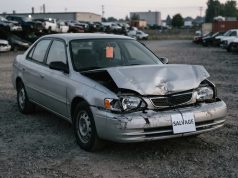
A total loss changes the math again. If you keep the wrecked vehicle instead of surrendering it, insurers subtract a separate salvage value from your settlement, a different deduction than the collision deductible discussed here.
Frequently asked questions
Do I have to pay my deductible if I was not at fault? Yes, if you file on your own collision coverage. The deductible is part of your contract with your own insurer and applies regardless of fault. You pay it at the shop and get it back later through subrogation, in proportion to what your insurer recovers from the at-fault party.
How long does it take to get my deductible back after subrogation? There is no fixed timeline. Recovery depends on the other carrier accepting liability, and disputed claims often go to inter-company arbitration, which adds months. Several months from repair to reimbursement is common on an ordinary claim, and your insurer should be able to tell you where the file stands.
What if my insurer does not pursue subrogation? It must tell you. If the company declines to pursue recovery, you can pursue the at-fault driver for your deductible yourself, typically in small claims court. Talk to your insurer before you do, so you do not interfere with any recovery effort still in progress.
Can I avoid the deductible by filing against the other driver’s insurance? Yes. A third-party claim against the at-fault driver’s property damage liability coverage carries no deductible, because it is their policy paying. The trade-off is that repairs cannot start until their insurer accepts liability, which is slower and depends entirely on their cooperation.
Do I get my full deductible back if I was partly at fault? No. Reimbursement tracks the recovery percentage. If you are found 20% at fault and your insurer recovers 80% of what it paid, you get 80% of your deductible back. Legal and collection fees incurred in the recovery are also apportioned between you and the insurer.
A $1,000 deductible is only cheap until the crash is not your fault
Compare auto insurance quotes and see what dropping to a $500 deductible actually costs per month.
Compare Auto Insurance Quotes