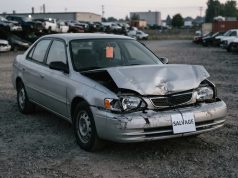
Raj’s 2022 Toyota Camry was 14 months old when a delivery van rear-ended him at a stoplight on a Saturday morning. The body shop did clean work: new bumper, new tailgate, color match perfect, panel gaps even, Camry ran like nothing happened. Two weeks later, Raj traded it in toward a different vehicle. The dealer’s offer came in $3,400 lower than the same trim, same mileage, same year sold the previous month. The Carfax report showed the accident. The Camry had been repaired to factory spec but it was no longer worth factory price. Raj filed a diminished value claim against the at-fault driver’s insurer six months later. The check arrived in 11 weeks for $2,950.
What diminished value actually is
Diminished value is the difference between what your vehicle was worth the day before the accident and what it is worth after a quality repair. The vehicle has been fully fixed. The market has not been fooled. Buyers pay less for a Carfax-reported accident vehicle, period. Industry studies put the average inherent diminished value loss at 10 to 25 percent of pre-accident retail value for vehicles less than five years old, with the largest hits on premium brands and low-mileage examples.
Three categories exist, and only one is the kind most drivers can collect on. Immediate diminished value is the loss right after the accident before any repair, and is rarely claimed because the vehicle is repaired. Inherent diminished value is the residual loss after a quality repair, due to the accident history alone, and is the standard claim type. Repair-related diminished value is the additional loss from substandard repair work, and is collected separately when a body shop cuts corners.
Why you can only collect from the at-fault driver’s insurer
The structural rule that catches most drivers off guard: in most states, your own collision coverage will not pay diminished value to you. Insurers write the policy to cover the cost to repair your vehicle, not the difference in market value after repair. When you are at fault, your insurer pays for your damage under your contract, and your contract excludes diminished value.
When the other driver is at fault and their liability insurance is paying, the legal standard shifts to “make the injured party whole,” which includes the loss of market value. Every state allows third-party diminished value claims as a matter of common law. The amount and the formula vary, but the claim itself is allowed.
Georgia is the famous exception: the 2001 Mabry v. State Farm settlement requires Georgia first-party insurers to pay diminished value on collision claims as well. A handful of other states have followed in narrower circumstances, but the rest of the country remains a third-party-only landscape for DV.
How carriers calculate the number
Most insurers apply a version of the 17c formula, named after paragraph 17c of the Georgia settlement. The formula starts with the pre-accident retail value from a guidebook like NADA or Kelley Blue Book, applies a 10 percent base loss factor, then adjusts down for damage severity and mileage. A clean structural repair on a high-mileage older vehicle produces a small number. A repaired frame strike on a low-mileage luxury vehicle produces a large one.
The 17c formula tends to underpay because the 10 percent ceiling does not match real market loss for premium vehicles. A more accurate path is an independent diminished value appraisal from a licensed appraiser, which runs $200 to $400 and pulls comparable sales of accident-history vehicles from auction data. A solid appraisal moves the number from a 17c estimate of $1,200 to a market-based number of $4,500 on the same vehicle.
What you need to file
Five documents make a DV claim defensible. The pre-accident value pulled from KBB, NADA, or Edmunds, dated to the accident. The repair invoice from the body shop showing parts replaced and labor performed. A post-repair photograph set including all replaced panels and any structural welds. The Carfax or AutoCheck report showing the accident on the vehicle history. An independent diminished value appraisal, which carries the most weight when the carrier disputes the number.
File the claim in writing with the at-fault driver’s insurer, addressed to the property damage adjuster handling the original repair claim. State the amount, attach the documents, and reference the state statute of limitations for property damage, which runs two to six years depending on the state. Most carriers settle DV claims at 50 to 75 percent of the appraised number on the first pass and require a second letter to move higher.
What can sink the claim
Three things kill a DV claim faster than anything else. First, signing a release in the original property damage settlement that waives all future claims, which adjusters frequently include in the standard release form without flagging it. Read every release before signing and strike the broad waiver if it appears. Second, waiting too long: most states cap the claim at the property damage statute of limitations, and adjusters use the time elapsed to argue depreciation has consumed any DV loss. File within 12 months of the repair when possible. Third, no vehicle history record: if Carfax does not show the accident, the carrier argues there is no provable market loss. Get a copy of the report after the body shop completes the repair.
For the broader picture on how this fits into your auto policy, our guide to what makes up an auto insurance policy walks through collision, comprehensive, and liability coverage. And 10 factors that affect your auto insurance rates covers what changes after a non-fault claim.
FAQ Section
Can I file a diminished value claim if I was at fault? In most states, no. Your own collision coverage pays the cost of repair, not the loss of market value. Georgia is the major exception, where first-party DV claims are allowed against the insured’s own carrier. Check your state’s regulations or consult a property damage attorney.
How long do I have to file a diminished value claim? Most states give two to six years from the date of the accident, tied to the property damage statute of limitations. Practical advice is to file within 12 months. Adjusters discount older claims by arguing the depreciation has already consumed any DV loss.
Do I need an attorney to file a DV claim? Not for amounts under $5,000. Most claims settle through direct negotiation with the adjuster. For larger amounts, a property damage attorney working on contingency will increase the recovery, with fees running 25 to 33 percent of the settlement.
Will filing a DV claim raise my rates? No. The claim is filed against the at-fault driver’s insurer, not yours. Your rates can shift after a non-fault claim regardless of DV, but the DV claim itself does not appear on your insurance record. For more on how insurers price accident claims, see what a single at-fault accident can do to your premium.
Do leased vehicles qualify for diminished value? Yes, but the lessor (the bank or finance company) is the legal owner and is the proper party to receive the check. Most lease agreements pass the proceeds back to the lessee. Confirm in writing before the claim is filed, because some leases retain the diminished value recovery as the lessor’s right.
Closing
Most drivers leave a diminished value claim unfiled because they do not know the loss exists, the insurer has no incentive to mention it, and the body shop’s job ends at “looks new.” The accident has already cost the time, the deductible, and the rental. The market loss on top of that is real money the at-fault driver’s insurer owes. Documentation is straightforward. The check is real. The clock is running.
Compare auto insurance quotes
See real coverage options for collision, liability, and uninsured motorist. Free comparison, no obligation.
Get Auto Insurance Quotes