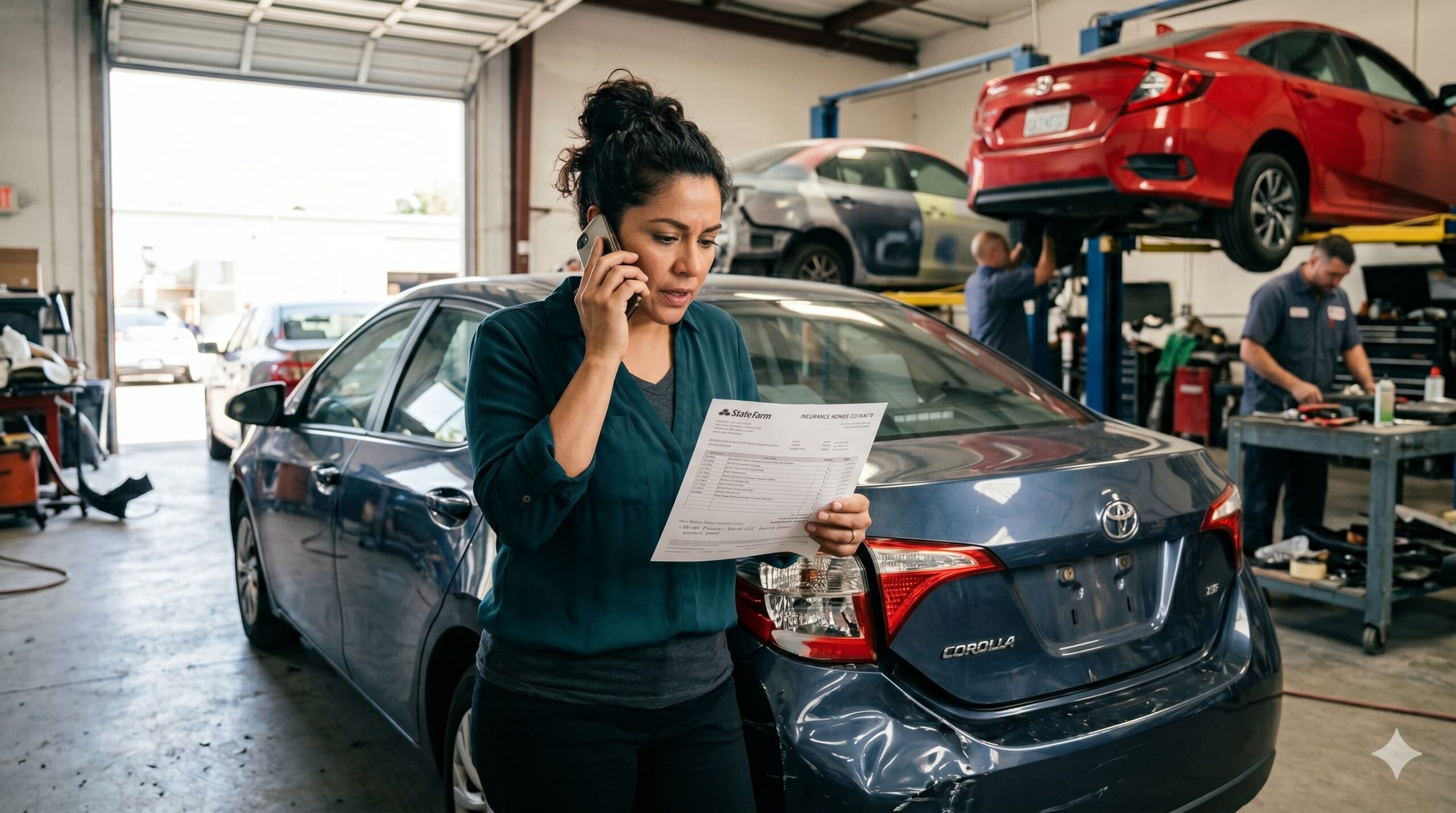
A 34-year-old teacher in Phoenix had her 2021 Honda CR-V totaled in a rear-end collision. The insurer’s adjuster valued the vehicle at $24,400 based on three comparable listings retrieved from the insurer’s valuation software. She spent two hours on Autotrader and Cars.com, found five comparable CR-Vs within 30 miles averaging $27,200, and said nothing. The $2,800 gap mattered: she was $1,400 upside-down on her loan. She accepted the lower number because the adjuster presented it with confidence, and she assumed the valuation was authoritative. It was not. She had the right to submit her own comparable vehicle research, request a supervisor review, and invoke the appraisal clause written into her policy, a binding arbitration process that typically costs $300 to $500 and consistently produces higher payouts than the adjuster’s opening number. The first offer on a claim is a starting point. Most policyholders treat it as the final answer.
Step 1: Document Everything Before Responding to Any Offer
The moment you receive a settlement offer or repair estimate, the clock starts on your response window. Before you say anything to the adjuster, gather the documentation that will support your position. For a total loss claim, that means printing or saving a minimum of five to ten comparable vehicle listings from Autotrader, Cars.com, CarGurus, or local dealer sites, using the same year, make, model, trim level, and mileage range as your vehicle. Take a screenshot of every listing with the price, mileage, and location visible, because listings disappear.
For a repair claim, document the damage with your own photographs before releasing the vehicle to the insurer’s preferred shop. If the insurer directs you to a specific shop, you have the right to take the vehicle to your own repair shop for a separate estimate. In most states, insurers cannot force you to use a specific shop, though they can guarantee the work only at preferred facilities. An independent body shop estimate at your preferred location gives you a second data point to compare against the insurer’s number.
Preserve every communication with the insurer in writing. Follow up phone calls with an email summarizing the discussion. Written records create a paper trail if the dispute escalates.
Step 2: Request the Written Decision and Valuation Methodology
Ask your adjuster for a written explanation of how they arrived at the settlement number. For a total loss, this means requesting the CCC ONE, Mitchell, or Audatex valuation report the insurer used. These reports list the comparable vehicles they pulled, the adjustments they applied for mileage or condition, and the weighting behind the final number. Insurers are generally required to provide this documentation on request.
Review the comparables they used. Are the vehicles genuinely comparable, or did the software pull listings in different markets, different trim levels, or with significantly higher mileage? Did they apply negative condition adjustments that may not reflect your vehicle’s actual state? Every adjustment in the insurer’s report is a potential data point to challenge. You are not attacking the adjuster personally. You are submitting evidence that their methodology produced an inaccurate result.
Step 3: Build Your Counter-Evidence
For a total loss dispute, compile a written counteroffer with your comparable vehicle listings attached. Use at least five listings, show the average, and note the geographic market. If your vehicle has recent maintenance records, new tires, or aftermarket improvements that increase its value, document them separately. Submit this in writing to the adjuster and request a response within 10 business days.
For a repair dispute, obtain an independent estimate from a licensed body shop of your choosing. If the independent estimate is materially higher than the insurer’s estimate, submit the independent estimate and a written request for the insurer to match it or explain the discrepancy. Many repair disputes are resolved at this stage because the insurer’s preferred shop receives a supplemental payment rather than the claim escalating.
Keep the dispute letter factual and specific: these are the comparable vehicles; this is the average price; this is the difference; and this is my requested adjustment to the settlement. Emotion does not move claims. Documentation does.
Step 4: Submit a Formal Dispute in Writing
If the adjuster review doesn’t produce an acceptable adjustment, escalate in writing to the claims supervisor. Request a formal reconsideration of the claim with your supporting documentation attached. This creates an internal record within the insurer that you pursued the official dispute path before invoking external mechanisms.
In the letter, state the original offer, state the amount you are requesting, cite the supporting evidence, and note that you are prepared to invoke the appraisal clause if the reconsideration does not produce a satisfactory result. Explicitly mentioning the appraisal clause signals that you know your policy rights and shifts the negotiating dynamic.
Step 5: Invoke the Appraisal Clause
The appraisal clause is one of the most underused provisions in auto insurance policies. Nearly all standard policies include it, and it works as follows: each party selects an independent appraiser, those two appraisers agree on an umpire, and the umpire’s determination on value is binding on both parties. The process costs $300 to $500 for the appraiser you hire, plus the umpire fee. Studies of appraisal outcomes consistently show that the process produces higher payouts than initial adjuster offers for policyholders who invoke it.
Review your policy’s appraisal clause language for the exact invocation process. Most require written notice to the insurer within a defined period after the loss. Once you invoke, the insurer must participate. If a totaled car case is going your way with documentation, an appraisal is worth the cost. If the gap is $300, it probably is not. If the gap is $2,000 or more, run the math.
For more context on how auto claim processes work from the filing stage, see what happens when you file a car insurance claim. If you are dealing with a total loss where the payout falls short of your loan balance, how gap insurance works after a totaled car explains how to address that specific shortfall.
Step 6: File a State Insurance Department Complaint
If the insurer is refusing to engage, handling your claim in bad faith, or simply not responding to written disputes in a timely manner, filing a complaint with your state insurance department creates regulatory pressure that adjusters and supervisors take seriously. Every state has an insurance regulatory body that handles consumer complaints against insurers. A filed complaint triggers a mandatory written response from the insurer within a state-specified timeframe, typically 15 to 30 business days.
The complaint also creates a regulatory record. Insurers with repeat complaint patterns in a given category face regulatory scrutiny and, in some states, penalties. A single well-documented complaint does not guarantee a changed outcome, but it produces a response and puts the insurer on notice that you are pursuing all available channels.
Questions to Ask Your Adjuster
- Can you provide the full valuation report, including the comparable vehicles and the adjustments used to reach this number?
- How were the comparable vehicles selected, and what geographic range was used?
- What condition adjustments were applied, and what documentation supports them?
- What is your formal reconsideration or dispute process, and what is the timeline?
- Does my policy include an appraisal clause, and can you walk me through how to invoke it?
The adjuster’s first offer is the number the insurer hopes you will accept. Some offers are accurate and fair. Many are not. The process for finding out which one you got exists in your policy. It works.
Not Happy With Your Claim Offer?
Policyholders who invoke the appraisal clause consistently recover more than the adjuster’s initial offer, sometimes by thousands.
Compare Auto Insurance Options →