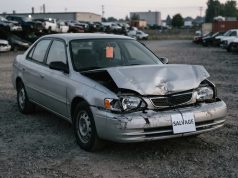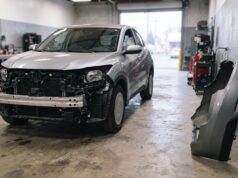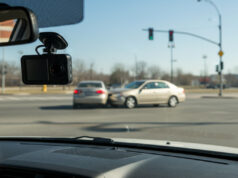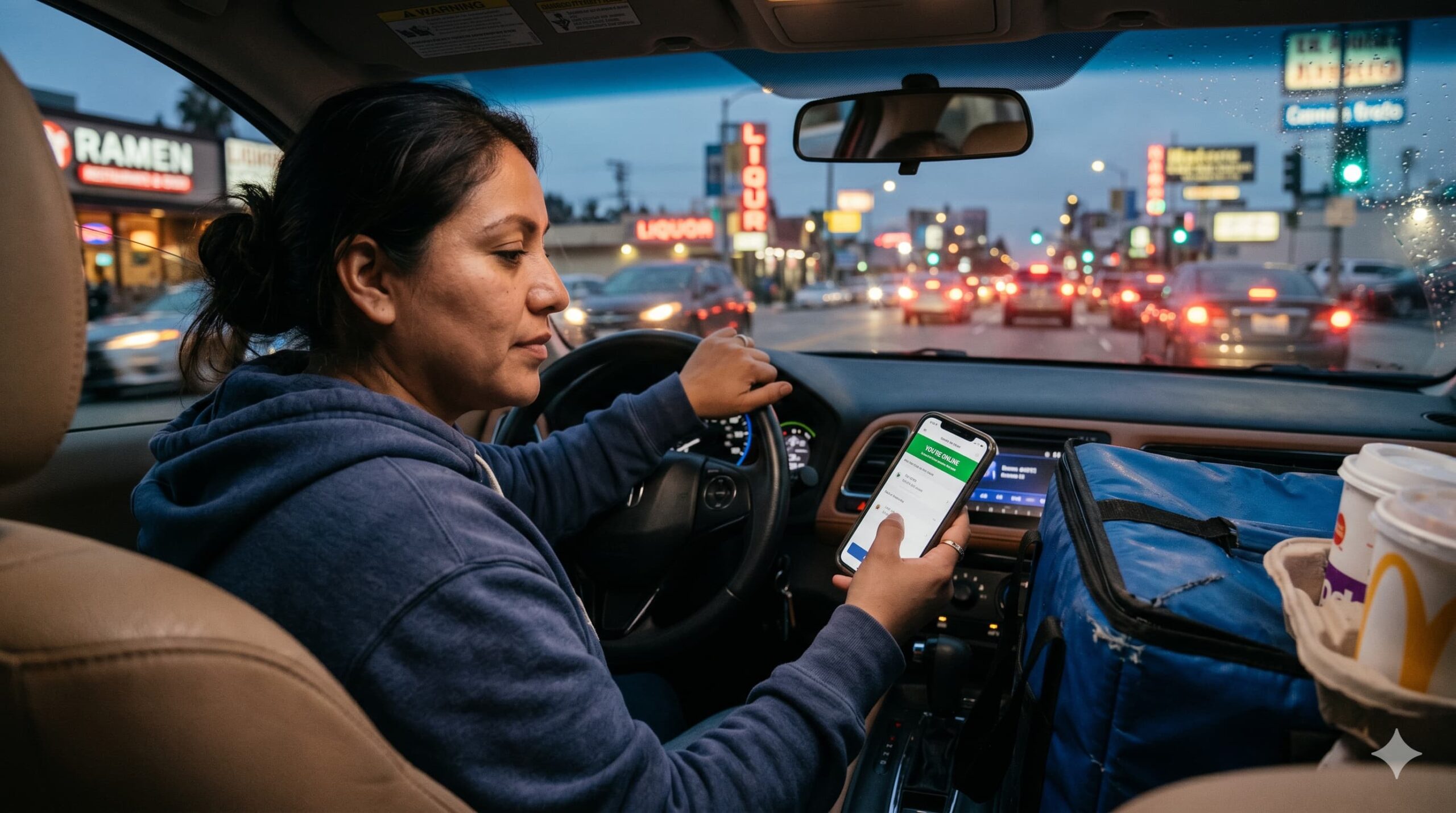
Roughly 1 in 4 rideshare and delivery drivers is operating with a coverage gap that will void their personal auto policy the instant the app goes live, and most of them find out only after a crash. A Los Angeles driver turned on her DoorDash app at 6:40 p.m. and headed toward a hotspot to pick up an order. At 6:47 p.m., before she accepted any delivery, she rear-ended a sedan at a red light. The damage was $7,300 to the other car and $4,100 to her own. Her personal auto insurer denied the claim, citing the business-use exclusion, canceled her policy for misrepresentation, and left her on the hook for $11,400. A $14-a-month rideshare endorsement on her personal policy would have covered the entire incident.
The Three-Period Structure Every Platform Uses
Every major rideshare and delivery platform in the United States operates on the same three-period coverage structure, and every major personal auto policy is written around it. Period 1 begins the moment you open the app and tap “go online.” You are available to accept rides or deliveries, but you have not accepted one yet. Period 2 begins when you accept a request and start driving toward the pickup. Period 3 begins when the passenger is in the car, or the delivery is in hand, and ends when you drop them off.
In Period 3, platform coverage is the product you would expect. Uber, Lyft, DoorDash, Instacart, and Uber Eats all carry $1 million of third-party liability during active rides and deliveries, along with collision and comprehensive coverage for the driver’s vehicle (usually with a $1,000 to $2,500 deductible and a requirement that you already carry collision on your personal policy). Period 2 coverage is similar, though some platforms reduce certain limits. Period 1 is a different product entirely.
During Period 1, the platforms provide only contingent liability coverage. For Uber and Lyft, that is typically $50,000 per person for bodily injury, $100,000 per accident, and $25,000 for property damage. There is no coverage for your own vehicle. There is no coverage for your own medical expenses. And contingent means it only engages if your personal auto insurer denies the claim first, which every personal auto insurer will do the moment they see the app was on.
The Business-Use Exclusion Is Already in Your Policy
Every personal auto policy sold in the United States contains a business-use exclusion. The exact wording varies by carrier, but the substance is the same: the policy does not cover the use of the vehicle to carry persons or property for a fee or other compensation. That language has been in personal auto policies for a long time, long before the gig economy existed. The app is what triggers it. Not the passenger in the car, not the delivery in the back seat, the app.
Insurers know this. Personal auto underwriting models now flag drivers with rideshare or delivery activity as a different risk category, which is why most carriers require you to disclose gig driving when you buy or renew the policy. If you do not disclose, and the insurer discovers it after a claim (and they will, through the app data, the police report, or a quick social media search), they can deny the claim and cancel the policy for material misrepresentation. That cancellation code follows you to every other carrier and puts you in the non-standard high-risk market for the next three years.
The single phrase “business use” is the one that does the damage. It does not require a passenger. It does not require a delivery to be in motion. It only requires that the vehicle was being used for business at the moment of the loss, and the definition of “being used” includes waiting for a ride request with the app on.
The Three Ways to Close the Gap
There are three products that close the Period 1 gap, and the right one depends on how much you drive for gig platforms and what kind of coverage you actually want.
A rideshare endorsement added to your personal auto policy is the cheapest and simplest option for drivers who work part-time. For $10 to $25 per month, depending on state and carrier, the endorsement extends your existing personal auto liability, collision, and comprehensive coverage into Period 1, closing the gap between the app going online and a ride being accepted. State Farm, Progressive, Allstate, Geico, USAA, Erie, Farmers, and most regional carriers offer the endorsement, but none of them add it automatically. You have to ask for it by name.
Read that endorsement’s own definition before you assume it covers everything. Most are written specifically for transportation network platforms carrying passengers, and expressly exclude delivery of food or packages, a separate legal category most drivers only discover after a denied claim.
A commercial auto policy is the right product for drivers who make more than $30,000 a year from gig driving or who use the vehicle for other business purposes. It is more expensive, typically $150 to $350 per month, depending on vehicle and state, but it covers all three periods without reliance on platform coverage at all and does not have the business-use exclusion. For full-time drivers, it is also the policy that pays out when a personal insurer would have denied.
Hybrid rideshare policies are a middle option offered by a growing number of carriers specifically for gig drivers. They combine the coverage of a personal auto policy with explicit rideshare and delivery coverage during all three periods, priced between a standard personal auto policy with an endorsement and a full commercial policy. For drivers who work 20 to 30 hours a week across multiple platforms, the hybrid policy is often the best fit.
What Happens When You File Without the Endorsement
The Los Angeles driver’s timeline is instructive because it is so common. The crash happened in Period 1. She called DoorDash first, which told her to file with her personal insurer because no delivery had been accepted. She called her personal insurer, which pulled the app data, identified the business-use exclusion, denied the claim, and issued a cancellation notice for material misrepresentation on her policy application (she had not disclosed gig work when she bought the policy). She went back to DoorDash’s contingent coverage, which declined to pay because her personal policy had not been denied on the merits of the accident itself, only on the exclusion.
The end result was $11,400 out-of-pocket for the crash, a canceled policy, a non-renewal record that made her uninsurable at standard rates, and a jump from her $142-a-month personal auto premium to $310 a month in the non-standard market for the next three years. The three-year cost of the cancellation alone, before the $11,400 in crash losses, was roughly $6,000. A $14-a-month endorsement for 12 months would have cost her $168 and paid out in full.
The contingent liability numbers on the platforms (the $50,000/$100,000/$25,000 most people assume are the main coverage) do not cover your own vehicle damage, your own medical bills, or any scenario where your personal insurer denies before their coverage even activates. Treat those numbers the way you would treat state minimum auto liability. They exist on paper. They do not exist in a real claim.
A clean read of your current personal auto policy will tell you whether you already have the business-use exclusion in the declarations and, if so, where a rideshare endorsement would need to be added. The exclusion lives in the “exclusions” section of the policy form, usually on page four or five of your standard auto insurance policy. Read it tonight, before your next shift.
Questions to Ask Your Insurer Before Your Next Shift
- Does my current personal auto policy have a business-use exclusion, and does it apply when the rideshare or delivery app is on but no ride or delivery has been accepted?
- Do you offer a rideshare endorsement, and if so, what does it cost monthly, and what coverage does it extend into Period 1?
- If I crash during Period 1 without an endorsement, will you deny the claim, cancel the policy, or both?
- What happens to my premium and insurability if I am canceled for misrepresentation related to undisclosed gig driving?
- For the amount of driving I actually do, is a rideshare endorsement, a commercial auto policy, or a hybrid policy the right fit?
The App Is the Trigger
Everything in this article starts and ends with one fact: the app is the trigger, not the passenger, the delivery, or the ride. The moment you tap “go online,” your vehicle’s risk profile changes, your personal auto policy knows it, and the platform’s coverage has not yet engaged. The only product that fills the gap is one you have to ask for by name, and the only time to ask is before the next crash, not after.
The Los Angeles driver now has a rideshare endorsement on her new non-standard policy. It cost her $21 a month. It should have cost her $14 a month last year, before she had a cancellation on her record. If you drive for any platform, make that call this week.
Is your auto policy still valid the moment you go online?
A $14-a-month rideshare endorsement would have covered this driver’s $11,400 in crash costs. Compare auto insurance quotes that actually cover gig work.
Get Auto Insurance Quotes →