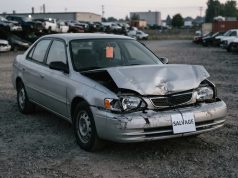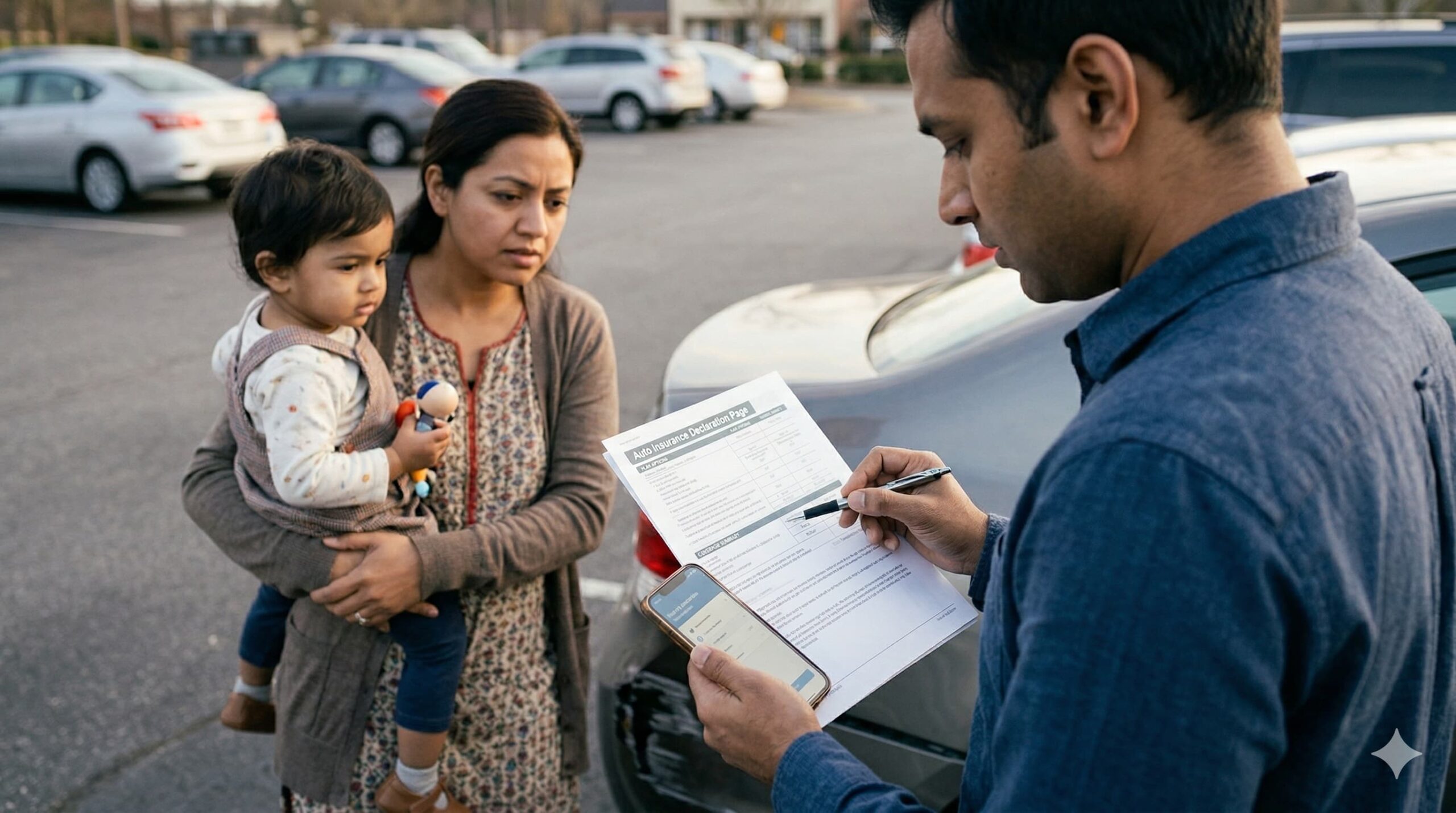
If the repair costs less than $2,000 to $3,000 and no one was injured, paying out of pocket instead of filing a claim can save you $3,000 to $5,000 in premium surcharges over the next three years.
How At-Fault Accident Surcharges Work
Auto insurers use a tier-based rating system that classifies drivers by risk. A clean record places you in the lowest-risk tier with the lowest premium. One at-fault accident moves you up one or two tiers, and the premium increase reflects the statistical likelihood that a driver who has caused one accident will cause another within the next three to five years. The average rate increase after one at-fault accident is 42% to 49% nationally. The exact percentage varies by state: California averages around 46%, Texas 44%, Florida 38%, and Michigan 55%. The surcharge takes effect at your next renewal and persists for three years in most states, though Massachusetts and Michigan keep surcharges on your record for five years. After the surcharge period expires, your rates return to the standard tier, provided no additional incidents occur during that window. The percentage increase applies to your full premium, not just the base rate. If your policy costs $1,800 per year before discounts and a 45% surcharge kicks in, you’re paying an additional $810 per year. Over three years, that single surcharge costs $2,430 in extra premiums alone. This tier-based surcharge system assumes fault is a matter of degree. In Alabama, Maryland, North Carolina, Virginia, and Washington, D.C., that assumption breaks down entirely: a driver found even 1% at fault can lose an entire claim, not just face a surcharge. See how pure contributory negligence turns any fault at all into a zero-dollar payout before assuming a partial-fault finding only costs you a rate increase.The Compounding Effect
The surcharge itself is only part of the financial hit. Most carriers also revoke clean-record and safe-driver discounts after an at-fault accident. These discounts typically save drivers 10% to 25% on their premiums. Losing a 15% discount on an $1,800 policy adds another $270 per year to your costs, and that loss persists for the same three- to five-year period as the surcharge. Add the deductible you paid at the time of the accident, typically $500 to $1,000, and the total driver-paid cost of a single at-fault accident starts to become clear. On a policy that was $1,800 per year, a 45% surcharge, a lost 12% safe driver discount, and a $500 deductible total roughly $4,100 over three years. The insurer paid for the other driver’s repairs. You paid $4,100 for the privilege of having insurance that costs more than it did before you used it.The “Accident Forgiveness” Fine Print
Accident forgiveness sounds like exactly what every driver wants: one free pass on an at-fault accident with no rate increase. The reality is more limited than the marketing suggests. Accident forgiveness is a paid endorsement, not a standard policy feature. Most carriers charge an additional $50 to $150 per year for the add-on, and it must be in place before the accident occurs. You cannot add it after a claim. The endorsement typically protects only the first at-fault accident for the named insured on the policy, not for other listed drivers. Some carriers restrict eligibility to drivers who have been claim-free for three to five years with that specific carrier. Even with accident forgiveness in place, the forgiven accident still appears on your claims history. If you switch carriers after a forgiven accident, the new insurer will see the claim on your CLUE report and may surcharge you at their standard rate. Accident forgiveness only protects your rate with the carrier that sold you the endorsement. It does not erase the incident from your record.Accident forgiveness only protects your rate with the carrier that sold you the endorsement. A new insurer will still see the at-fault accident on your claims history and surcharge accordingly.
The Break-Even Calculation
There’s a practical math question every driver should understand before filing a claim: at what dollar amount does it make financial sense to file a claim rather than pay for the repair out of pocket? If the damage is between $2,000 and $3,000 and no one was injured, the premium increase over three years will likely exceed the repair cost. A $1,500 fender repair, when filed as a claim, can generate $2,500 to $4,000 in premium surcharges and lost discounts over the surcharge period. Paying the $1,500 out of pocket keeps your record clean and preserves your safe driver discount. The calculation changes when injuries are involved, when the other driver files a claim against you regardless, or when the damage exceeds $3,000 to $5,000. In those cases, the financial protection of your policy outweighs the surcharge cost, and that’s exactly the scenario insurance is designed for. But for minor, property-only accidents where you’re at fault and the total damage is low, running the surcharge math before filing a claim can save you thousands.Questions to Ask Your Insurer After an Accident
- What is the exact surcharge percentage my carrier applies for one at-fault accident, and how long does it last?
- Will I lose my safe driver or claims-free discount, and what is that discount worth in dollars per year?
- Do I currently have accident forgiveness on my policy, and does it apply to this specific incident?
- If I pay for this repair out of pocket and don’t file a claim, will the incident still appear on my CLUE report?
- What is the total estimated premium increase over the surcharge period compared to the cost of the repair?
Do you know what one accident would cost you in premium increases?
Kevin’s $6,200 fender-bender added $4,490 in surcharges and lost discounts over three years.
Compare Auto Insurance Rates →Related: challenge the claim outcome