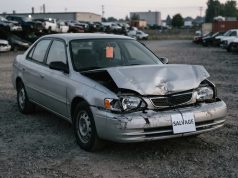
Priya Reza, 33, of Cleveland was stopped at a red light when an uninsured driver rear-ended her at 38 mph. Her injuries totaled $94,000 in medical bills and lost income. Her uninsured motorist limit was $50,000 per accident. But Priya had three vehicles on her policy and Ohio law allows stacking. She collected $150,000.
Stacking is one of the few features of an auto policy that can multiply your coverage rather than just rearrange it. The Insurance Research Council reported in 2023 that one in eight U.S. drivers carries no insurance, with state rates from under 4% in Maine to over 25% in Mississippi. When one of them hits you, uninsured motorist (UM) coverage on your own policy steps in. Whether you can stack it depends on your state, your policy form, and what you signed when you bought it.
What “Stacking” Actually Means
Stacking adds the per-accident UM limits of every vehicle on a policy (intra-policy stacking) or every policy in a household (inter-policy stacking) and pays the combined total against a single accident.
If you carry $50,000 UM per accident on three vehicles, intra-policy stacking treats that as $150,000 available for a single accident, regardless of which vehicle you were driving. Without stacking, the $50,000 from the one involved vehicle is all you have. Inter-policy stacking goes further: if you and your spouse each carry separate auto policies, stacking states may let you reach across both, subject to policy and case-law limits.
Stacking States Versus Anti-Stacking States
State law decides whether stacking is available and whether carriers can sell anti-stacking provisions. Roughly half the states allow some form of stacking.
Pennsylvania has the most policyholder-friendly framework. Under 75 Pa.C.S. § 1738, stacking is the default and a carrier must obtain a written rejection to charge a lower premium without it. Florida and Ohio also allow stacking but treat anti-stacking exclusions as enforceable when properly disclosed. Most anti-stacking states bar both intra-policy and inter-policy stacking by statute or court decision. Even in stacking states, properly displayed anti-stacking endorsements have been upheld.
Per-Vehicle Stacking Versus Inter-Policy Stacking
Intra-policy stacking adds limits within one policy. Inter-policy stacking adds across multiple policies in the same household. The justification for the first is simple: if your declarations page shows a separate premium charge for each vehicle’s UM coverage, you paid three premiums and you should get three limits at claim time. Most stacking states accept that.
Inter-policy stacking depends on household relationship. Most carriers and states require that the second policy be in the same household and that the injured party qualify as a named insured or resident relative under both. A college student living away from home may or may not count, depending on state law and dependency status.
Why Carriers Charge Extra for Stacking
Stacking premium is typically 15% to 35% higher than the equivalent non-stacking UM coverage, according to filings reviewed by the National Association of Insurance Commissioners. Carriers price for expected severity, and stacking triples or quadruples the per-claim exposure on multi-vehicle households.
The extra premium is almost always a good trade for households with two or more vehicles in stacking states. A $50,000 per-accident UM limit on three vehicles non-stacked costs less than the same three vehicles with stacking, but the stacked version gives you $150,000 in available coverage for a single accident where the other driver is uninsured or underinsured. Hospital and rehabilitation bills from a serious crash routinely cross $100,000 once surgery and physical therapy are included.
What Happens When Stacking Is Denied at the Claim Stage
The most common reasons stacking gets denied are paperwork, not policy gaps. A signed stacking waiver that the policyholder forgot about is first. If the application or a later endorsement includes a stacking rejection signed by the named insured, carriers will enforce it. Many waivers run with the policy and survive renewal unless the policyholder reinstates stacking in writing.
Non-resident exposure is second. If the injured driver was not a named insured or a resident relative at the time of loss, inter-policy stacking is unavailable. Adjusters routinely run residency checks before paying out. Jurisdiction is third: when an accident happens in an anti-stacking state under a policy issued in a stacking state, the answer comes down to choice-of-law rules and policy wording.
Frequently Asked Questions
Which states allow uninsured motorist stacking? Stacking is most clearly available in Pennsylvania, Florida, Ohio, Indiana, Mississippi, and several others. Roughly half the states permit some form of stacking by statute or case law, but anti-stacking endorsements are widely enforceable when properly disclosed. Check your declarations page for an anti-stacking notation and check state guidance from your insurance department.
Does an umbrella policy stack on top of uninsured motorist? Umbrella policies generally do not provide UM coverage by default. A small number of carriers offer UM as an optional endorsement on the umbrella, sometimes called UM/UIM excess. The excess does sit on top of the underlying UM limit, but the underlying UM has to be exhausted first and the umbrella endorsement has to be purchased separately.
Can I stack uninsured motorist coverage if I drive a leased vehicle? Yes, in most states. The named insured on the policy controls stacking eligibility, not the title to the vehicle. A leased vehicle on your auto policy counts toward intra-policy stacking the same way a financed or owned vehicle does.
Why does my carrier ask me to sign a stacking waiver? The waiver lets the carrier charge a lower premium by treating the UM coverage as non-stacked. Many policyholders sign it without realizing the trade-off. In Pennsylvania, the waiver has to be on a specific state-approved form and signed separately from the application.
Is stacking only for bodily injury or also for property damage? Most states limit stacking to UM bodily injury, with some also permitting it for underinsured motorist (UIM) coverage. UM property damage stacking is much less common because most states either bar it or limit it severely. Check your policy declarations for UM/UIM PD limits separately from BI limits.
Reviewing your uninsured motorist limits?
Stacking rules and per-vehicle premium vary by carrier and state. See real auto insurance coverage options before you renew.
Compare Auto Insurance QuotesFor background, see how uninsured motorist coverage actually works and the different types of auto insurance coverage.
Priya’s $150,000 UM settlement closed her medical bills and left $56,000 toward lost wages and continued care. Her stacking premium the prior year was $312 across three vehicles.