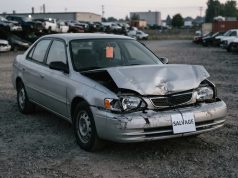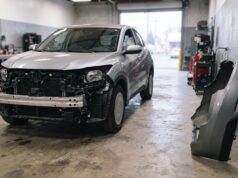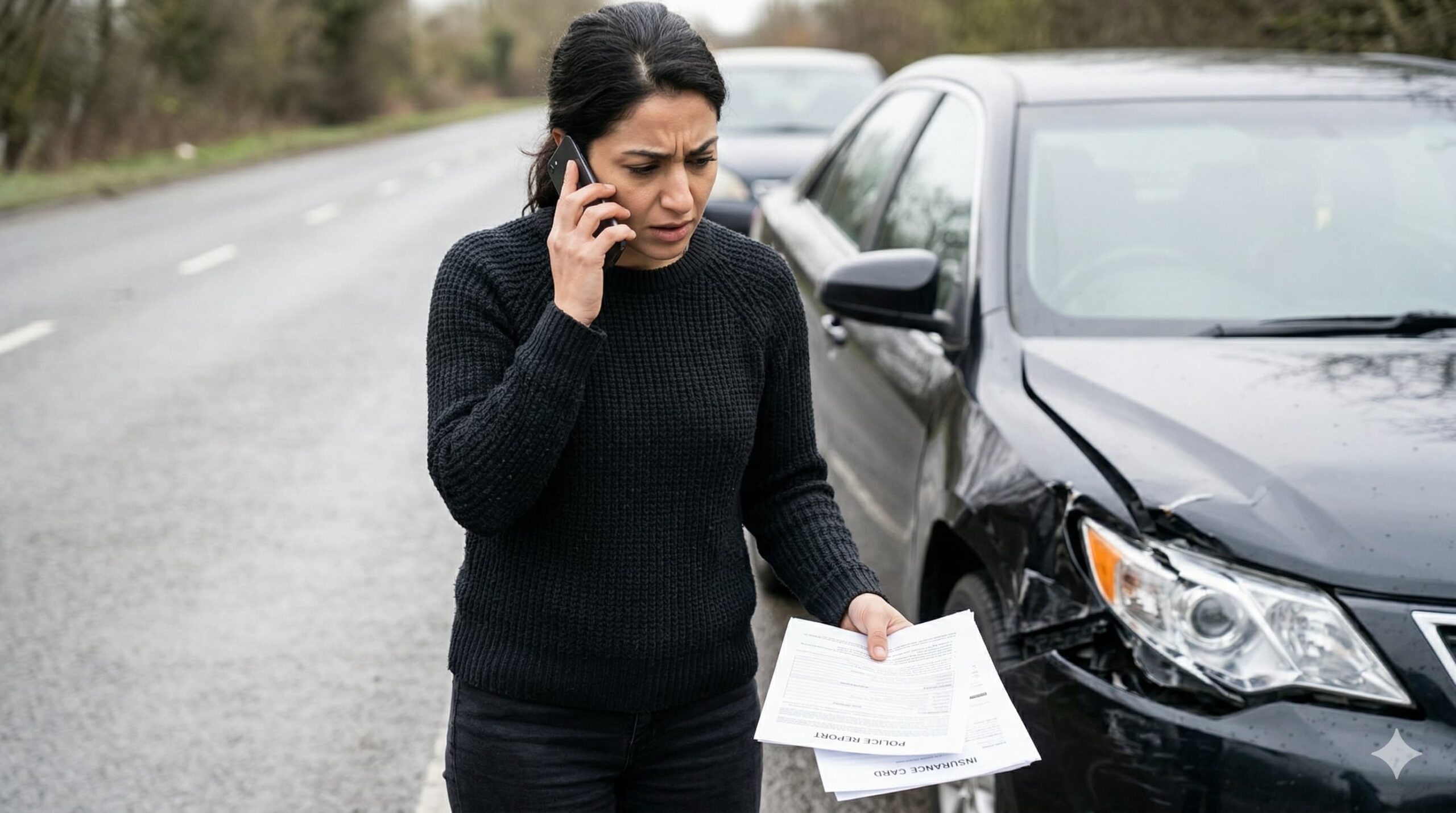
Jamie had a clean driving record, full coverage, and a $43,000 medical bill after an uninsured driver ran a red light and T-boned her. Her insurer told her she had waived uninsured motorist coverage at her last renewal.
Jamie carried liability, collision, and comprehensive coverage on her sedan. At her last renewal, her agent mentioned she could save $18/month by removing uninsured motorist coverage, and she agreed. Eight months later, an uninsured driver ran a red light and struck her vehicle at 45 mph. Her collision coverage paid to repair her car. Her medical treatment, two weeks of missed work, and a course of physical therapy totaled $43,000. Her insurer had no obligation to pay those costs. The waiver she signed at renewal was legally valid. She pursued the at-fault driver in civil court, obtained a $43,000 judgment, and has collected $2,200 over three years because the driver has no assets.
Collision coverage pays to fix your car. It pays nothing for your medical bills, your lost wages, or the months of physical therapy. UM/UIM coverage is the only policy that covers you when the driver who hurt you has nothing.
The Scale of the Uninsured Driver Problem
The Insurance Research Council estimated in 2022 that roughly 14% of U.S. motorists, about 1 in 7 drivers, were operating without auto insurance. That figure has held steady for years, and the distribution is uneven. Some states report uninsured driver rates below 5%, while states like Mississippi and Michigan have historically exceeded 20%. In Florida, the problem is compounded by weak mandatory coverage requirements: the state allows most passenger vehicle owners to legally operate with only $10,000 in personal injury protection and $10,000 in property damage liability, with no required bodily injury coverage at all. A driver who hits you in Florida can be entirely within the law and entirely unable to compensate you for your injuries.
The result is that in most parts of the country, there is a meaningful probability that the next driver who causes you a serious injury will have either no insurance or limits so low they cover a fraction of the actual damages. This is the situation that uninsured and underinsured motorist coverage exists to address.
How UM/UIM Coverage Works
Uninsured Motorist (UM) and Underinsured Motorist (UIM) coverage are typically sold as a single endorsement on an auto policy. UM pays when the at-fault driver has no insurance. UIM pays when the at-fault driver has insurance, but their policy limits are lower than your total damages. Both coverages are triggered by the other driver’s fault, and in most states, they apply primarily to bodily injury losses, though some policies and states extend them to property damage as well.
Neither coverage pays for damage to your vehicle. That is what collision is for. What UM/UIM covers is the category of losses that collision insurance ignores entirely: medical expenses, hospital stays, surgery, physical therapy, lost income during recovery, and, in serious cases, compensation for long-term disability. These are often the highest costs in a significant accident and are completely outside the scope of a standard collision or liability policy. Jamie’s collision coverage did exactly what it was designed to do: repair her car. Nothing in her policy was designed to pay for her medical bills.
The Minimum Coverage Trap
State minimum insurance requirements are often far below what a serious accident actually costs. Most states set mandatory bodily injury liability minimums at $25,000 or less per person. California requires $15,000 per person. Florida requires nothing. A single night in an intensive care unit can exceed the mandatory minimum in most states. A driver who hits you, totals your car, and sends you to the hospital for a week may be carrying a policy that pays less than your first three days of medical bills.
The “full coverage” that most drivers carry, meaning liability plus collision plus comprehensive, addresses vehicle damage well and covers your own liability to others. It stops entirely short of covering your own body when another driver causes the harm. The driver who purchased $15,000 in liability coverage is not responsible for the gap between their limits and your actual losses. Without UM/UIM coverage, that gap belongs to you.
“Full coverage” does not mean fully covered. Collision and comprehensive protect your vehicle. UM/UIM coverage is the piece that protects your body, your income, and your financial recovery when an uninsured or underinsured driver is at fault.
What UM/UIM Coverage Costs
Uninsured and underinsured motorist coverage is typically among the least expensive lines on an auto policy. Adding $100,000/$300,000 in UM/UIM coverage usually costs less than $10 per month, or roughly $50 to $150 per year, depending on your state and insurer. In states where UM/UIM is not mandatory, it is offered as optional coverage and is frequently the first item an agent suggests removing to lower a quoted premium. The savings are real. The exposure that remains when the coverage is removed is also real.
The appropriate limit depends on your daily driving exposure and your financial situation. Carrying UM/UIM limits that match your liability limits is a standard benchmark. A $100,000 per person limit covers most serious injury scenarios short of catastrophic, long-term disability. If you drive frequently in a state with a high uninsured driver rate, higher limits or a personal umbrella policy that extends UM/UIM coverage may be worth considering.
Jamie saved $216 over the twelve months between her renewal waiver and her accident. Her out-of-pocket losses totaled $43,000.
For more on what your auto policy actually covers and where the gaps appear, see <a href=”https://dailyinsurance.news/the-different-types-of-auto-insurance-coverage-explained”>the different types of auto insurance coverage explained</a> and <a href=”https://dailyinsurance.news/10-factors-that-affect-your-auto-insurance-rates”>10 factors that affect your auto insurance rates</a>.
Questions to Ask Before Your Next Renewal
- Does my current policy include Uninsured and Underinsured Motorist coverage, and what are my current limits?
- If I have waived UM/UIM in the past, can I add it back at renewal, and is there a waiting period before it takes effect?
- Does my UM/UIM coverage apply to bodily injury only, or does it also extend to property damage in my state?
- Can a personal umbrella policy extend my UM/UIM limits, and does my state permit stacking UM/UIM across multiple policies?
- What is the uninsured-driver rate in my state, and should it influence the limits I carry?
Does your policy cover you when the other driver has nothing?
One in eight drivers is uninsured. UM/UIM coverage often costs less than $10 a month and is the only part of your policy that pays when the at-fault driver can’t.