5 min read · Last updated May 23, 2026
In this article
- How gig delivery platforms structure coverage
- The business-use exclusion
- Coverage options that close the gap
- What the platforms actually provide
- What to do this week
- FAQ
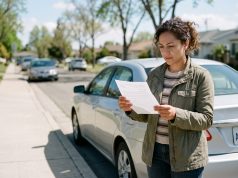
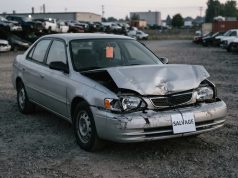
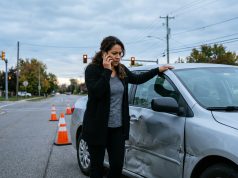
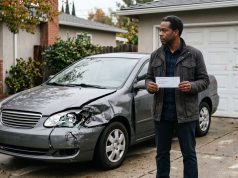
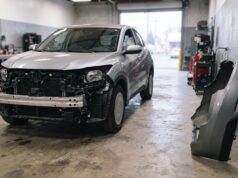
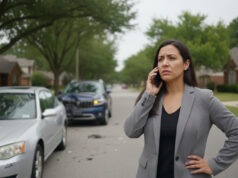
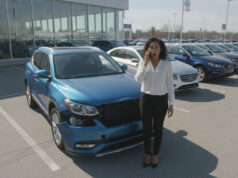
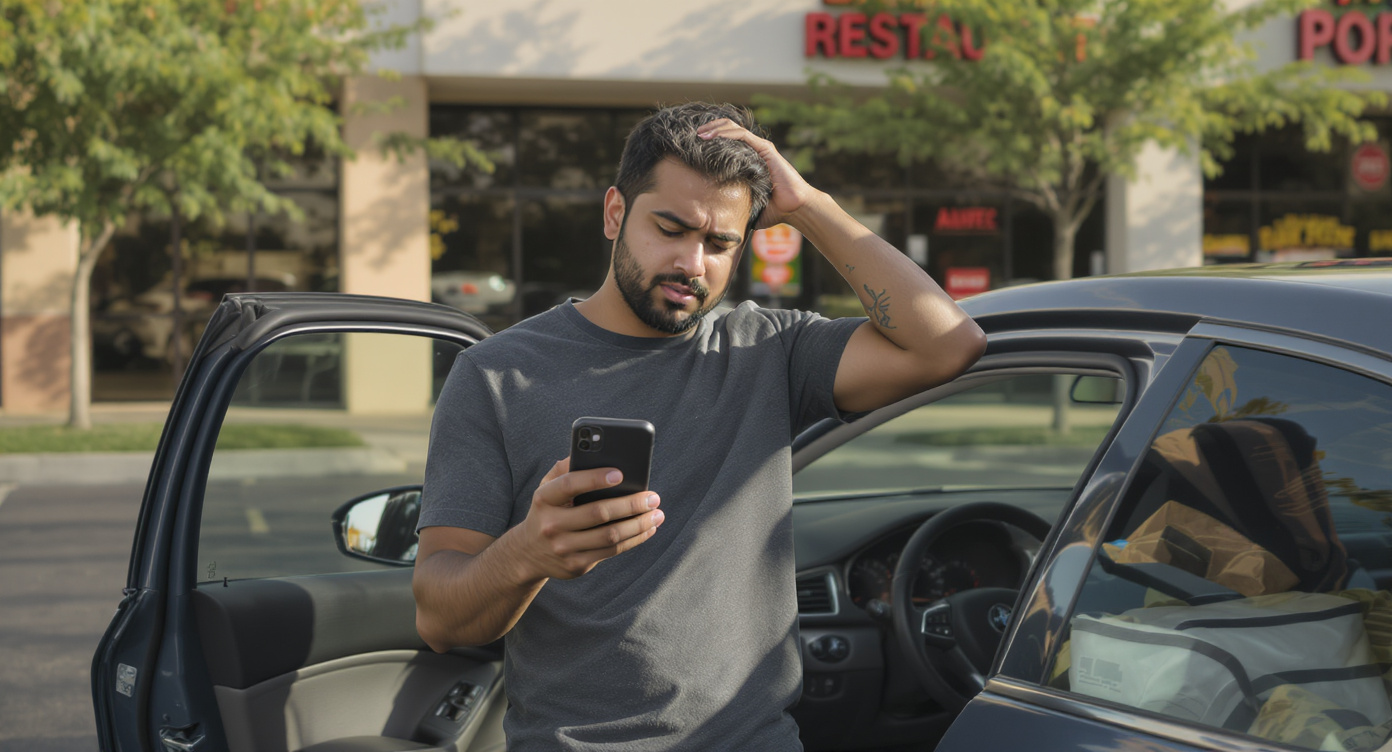
On a Wednesday evening in April 2026, Priya Sharma sat in her parked Toyota Corolla in a Houston suburb with the DoorDash app open, waiting for her next order. She had been online 47 minutes since her last drop. A driver running a red light hit her front quarter panel. The repair estimate came back at $7,200. Priya filed with her personal auto carrier and was denied 11 days later for business use. She filed with DoorDash and was denied 6 days after that: the company’s $1 million policy only triggered once an order was accepted, and Priya had been between orders.
How gig delivery platforms structure coverage
Almost every gig delivery platform divides driver activity into periods, modeled on the rideshare framework Uber and Lyft introduced a decade ago. Period 0 (app off): your personal policy covers everything. Period 1 (app on, no order accepted): most personal policies treat this as commercial use; most platforms provide zero coverage. Period 2 (order accepted, en route to pickup): platform coverage kicks in for some carriers, contingent liability only for others. Period 3 (order picked up, en route to customer): full platform liability, often with a $1,000 to $2,500 deductible on collision.
Period 1 is the window the platforms gloss over and where personal carriers most aggressively enforce business-use exclusions. For a driver online from 5 PM to 10 PM, period 1 can easily account for 30 to 90 minutes of total exposure.
The business-use exclusion
Personal auto policies from Geico, State Farm, Progressive, and Allstate exclude coverage when the vehicle is used to carry persons or property for compensation, the same general business-use exclusion Maine’s Bureau of Insurance warns drivers about, noting that most personal auto policies exclude business use and are unlikely to cover accidents that happen during deliveries. The clause is broad enough to capture nearly all gig work. Some carriers interpret it strictly (any time the app is on); others apply it only during active delivery. The interpretation is rarely written down; it is applied by the claims adjuster comparing the loss timing against the platform’s activity logs. Priya’s adjuster pulled her DoorDash records, saw 2 hours 14 minutes online that day, cited the exclusion, and closed the file.
Coverage options that close the gap
Three structures fill the period 1 gap. A carrier-specific delivery endorsement (State Farm, Progressive, Allstate, and several regionals) typically runs 15 to 25 percent over base personal auto premium. A full commercial auto policy covers all periods but runs 50 to 150 percent higher, making it overkill for part-time drivers. A rideshare-and-delivery hybrid endorsement (Erie, Mercury) covers both Uber/Lyft and DoorDash/Instacart under one rider. We covered the rideshare version of this gap in our piece on the rideshare insurance coverage gap.
What the platforms actually provide
DoorDash and Grubhub provide $1 million liability during active delivery (period 2 and 3) and zero during period 1, with no comprehensive or collision on your own car, consistent with DoorDash’s own insurance page, which describes up to $1,000,000 in third-party liability coverage during an active delivery and states plainly that the coverage does not extend to damage to the Dasher’s own vehicle. Uber Eats adds a contingent liability of $50,000/$100,000/$25,000 during period 1 that only triggers if your personal policy denies first. Instacart provides essentially nothing during period 1.
For how an auto policy is structured, see the different types of auto insurance coverage. For non-gig business use, the hired and non-owned auto framework applies and is structurally different.
What to do this week
Pull your auto declarations page and search for “delivery,” “rideshare,” “transportation network company,” or “for compensation.” If none appear, you have a standard policy with no gig coverage. Ask your agent in writing whether your policy covers the time the app is on but no order is accepted. If the answer is no, ask what a delivery endorsement costs.

See auto insurance options that include rideshare and delivery endorsements, so a $7,200 collision while you’re waiting on your next DoorDash order doesn’t land on your credit card.
Compare auto insurance quotesThe promotional language gig apps use makes it sound like every minute on the road is covered. The fine print is different. The 47 minutes Priya spent waiting for her next order cost her $7,200, and she is not the unusual case. Anyone driving for an app without checking their own policy is one stoplight collision away from a five-figure write-off.
Frequently asked questions
Does my personal auto insurance cover me while I’m driving for DoorDash? Generally no while the app is on. Almost every personal auto policy has a business-use exclusion that adjusters apply once the carrier’s investigation shows the vehicle was being used to earn income.
Is there a gap between when my personal policy stops and when DoorDash’s policy starts? Yes. Period 1, the time the app is on and the driver is waiting for an order, is typically uncovered by both. For drivers running multiple apps, period 1 can stretch across most of an evening shift.
Do all delivery apps cover the period when the app is on but no order is accepted? No. DoorDash, Grubhub, and Instacart provide no period 1 coverage. Uber Eats provides limited contingent liability during period 1 that only triggers if the personal policy denies first. None cover comprehensive or collision on the driver’s own vehicle during period 1.
Will my insurance company drop me if they find out I drive for a delivery app? Some non-renew at the next term once delivery use is discovered through a claim. Others deny the specific claim and continue the policy. Disclosing gig use upfront and asking for an endorsement is safer than hoping the activity log never gets pulled.
What is the cheapest way to close the period 1 coverage gap? A delivery or rideshare endorsement on your existing personal policy: 15 to 25 percent over base premium, compared to 50 to 150 percent for full commercial auto. If your carrier doesn’t offer one, switching carriers is usually cheaper than upgrading to commercial.