8 min read · Last updated August 21, 2026
- Connecticut’s and Pennsylvania’s insurance departments have both told insurers in writing that an aerial image showing only discoloration or streaking cannot, by itself, support a homeowners nonrenewal.
- An aerial image only proves what a roof looked like on the day it was captured. In Renée Okafor’s case, that was 14 months before her $16,400 reroof was even finished.
- California’s Assembly Bill 1559 (AB 1559) passed the Assembly 77-0 in May 2026 and would bar an insurer from basing a nonrenewal on an aerial image more than 180 days old unless the finding is reverified. It is not yet law.
- Connecticut requires at least 60 days’ notice before a homeowners nonrenewal takes effect, with a specific written reason, which gives a homeowner a real window to submit contractor proof and reverse the decision.
In this article
- How a photo nobody at the carrier has seen becomes a nonrenewal
- What the picture can prove, and what it cannot
- The dispute rights that already exist, and the one still moving through Sacramento
- A denied renewal, reversed: the paperwork that worked
- What to do if a nonrenewal notice cites a roof photo
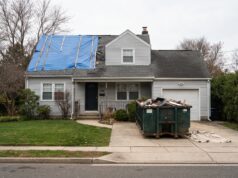
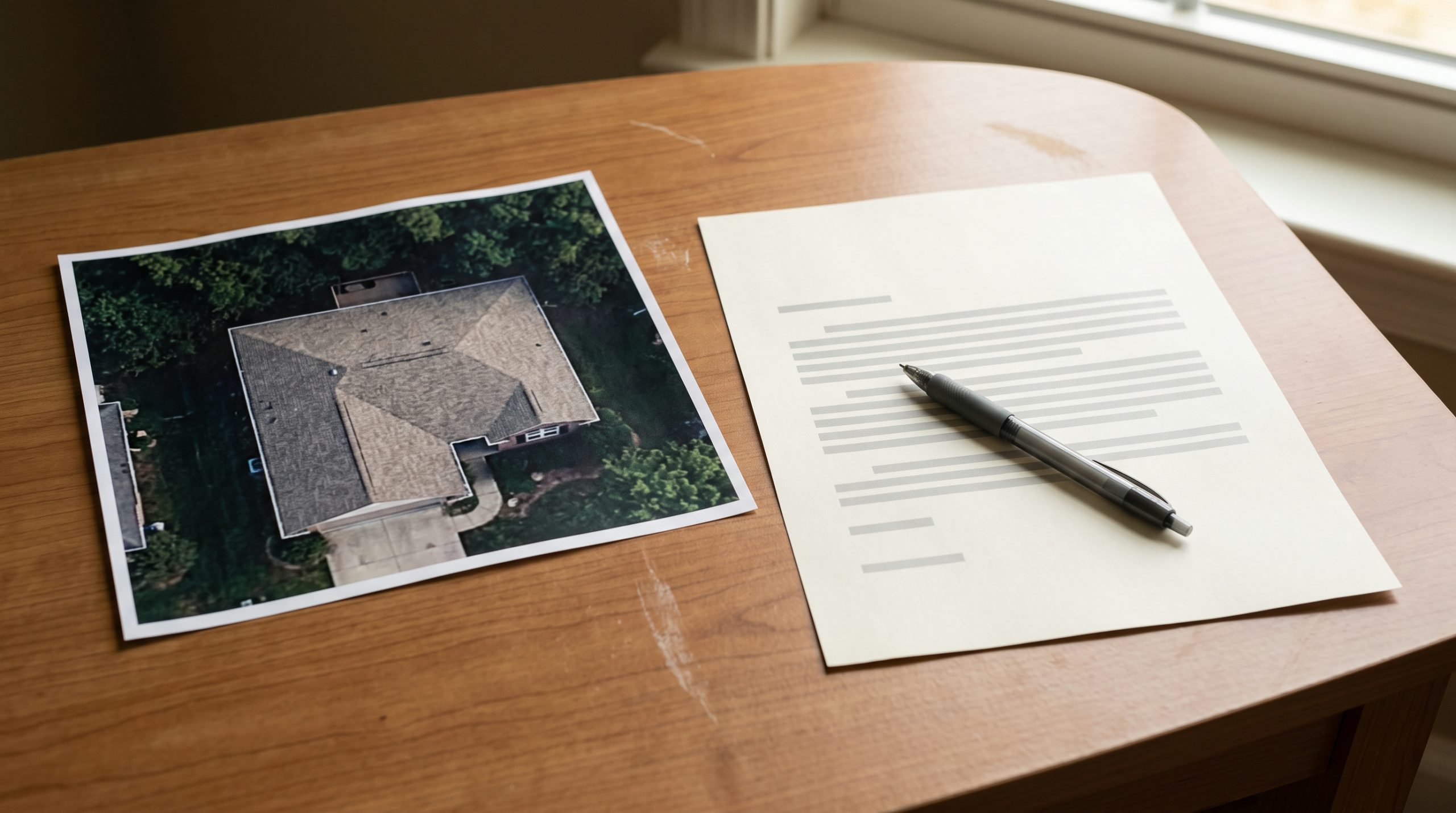
In April 2026, a homeowners insurer in Hartford County, Connecticut, sent Renée Okafor a nonrenewal notice citing roof degradation shown in an aerial image on file. Okafor had paid a licensed contractor $16,400 to tear off and replace her entire roof in October 2025. The photo cited in her notice was captured in August 2024, fourteen months before the new roof went on and six months before the notice arrived. No one from the insurer had climbed a ladder, walked her attic, or driven past her house. A subscription image feed had flagged discoloration on a roof that no longer existed, and an underwriting rule had turned that flag into a cancellation.
How a photo nobody at the carrier has seen becomes a nonrenewal
Most large homeowners insurers now buy roof-condition data from geospatial imagery providers instead of sending an inspector to every renewal. The images come from low-altitude aircraft or high-resolution satellites, get run through computer vision software that scores each rooftop for staining, missing shingles, tarps, or ponding, and the score feeds an underwriting rule that can trigger a nonrenewal letter without a human ever opening the file. The Connecticut Insurance Department said in a March 2024 notice that “several insurers are seeking to nonrenew homeowners’ or dwelling fire insurance policies due to concerns about the quality of a property’s roof and its propensity for loss,” and that the department had reviewed consumer complaints where the aerial images relied on “did not definitively show material roofing degradation or damage.”
Pennsylvania’s insurance commissioner described the same pattern in a bulletin covered by Insurance Journal in May 2024, saying “some of the aerial images that we’ve seen used to take adverse actions against policyholders barely identify the structure of the home, much less the detailed condition of the roof and whether it needs to be repaired or replaced.” Neither state is telling insurers to stop using the technology. Both are telling insurers the image has to actually show something before it can end a policy.
What the picture can prove, and what it cannot
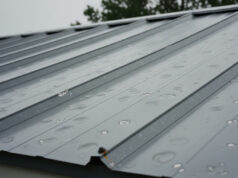
An aerial image can show a roof missing shingles, holding standing water, or covered by a tarp. What it struggles to separate is cosmetic wear from functional failure. Connecticut’s notice draws the line explicitly: “cosmetic roofing conditions such as natural discoloration and streaking do not support taking homeowner or dwelling fire nonrenewal action,” while “aerial images that unequivocally show material damage” can. Algae staining looks like deterioration from 400 feet up. It usually isn’t.
The bigger limitation is time. A photo is a single frozen moment. It cannot show the roof’s actual installation date, what’s underneath the shingles, or whether a full replacement happened the month after the image was taken. Insurers use this technology to check a claims-related version of a similar question on the cosmetic hail damage exclusion, which applies its own cosmetic-versus-functional test after a storm rather than at renewal. Same word, different gate: one decides whether a claim pays, the other decides whether the policy continues at all.
The dispute rights that already exist, and the one still moving through Sacramento
Two states already require insurers to give homeowners a real path to fight back. Connecticut law (Conn. Gen. Stat. §38a-323) requires at least 60 days’ advance notice of nonrenewal with a specific stated reason. Vague language like “claims experience” or “underwriting judgment” is not acceptable under the department’s own bulletin guidance. Where an insurer cannot point to unequivocal material damage in the image, the department expects a physical inspection or “a report prepared by a licensed home improvement contractor or roofer” before the nonrenewal stands.
Pennsylvania requires insurers to give homeowners a chance to challenge the finding or fix a confirmed problem before termination, per Insurance Journal’s coverage of the department’s bulletin, and its regulator has said plainly that “simply characterizing a condition of a property as unacceptable fails to establish an increase in risk required for policy termination.”
California does not have either protection in statute yet. Assembly Bill 1559, introduced by Assemblymember Lisa Calderon, would add Section 2035 to the state’s Insurance Code. As amended, it would require an insurer to hand the homeowner the actual aerial image at the same time it sends a termination notice, and it would prohibit basing that termination on an image captured more than 180 days before the notice unless the finding has been separately reverified through an inspection. It passed the Assembly 77-0 on May 14, 2026, and was still moving through Senate committee review as of its most recent recorded action on June 10, 2026. It has not been signed into law, and if it is, the new rules would not take effect until July 1, 2027. Treat it as a preview of where regulation is heading, not a right Californians can invoke today.

| State | Legal status (as of August 2026) | What limits the image’s use | Homeowner’s dispute right |
|---|---|---|---|
| Connecticut | In force since March 2024 department notice | Cosmetic damage alone cannot support nonrenewal; material degradation required | Physical inspection or licensed contractor report before termination stands |
| Pennsylvania | In force since May 2024 department bulletin | Insurer must show an actual increase in hazard, not a general condition label | Right to challenge the finding or fix a confirmed problem |
| California (AB 1559) | Passed Assembly 77-0; pending in Senate, not yet law | No image older than 180 days may support termination without reverification | Insurer must provide the image and allow dispute plus remediation proof before the effective date |
A denied renewal, reversed: the paperwork that worked
Okafor’s case is a composite built from the mechanics described above, not a single reported dispute, but every step in it maps to a documented state requirement. She first requested, in writing, the exact aerial image and its capture date, which the notice had not included. She then gathered her contractor’s dated invoice for the $16,400 reroof and the completion photos her roofer had time-stamped the day the job finished. She submitted both to underwriting within the notice period Connecticut law provides. Because Connecticut’s guidance treats a licensed contractor’s report as an acceptable substitute for a physical reinspection, the paperwork was enough. The nonrenewal was withdrawn before its effective date, and her policy renewed at its normal date.
What to do if a nonrenewal notice cites a roof photo
Request the actual image and its capture date in writing immediately. “On file” is not a date, and several state bulletins treat withholding it as a red flag on its own. If you have reroofed, repaired, or even just cleaned the roof since that date, get a same-day letter or invoice from the contractor plus dated photos. Submit everything inside the notice window; Connecticut’s is 60 days, and most states set a minimum you can find on your declarations page or by calling your agent. Ask specifically for a physical reinspection rather than a second look at the same photo. If the insurer refuses to reconsider despite documented proof, file a complaint with your state’s Department of Insurance. If the nonrenewal stands anyway, know that a state’s FAIR Plan (Fair Access to Insurance Requirements, the state-backed insurer of last resort for homes that can’t find coverage in the standard market) is not a like-for-like replacement for what a standard policy covered, so shop the standard market first.
Frequently asked questions
Can my home insurance be cancelled because of a photo I never saw? It should not happen without notice. Connecticut and Pennsylvania both require insurers to give a specific written reason for nonrenewal, and their guidance expects the insurer to make the underlying image available on request. California’s pending AB 1559 would go further and require the insurer to hand you the image automatically with the termination notice, though that bill is not yet law.
What counts as cosmetic roof damage versus damage that justifies nonrenewal? Regulators in Connecticut and Pennsylvania draw the same line: discoloration, algae staining, and general streaking are cosmetic and cannot alone support a nonrenewal. Missing shingles, standing water, incomplete patching, or a tarp covering part of the roof are treated as material conditions that can.
How old can an aerial photo be before an insurer cannot use it for a nonrenewal? No state currently in force sets a hard cutoff by law. California’s pending AB 1559 would set one at 180 days, but it has not been enacted. Connecticut and Pennsylvania instead require the image to show unequivocal, current damage, regardless of how old it is.
What should I send my insurer if a nonrenewal is based on an outdated roof photo? A dated invoice or completion letter from a licensed contractor, plus timestamped photos of the finished work, is the documentation Connecticut’s own guidance treats as sufficient in place of a physical inspection. Submit it in writing, inside the notice period, and request written confirmation that it was received.
Does every state require insurers to allow a dispute over a roof photo? No. Connecticut and Pennsylvania have issued formal department guidance requiring it. Many states have no equivalent rule yet, which is why California’s AB 1559 is being watched closely as a possible model if it becomes law.
A $16,400 roof shouldn’t cost you your policy too
Compare homeowners insurance quotes and see what a carrier that actually looks at your current roof would charge.
Compare Homeowners Insurance Quotes