8 min read · Last updated September 18, 2026
- Coverage B (“Other Structures”) on a standard homeowners policy defaults to 10% of your Coverage A dwelling limit, no matter what any single structure is actually worth.
- A $420,000 dwelling limit produces only $42,000 of automatic coverage for every detached garage, shed, fence, and gazebo on the property combined.
- Converting a detached garage into a workshop or office routinely pushes its rebuild cost well past that 10% cap. Ingrid’s 720-square-foot conversion priced out at $93,600, a $51,600 shortfall.
- Raising the Coverage B percentage, or scheduling the structure on its own endorsement, is available from most insurers for an added premium, but the dollar amount is not standardized. Get a rebuild-cost quote and ask your agent to run the number.
Coverage B, the part of a homeowners policy that insures detached garages, sheds, fences, and similar buildings, automatically covers only 10% of your dwelling limit by default. That figure has nothing to do with what any specific structure on your property would cost to rebuild.
In this article
- What Coverage B actually pays for
- What counts as a covered other structure
- Why Ingrid’s workshop blew past the 10 percent cap
- What it costs to raise your Coverage B limit
- Frequently asked questions
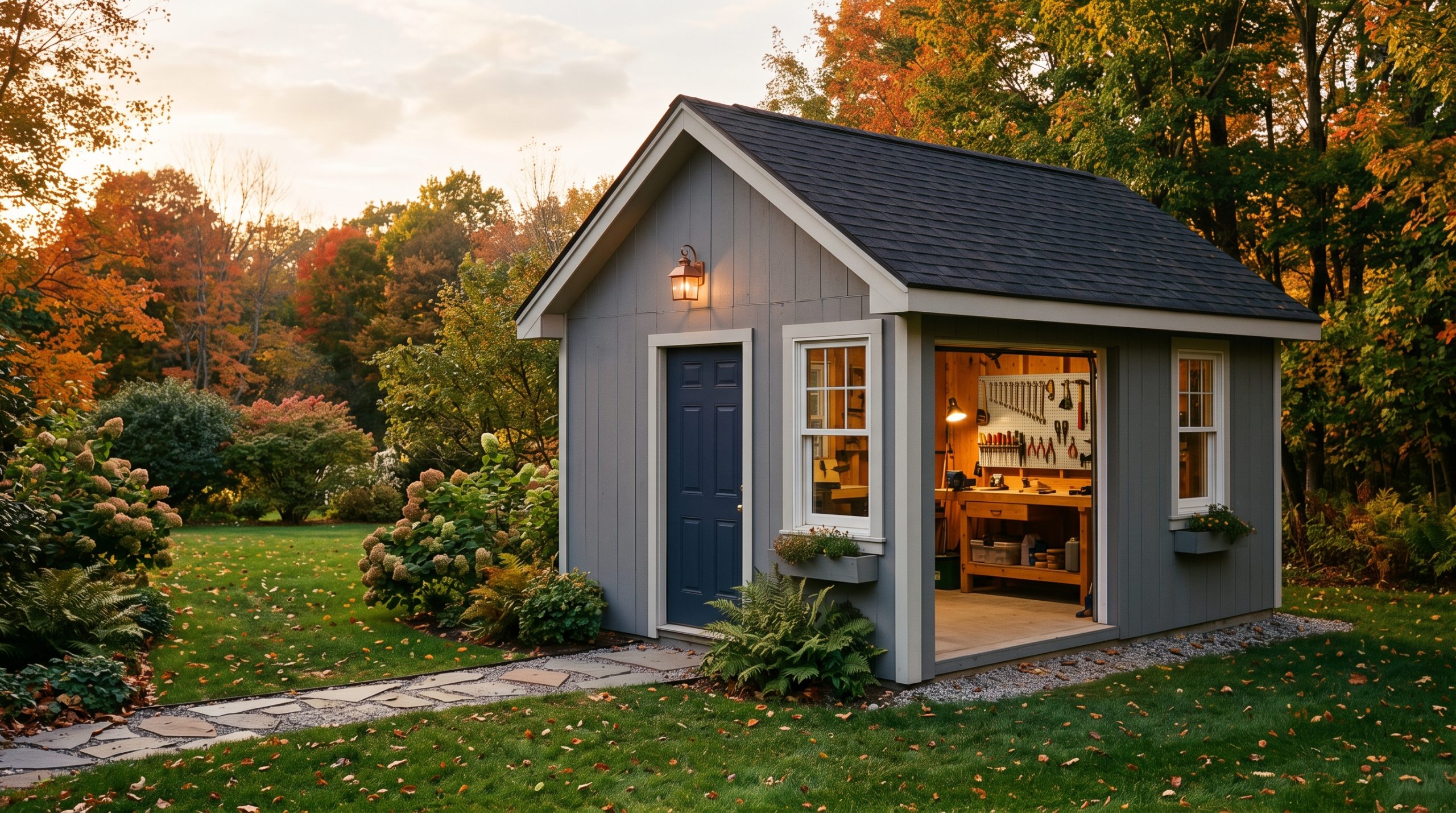
Ingrid Halvorsen spent the summer of 2023 turning her detached three-car garage into a woodworking workshop and a small remote-work desk, running new electrical circuits, insulating the walls, and adding a mini-split heating and cooling unit. She didn’t think about her homeowners insurance again until August 2026, when a renewal call with her agent turned up a $51,600 gap between what her policy would pay to rebuild that garage and what it would actually cost.
What Coverage B actually pays for
Every standard homeowners policy splits its property protection into sections. Coverage A insures the house itself. Coverage B, usually called Other Structures coverage, pays to repair or rebuild anything on the property that is not attached to the house. The National Association of Insurance Commissioners (NAIC), the group that coordinates insurance regulation across all 50 states, describes it plainly in its own consumer materials: it covers damage to other structures or buildings, such as a detached garage, work shed, or fencing. Texas’s insurance regulator uses nearly identical language, describing Coverage B as the part of the policy that pays to repair or rebuild structures not attached to your house, such as detached garages, storage sheds, and fences.
The number attached to that promise is where most homeowners get surprised. North Carolina’s Department of Insurance states the default directly in its own homeowner guidance: Coverage B is normally limited to 10 percent of the Coverage A limit. Progressive’s own policy explainer gives the identical figure, noting that other structures coverage is typically set at 10% of your policy’s dwelling coverage, but this can vary by insurer. On Ingrid’s $420,000 dwelling limit, that 10 percent works out to $42,000, and that number covers every detached structure on her property combined, not just the workshop.
What counts as a covered other structure
Progressive’s own coverage description names the everyday examples clearly: gazebos, detached garages, guest houses, sheds, and fences. North Carolina’s Department of Insurance lists detached garages and tool sheds as the typical items covered. If a structure sits apart from the house, or connects to it only by a fence, wire, or breezeway rather than a shared wall, it is Coverage B’s problem, not Coverage A’s.
Two things fall outside that promise, and both matter for anyone eyeing a garage conversion. First, the land underneath any structure is never part of the payout. Insurers calculate a rebuild figure, not a property value, because dirt does not burn down. Second, and more relevant to Ingrid’s situation, a structure used for business purposes gets treated differently. Progressive is direct about this: other structures coverage also doesn’t typically cover business structures, and a homeowner running even a small business out of a converted garage may find that building excluded from Coverage B entirely, regardless of where it sits on the property. Ingrid’s workshop stayed personal, her own furniture projects and a desk for remote work, with no paying clients. A reader whose detached structure doubles as a paid studio, salon, or storefront needs a separate business property endorsement, not a bigger Coverage B number.
Why Ingrid’s workshop blew past the 10 percent cap
Here is the arithmetic that made Ingrid’s gap real instead of theoretical. Her dwelling limit, Coverage A, sits at $420,000. Her Coverage B default, 10 percent of that, is $42,000. Her workshop measures 720 square feet, a converted three-car-width garage.

A general contractor’s mid-range estimate to rebuild that space today runs about $130 a square foot, near the top of the $61-to-$153-per-square-foot range that a national garage-conversion cost guide lists for mid-range work, because Ingrid’s project needed heavier electrical service for power tools, full insulation, and a dedicated heating and cooling unit rather than a bare-bones paint job. That puts her rebuild cost at 720 square feet times $130, or $93,600. Subtract her $42,000 Coverage B limit, and $51,600 of that rebuild has no coverage behind it at all. If a fire or a fallen tree took out that workshop tomorrow, Ingrid would be personally responsible for more than half the cost of putting it back.
| Structure type | Typically covered under Coverage B | Often needs a separate step |
|---|---|---|
| Detached garage, unmodified | Yes, up to the Coverage B limit | No |
| Storage shed | Yes, up to the Coverage B limit | No |
| Fence or gazebo | Yes, up to the Coverage B limit | No |
| Garage converted to a workshop or office, personal use | Yes, but the dollar limit does not rise on its own | Often, once rebuild cost passes the 10% default |
| Detached structure used for a paid business | Typically no | Yes, a business or in-home-business endorsement |
What it costs to raise your Coverage B limit
The fix is not complicated. North Carolina’s Department of Insurance tells homeowners directly that you may purchase more coverage for an additional premium, and that same guidance recommends carrying insurance equal to at least 80 percent of the full replacement cost of your other structures, not just whatever the default happens to produce. Progressive describes the same option: if your Coverage B amount would not sufficiently pay to repair or replace your other structures, you may be able to increase it, depending on your insurer, by adding more coverage or an endorsement to your policy.
Neither source publishes one standard price, because the added premium depends on your insurer, your state, and how much extra coverage you are buying. What both agree on is the order of operations. Before you call your agent, get an actual rebuild-cost estimate for the converted structure, the way Ingrid did, not the number the builder charged years ago. Ask for either a higher Coverage B percentage on the whole policy or a scheduled endorsement on the workshop specifically, and have your contractor’s estimate in hand so the new limit matches what rebuilding would really cost, not a round number that still falls short.
A related gap worth checking at the same time: if your dwelling itself is underinsured, raising Coverage B alone will not fix the bigger problem. Our guide to underinsured dwelling coverage walks through how to check whether Coverage A itself is set correctly, and our breakdown of extended versus guaranteed replacement cost explains the endorsements that protect against rebuilding costs rising faster than your limit did.
Frequently asked questions
What does Coverage B, or Other Structures coverage, pay for on a homeowners policy? Coverage B, often called Other Structures coverage, pays to repair or rebuild anything on your property that is not attached to your house, such as a detached garage, storage shed, fence, or gazebo. It is a separate dollar limit from Coverage A, which insures the house itself, and it responds to the same covered causes of loss.
What is the default limit for Coverage B on a homeowners policy? Most standard policies set Coverage B automatically at 10% of your Coverage A dwelling limit. On a home insured for $420,000, that is $42,000 for every detached structure on the property combined, according to North Carolina’s Department of Insurance. Insurers let you raise that percentage for an added premium.
Does homeowners insurance cover a garage that has been converted into a workshop? Yes, a converted garage stays under Coverage B as long as it remains personal-use space, but the dollar limit does not change just because you renovated it. If the finished workshop’s rebuild cost, including new wiring, insulation, and flooring, exceeds your Coverage B limit, the difference is your own out-of-pocket cost.
Can I increase my Coverage B limit on my homeowners policy? Most insurers let you raise Coverage B above the standard 10% default, or add an endorsement that schedules a specific structure at its own limit. Neither the regulators nor the insurers publish one standard price for this, so get a rebuild-cost estimate first and ask your agent for a quote based on that figure.
Does Coverage B cover a detached garage used for a home business? Generally, no. Most insurers, including Progressive, exclude structures used in whole or in part for a business from standard Other Structures coverage, even when the same building also serves personal use. A hobby workshop with no paying clients typically stays covered; a home business run from that garage usually needs a separate business or in-home-business endorsement.
Is Your Other Structures Coverage $51,600 Short?
Compare homeowners insurance quotes and ask about raising your Coverage B limit before your next renewal.
Compare Homeowners Insurance Quotes