5 min read · Last updated July 10, 2026
- A FAIR plan is a state-created insurer of last resort for homeowners who cannot buy coverage on the regular market. It exists in more than 30 states.
- Most FAIR plans write a stripped-down dwelling-fire policy: named-peril coverage, actual cash value, and often no personal liability at all.
- The most common shock is a total loss paid at depreciated value, which can leave a six-figure gap on a home that costs far more to rebuild.
- A companion “difference in conditions” policy can add back liability, theft, water damage, and replacement cost to bring you close to a normal policy.
In this article
- What a FAIR plan is
- What a FAIR plan actually covers, and what it drops
- The wrap policy that fills the gaps
- The cash-value gap in a total loss
- How to get out, and what to check while you are on it
- Frequently asked questions
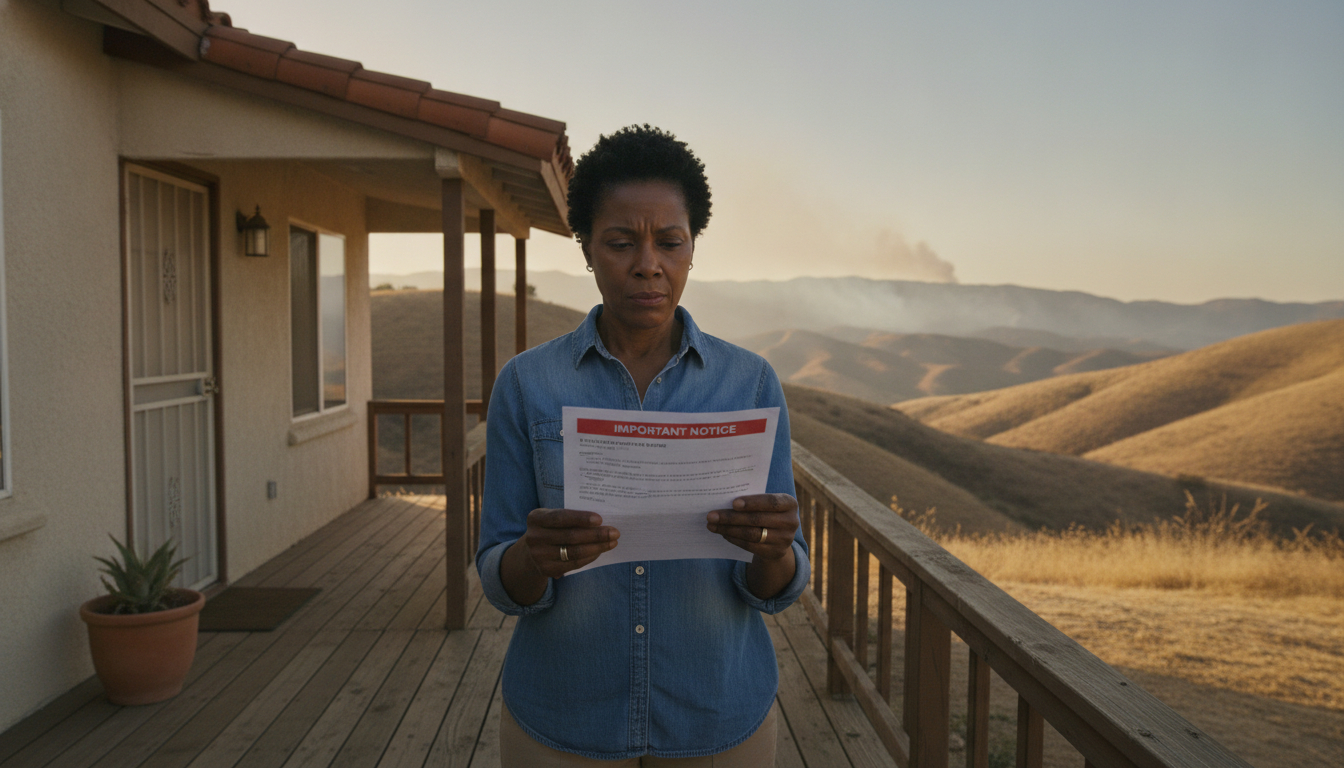
Denise Coleman opened the letter on a Tuesday. Her homeowners policy would not be renewed. After 19 years and zero claims, her carrier was pulling out of her wildfire-exposed foothills ZIP code entirely. The only company that would write her was the state FAIR plan. It cost more than her old policy, and when she sat down and read it, it covered her $420,000 home for far less than she assumed. Homeowners from Idaho’s Robie Creek to the California foothills are getting the same letter this summer.
What a FAIR plan is
FAIR stands for Fair Access to Insurance Requirements. FAIR plans are state-created insurance pools that write policies for property owners who cannot get coverage on the standard market. They started in the late 1960s and now operate in more than 30 states. In plain terms: if every normal insurer says no, the FAIR plan is the one that has to say yes.
It is not a government handout and it is not free. FAIR plans are funded by the insurance companies that operate in the state, and premiums are often higher than standard coverage for less protection. The plan is designed to be temporary. You are meant to use it until you can get back into the regular market.
What a FAIR plan actually covers, and what it drops
Most FAIR plans write a basic dwelling-fire policy, frequently the most limited version known as a DP-1. That policy is “named-peril,” which means it only covers the causes of loss specifically listed in the contract. If a cause of loss is not on the list, it is not covered. A standard homeowners policy works the opposite way for your structure, covering everything except what it excludes.
Here is where the gaps open up. Many FAIR plans include:
- Dwelling coverage only, with little or no coverage for your personal belongings unless you add it.
- No personal liability coverage. If a visitor is injured on your property and sues, you face that alone.
- Actual cash value, not replacement cost. Actual cash value means the depreciated value of what was damaged, not what it costs to replace it new.
- A maximum coverage cap, which in some states limits how expensive a home the plan will insure.
The wrap policy that fills the gaps
You are not stuck with the bare FAIR plan by itself. Most agents pair it with a companion policy called a difference in conditions, or DIC, policy. A DIC policy is private coverage that sits on top of the FAIR plan and adds back the parts the FAIR plan leaves out: personal liability, theft, water damage, personal property, and replacement cost.
Bought together, a FAIR plan plus a DIC policy can get you close to what a normal homeowners policy provided. The catch is that you now pay two premiums and manage two policies, and you have to ask for the DIC on purpose. It is not automatic.
The cash-value gap in a total loss
Denise’s real exposure was the settlement math. Her home would cost about $420,000 to rebuild. Her FAIR plan paid actual cash value, so after depreciation on the roof, the systems, and the finishes, a total loss would have paid closer to $300,000. That is a $120,000 gap she would have had to cover herself to rebuild the same house.
The fix is either a FAIR plan option that pays replacement cost instead of cash value, where offered, or a DIC policy that adds it back. And because a FAIR plan does not cover flood any more than a standard policy does, a home with flood exposure still needs a separate flood policy on top. The wildfire that drove Denise onto the plan does not cover the water risk sitting underneath it.
How to get out, and what to check while you are on it

Treat the FAIR plan as a bridge, not a destination. Re-shop your coverage at every renewal and ask an independent agent whether any carriers are re-entering your area. Markets tighten and loosen, and a ZIP code that is uninsurable one year sometimes reopens the next.
While you are on the plan, do three things. Confirm whether your settlement is actual cash value or replacement cost. Add a DIC policy so you are not walking around with no liability coverage. And add a flood policy if your property needs one. Those three moves turn a bare-bones plan into something that can actually rebuild your life after a loss.
Frequently asked questions
What is a FAIR plan in home insurance?
It is a state-created insurance pool that provides coverage to property owners who cannot buy it on the regular market, often because of wildfire, hurricane, or other high-risk exposure. It is the insurer of last resort, funded by the insurers operating in that state.
Does a FAIR plan cover liability if someone is hurt at my house?
Usually not. Most FAIR plans are dwelling-only policies that exclude personal liability. To get liability coverage, you generally have to add a companion difference in conditions policy or find another way to insure that risk.
Is a FAIR plan more expensive than regular homeowners insurance?
Often yes. FAIR plans frequently cost more than standard coverage while providing less, because they insure the highest-risk properties. That is why they are meant to be temporary rather than a permanent replacement.
What is a DIC policy and do I need one with a FAIR plan?
A difference in conditions policy is private coverage that sits on top of a FAIR plan and adds back what the plan leaves out, such as liability, theft, water damage, and replacement cost. Most homeowners on a FAIR plan need one to approach normal coverage.
Can I switch back to a regular homeowners policy after a FAIR plan?
Yes, and you should try at every renewal. Insurance markets shift, and carriers sometimes return to areas they previously left. An independent agent can tell you whether standard coverage has become available for your home again.
Before you settle for the FAIR plan, see whether a standard policy is still available for your home.
Compare homeowners insurance quotes and check for carriers writing coverage in your area right now.
Compare Homeowners Insurance Quotes