6 min read · Last updated July 29, 2026
- A cosmetic damage endorsement excludes hail damage that changes how a roof looks without stopping it from keeping water out. The dents are real and the claim still pays zero.
- Texas wrote the original version in 1998, and it attaches only to impact-resistant roofs that are already receiving a premium credit. Endorsements sold in other states are often broader.
- On a $410,000 dwelling limit with a 2% wind and hail deductible, the difference between a functional finding and a cosmetic finding was $22,800.
- Kansas recorded 375 hail events in 2025 and Texas recorded 902, out of 5,432 nationally, per NOAA data compiled by the Insurance Information Institute.
In this article
- What the endorsement actually says
- Texas wrote the narrow version first
- The dollar math on one real roof
- Where hail actually lands
- How to find out if you have it
- Frequently asked questions
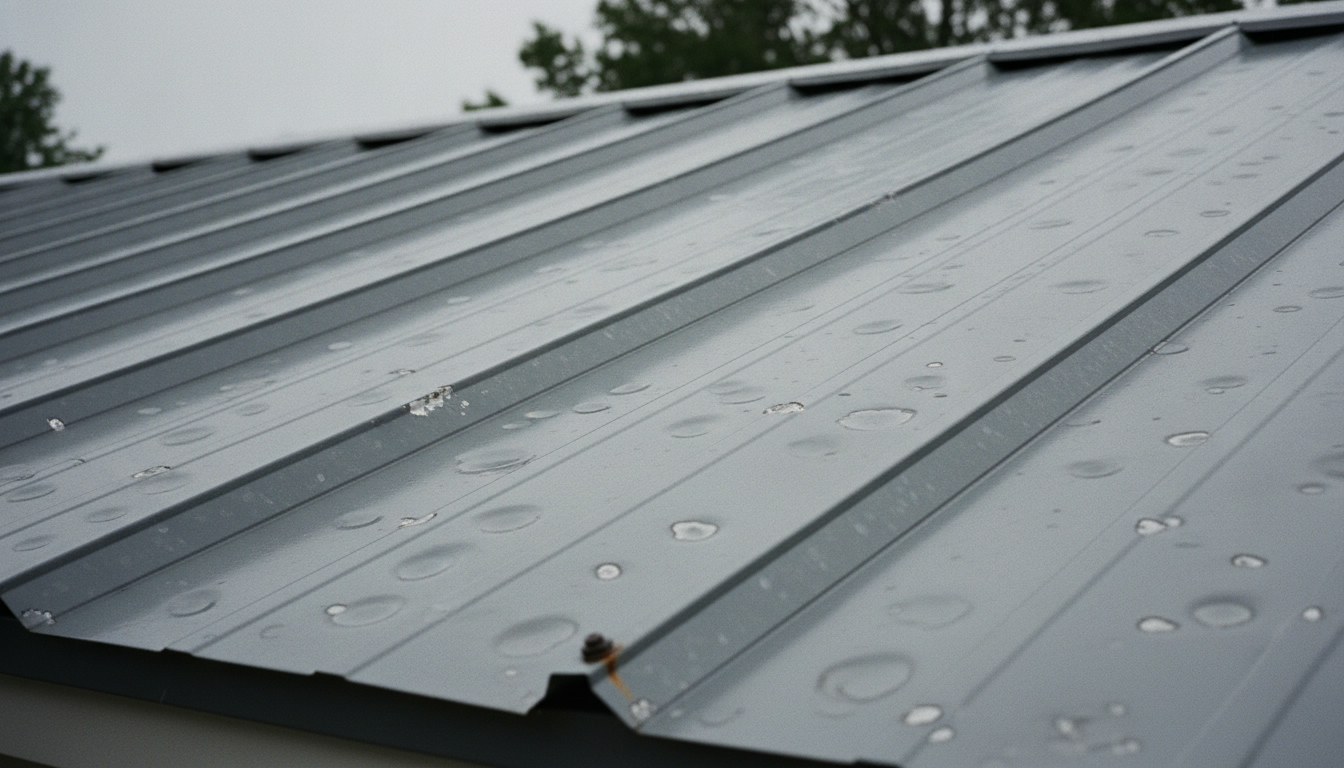
An adjuster spent forty minutes on Marcus Whitfield’s roof in Wichita last June and counted 214 hail dents across the standing-seam metal panels. Whitfield had a $31,000 replacement bid in hand from a licensed roofer. The claim closed at zero. Not denied for late notice, not reduced for depreciation, and not disputed on causation. The adjuster agreed hail did it. A two-paragraph endorsement Whitfield had never read excluded loss that alters a roof’s appearance without impairing its function.
What the endorsement actually says
The Texas Department of Insurance adopted the original endorsement in 1998 and defined the excluded loss with unusual precision. Under Commissioner’s Bulletin B-0030-98, “cosmetic loss or damage means only that damage that alters the physical appearance of the roof covering but does not result in damage that allows the penetration of water through the roof covering or does not result in the failure of the roof covering to perform its intended function, to keep out elements over an extended period of time.”
Read that as a two-part test the adjuster applies on your roof. Does water get through now? Will the covering fail to keep out the elements over an extended period? If the answer to both is no, the damage is cosmetic and the endorsement excludes it, no matter how many dents there are or what a replacement costs.
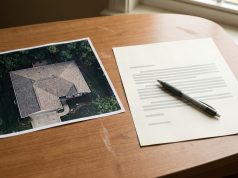
Insurers draw a similar line at renewal time, just in the opposite direction. Rather than deciding whether existing damage is cosmetic or functional, some now use aerial and satellite roof imagery to decide whether to renew you at all, and that photo can be old enough to predate a full reroof.
Metal roofs are the clearest example: a dented steel panel is visually ruined and hydraulically fine. Asphalt shingles give homeowners more room to argue, because hail impact displaces the granule layer that shields the asphalt mat from ultraviolet light, and granule loss is a functional change with a measurable path to failure. Document the granule loss and the conversation moves from appearance to performance.
Texas wrote the narrow version first
The Texas endorsements, HO-145 for homeowners policies and TDP-022 for dwelling policies, are far narrower than what many homeowners now carry. They attach only to residences with impact-resistant roof coverings meeting Underwriters Laboratories Standard 2218 or an equivalent approved test, and only where the insured is eligible for and receiving a premium credit for that roof. Texas built it as a trade: a discount for a tougher roof, in exchange for giving up appearance-only claims on it.
Endorsements written outside that framework do not always carry the same conditions. Some attach to ordinary asphalt roofs. Some carry no premium credit at all. If your declarations page shows a cosmetic damage exclusion and no matching roof credit, you accepted the coverage reduction without the consideration Texas required in 1998. That is worth a call to your agent this week, not after the next storm.
The dollar math on one real roof
Whitfield’s inputs: a 2,400 square foot brick ranch in Wichita, Kansas, a $410,000 dwelling limit, a 2% wind and hail percentage deductible, and a $31,000 bid to replace the standing-seam metal roof.
– The percentage deductible converts to dollars first: 2% of $410,000 is $8,200. – If the adjuster had found functional damage: $31,000 minus $8,200 equals $22,800 paid. – With the cosmetic finding: $0 paid, and the $8,200 deductible never even comes into play.
The gap is $22,800 on a single decision made by one person standing on your roof. Whitfield’s premium credit for the impact-resistant metal roof was $214 a year, collected since 2021, so the endorsement returned him $1,070 in credits and cost him $22,800 in coverage on its first real test.
Where hail actually lands
Whether this endorsement matters to you is largely geography. The Insurance Information Institute compiles hail event counts from the NOAA Storm Prediction Center, and the concentration is stark.
| State | Hail events, 2025 | Share of the national total |
|---|---|---|
| Texas | 902 | 16.6% |
| Kansas | 375 | 6.9% |
| Oklahoma | 369 | 6.8% |
| Nebraska | 315 | 5.8% |
| Missouri | 253 | 4.7% |
| United States, all states | 5,432 | 100% |
Those five states produced 41% of all US hail events in 2025 on their own, and the national count rose from 5,373 in 2024 to 5,432 in 2025. Insurers know exactly where their hail losses come from, which is why the cosmetic exclusion shows up most often on renewal offers in those same states.
How to find out if you have it
Pull your declarations page, not the policy jacket, and read the list of attached forms. You are looking for a title containing “cosmetic,” “roof surfacing,” or “appearance.” If you cannot find the endorsement list, email your agent this exact question: does my policy carry a cosmetic damage or roof-surfacing appearance exclusion, and am I receiving an impact-resistant roof credit in return?
Then ask what removing it costs. Some carriers will strike the endorsement and take back the credit. Where a carrier will not, price a competing quote without the exclusion and compare on total coverage rather than premium. Our guide to comparing homeowners insurance policies walks through the form-by-form comparison, and the deductible interaction is covered in how wind and hail percentage deductibles work.
After a storm, photograph the roof before any repair, ask the adjuster in writing which prong of the cosmetic test the damage failed, and have an independent roofer document granule loss or seam separation. That written answer is what a supplemental claim or a state complaint is built on.
Frequently asked questions
Is a cosmetic damage exclusion legal in my state? In most states, yes. These are filed endorsements a state insurance department has approved, and Texas approved the first version in 1998 for impact-resistant roofs receiving a premium credit. Legality is not the useful question. The useful question is whether you agreed to it knowingly and what you got in exchange.
How do I prove hail damage is functional, not cosmetic? Document the mechanism, not the appearance. On asphalt shingles, photograph granule loss at the impact points and any mat fracture, because a shingle stripped of granules is losing its ultraviolet protection. On metal, look for seam separation, fastener backout, or punctures. Have the roofer write it as a performance finding rather than a count of dents.
Does the exclusion apply to siding and gutters too? Most versions are written specifically for roof surfacing, so dented siding, gutters, and window wraps often remain covered under the rest of the policy. Check the endorsement’s own definition of covered property, because some broader forms reach other exterior surfaces.
Will removing the exclusion raise my premium? Usually yes, because in the Texas model the exclusion exists to justify the impact-resistant roof credit. Losing the credit is the price of restoring coverage. On a $31,000 roof, giving up a $214 annual discount is a straightforward trade.
What if my adjuster already closed the claim at zero? Ask for the written basis in the claim file, specifically which prong of the cosmetic test the damage failed. Then submit a supplemental claim with an independent roof report addressing function. If the carrier will not reconsider, file a complaint with your state insurance department and attach both reports.
Nothing about that roof will get worse fast enough to change the finding. The dents will sit there for years, doing exactly what the endorsement says they do, which is nothing a policy has to pay for.
Compare homeowners policies without a cosmetic damage exclusion
See which carriers cover appearance-only hail damage on your roof and what the impact-resistant credit is actually worth.
Get homeowners insurance quotes