6 min read · Last updated July 3, 2026
In this article
- What a proof of loss actually is
- Why the inventory decides your payout
- ACV, replacement cost, and the money held back
- The sublimits that quietly cap your claim
- Build the inventory before you need it
- FAQ
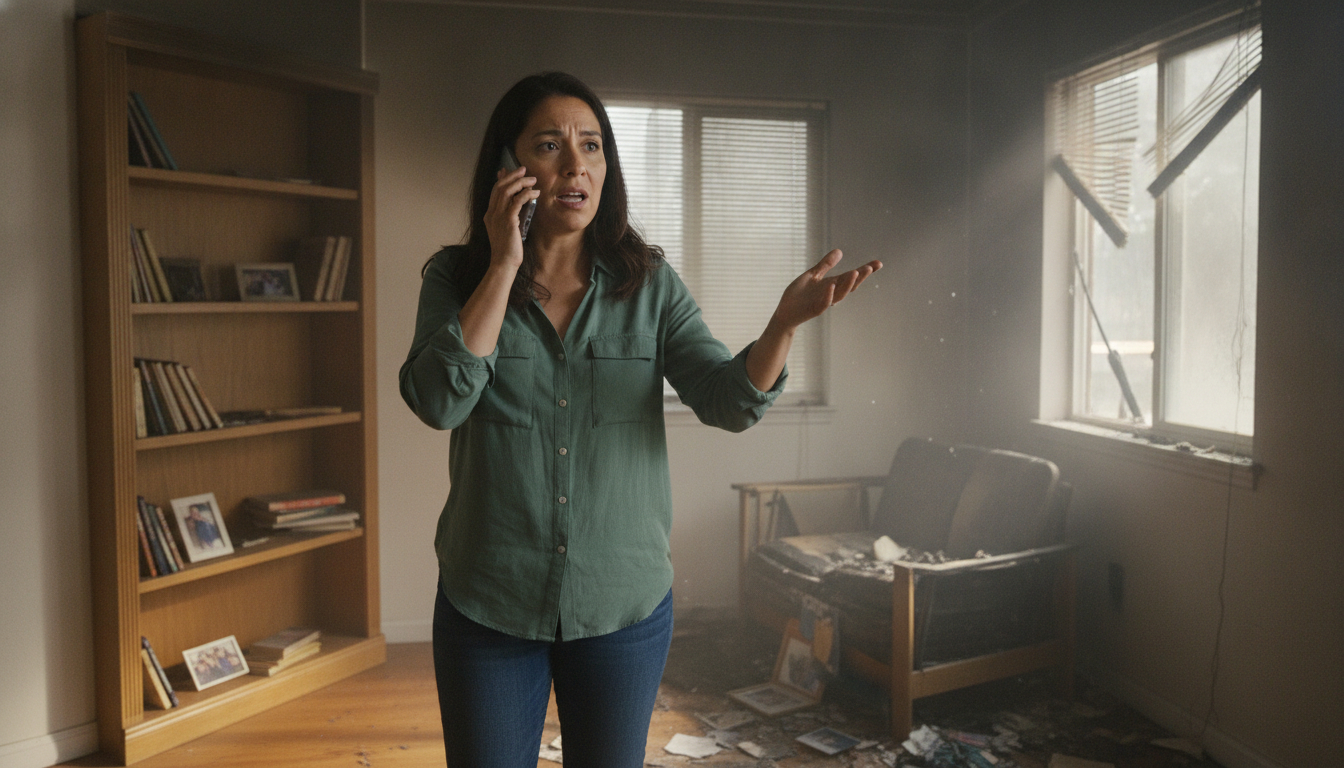
A grease fire in the Reyes family’s kitchen spread through the first floor of their home before the engines arrived. The structure was covered and rebuilt. The contents were a different story. Their policy carried $90,000 in personal property coverage, but when the adjuster asked for a proof of loss with an itemized list, the family could only document about $41,000 worth of belongings. Everything else, years of furniture, clothing, electronics, and kitchen goods, existed only in their memory. The insurer paid what was proven. The rest was gone.
What a proof of loss actually is
A proof of loss is a sworn, signed statement you submit to the insurer that documents the amount you are claiming. It is not a formality. It is a condition of the policy. Most standard homeowners forms require you to send a completed proof of loss within 60 days after the insurer requests it.
If you miss the deadline, or submit it incomplete, the insurer can delay or deny payment. That is not the adjuster being difficult. It is the contract you signed. The proof of loss is the legal document that turns a claim into a payable number.
The catch is what the form demands. For the structure, a contractor’s estimate does most of the work. For your belongings, the burden lands on you. You have to list what you owned.
Why the inventory decides your payout
The contents inventory is the itemized backbone of your proof of loss. For each item, the insurer wants a description, the quantity, roughly how old it was, what it originally cost, and what it costs to replace today.
Think about what that means for a whole household. Every shirt, every pot, every lamp, every book, every tool in the garage. After a fire, you are asked to reconstruct a lifetime of purchases from a burned or soaked pile. Most people cannot. So they list the big obvious items, forget hundreds of small ones, and sign a proof of loss for far less than they actually lost.
This is where you protect yourself in advance. Before you ever file, walk your home and build the list. A methodical photo and receipt inventory is the single thing that separates a paid claim from an estimate. The Reyes family had no list, so their memory set the ceiling on their payout.
Comparing policies with an eye on how contents claims are handled matters too. Our guide on how to compare homeowners insurance policies walks through the settlement terms to check before you buy.
ACV, replacement cost, and the money held back
Two settlement terms decide how much the inventory is worth. Actual cash value, or ACV, pays what your item was worth at the time of loss, after subtracting depreciation for age and wear. Replacement cost value, or RCV, pays what it costs to buy a new equivalent today.
Most replacement cost policies pay in two stages. First they send the ACV amount. Then they release the rest, the recoverable depreciation, only after you actually replace the item and send the receipt. If you never replace it, you never collect that second check. We explain that two-check process in detail in recoverable depreciation on a homeowners claim.
In plain terms, a five-year-old $1,200 sofa might have an ACV of $500. On a replacement cost policy, you get $500 now and the remaining $700 only after you buy a new sofa and prove it. No inventory, no proof, no second check.
The sublimits that quietly cap your claim
Even a perfect inventory hits the sublimits buried in your policy. Standard homeowners forms cap certain categories no matter how much total contents coverage you carry.
Jewelry and watches are often capped near $1,500 for theft. Cash is frequently limited to $200. Firearms may be capped around $2,500. Business property in the home carries its own low ceiling. These caps apply per category, and they surprise people who assumed a $90,000 contents limit covered a $9,000 ring.

If you own anything valuable in those categories, you usually need a scheduled endorsement or a floater to cover it fully. We cover the full list of these traps in personal property sublimits on homeowners insurance.
Build the inventory before you need it
Do this while your home is intact, not after it is gone. Walk every room with your phone and record video, narrating what each item is and when you bought it. Open closets, cabinets, and drawers. Photograph serial numbers on electronics and appliances.
Save receipts for major purchases in a cloud folder, not a drawer that burns with the house. For high-value items, keep appraisals. Then store a copy off-site or in the cloud so the record survives the loss that destroys the originals.
When a claim comes, you will hand the adjuster a documented list instead of straining to remember. That single habit is the difference between the Reyes family’s $41,000 and the $90,000 their policy was ready to pay.
FAQ
What is a proof of loss on a homeowners claim? It is a signed, sworn statement listing the amount you are claiming and the property involved. Most policies require you to submit it within 60 days of the insurer’s request. It is a condition of coverage, not optional paperwork.
Do I really have to list every item after a fire? For contents, yes. The insurer pays based on an itemized inventory showing what you owned, its age, and its cost. If you cannot document an item, the insurer generally will not pay for it, which is why most families under-claim.
What happens if I miss the proof of loss deadline? The insurer can delay or deny the claim. The deadline is written into the policy. If you need more time, ask in writing before the 60 days expire and get any extension confirmed in writing.
Why did my insurer only pay part of my claim upfront? On a replacement cost policy, you usually receive the actual cash value first. The remaining recoverable depreciation is released only after you replace the item and submit the receipt. Skip the replacement and you forfeit the second payment.
How do I prove ownership of things I bought years ago? Photos, video, receipts, credit card records, and appraisals all help. Building a room-by-room inventory before a loss and storing it in the cloud is the reliable way to prove ownership when the originals are destroyed.
Not sure your contents coverage matches what you own?
Compare homeowners policies and see how each one settles a contents claim before you file one.
Compare homeowners insurance quotes →The Reyes family rebuilt their kitchen, but they replaced their belongings out of pocket. The coverage was there the whole time. What they lacked was the proof, and after a fire, proof is the only thing the policy pays on.