8 min read · Last updated September 9, 2026
- Standard Insurance Services Office, Inc. (ISO) Homeowners 3 Special Form policies, form HO 00 03, exclude “mechanical breakdown, latent defect, inherent vice or any quality in property that causes it to damage or destroy itself” from Coverage A and B.
- An Equipment Breakdown or Home Systems Protection endorsement restores coverage for a failure like this, typically for $25 to $100 a year, with its own separate deductible around $500 and its own sublimit, commonly $50,000 to $100,000 per occurrence.
- A home warranty is not the same product. California and the District of Columbia both confirm in their own consumer guidance that a home warranty is a service contract, not an insurance policy, and often carries different dispute rules than a homeowners claim.
- On a real $6,000 compressor failure, adding the endorsement turns a $6,000 loss into a $500 deductible, a swing of $5,500 for a coverage that typically costs less than $100 a year.
A standard homeowners policy pays nothing when a furnace, water heater, or air conditioning compressor fails from an internal mechanical breakdown, because that cause of loss is excluded by name in the base form. An Equipment Breakdown endorsement restores that coverage separately, usually for under $100 a year, with its own deductible and its own limit apart from the rest of the policy.
In this article
- The Exclusion Hiding in Plain Sight
- The Real Math on a $6,000 Compressor Failure
- What the Equipment Breakdown Endorsement Actually Restores
- This Is Not a Home Warranty
- Frequently asked questions
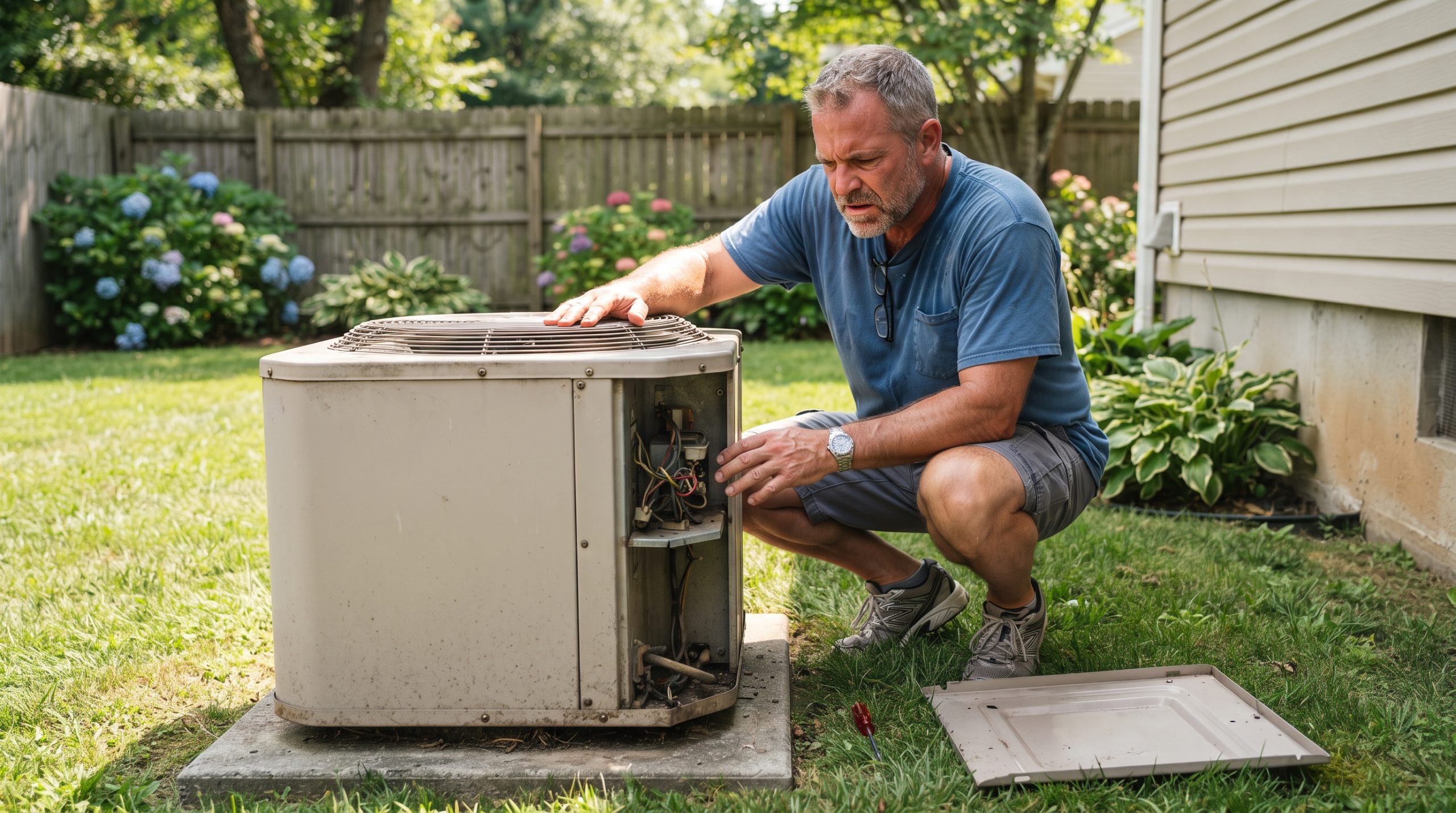
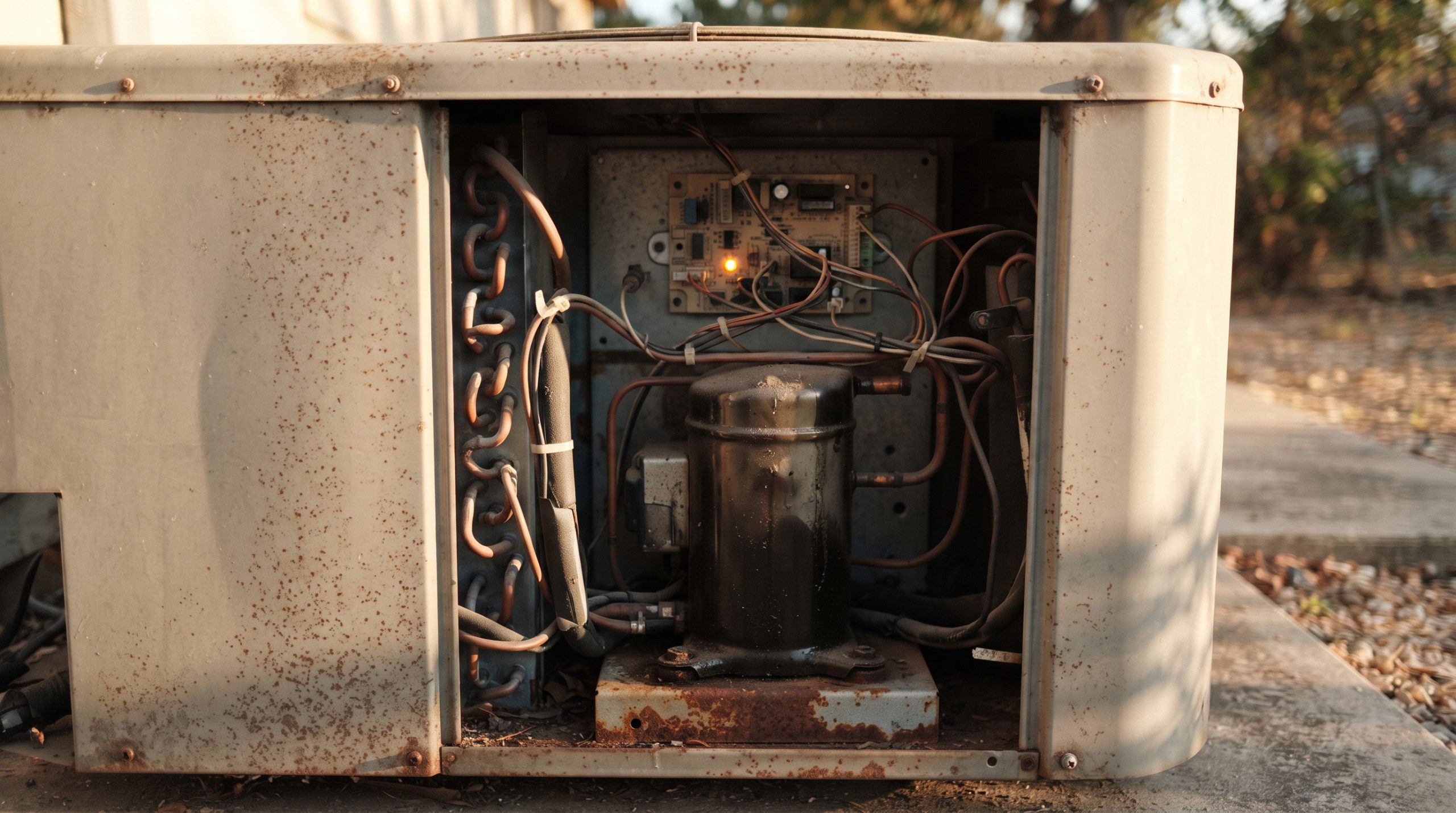
Walter Kessler’s central air conditioning system quit on the hottest week of August, the compressor dead from an internal electrical short his contractor diagnosed on-site. The repair estimate came to $6,000. His homeowners insurer’s answer came back within days, and it was not a denial letter over a disputed amount. No adjuster was ever assigned, because the loss was never a covered peril to begin with.
The Exclusion Hiding in Plain Sight
The clause that decided Walter’s claim before he ever filed it sits in Section I of the ISO Homeowners 3 Special Form, form HO 00 03, under the property coverages for the dwelling and other structures. Its exact wording: “Mechanical breakdown, latent defect, inherent vice or any quality in property that causes it to damage or destroy itself.”
Read plainly: if a machine fails because something inside it wore out, shorted, or simply broke on its own, that failure sits in the same excluded category as wear and tear, rust and corrosion, and settling and cracking, several rows above it on the same list. It is not treated as an accident the way a fire or a burst pipe is. The compressor is not damaged by something that happened to it. It is damaged by something that happened inside it, and the standard form draws a hard line at that distinction.
The distinction has a real, practical consequence worth naming directly. A homeowner who compares this to a related, more familiar gap, homeowners coverage for gradual versus sudden water damage, is looking at a close cousin: both exclusions turn on how a loss happened, not just what broke. Mechanical breakdown is narrower still. It applies even to a genuinely sudden failure, as long as the failure originated inside the equipment itself rather than from an external cause.
The Real Math on a $6,000 Compressor Failure
The fix is a separate endorsement, and the dollar swing it produces is large relative to its cost. A specimen Equipment Breakdown endorsement from carrier Trusted Resource Underwriters Exchange, form TRUE EB 06 20, makes the restoration explicit in its own exclusions section: “Any exclusions in your policy for mechanical or electrical breakdown do not apply to this endorsement.” That specimen runs a $100,000 per-occurrence limit against a $500 deductible, structured entirely apart from the homeowner’s regular dwelling deductible.
| Scenario | Payout |
|---|---|
| Standard HO-3, no endorsement (mechanical breakdown excluded) | $0 |
| Compressor repair cost | $6,000 |
| With Equipment Breakdown endorsement attached ($500 deductible) | $5,500 |
| Regular dwelling deductible applied to this loss | Not applicable, endorsement runs its own deductible |
| Net swing for the homeowner | $5,500 |
Real dollar losses at this scale are not hypothetical. Partners Mutual Insurance’s equipment-breakdown claims FAQ describes a $3,295 air conditioning compressor replacement and a separate freezer circuit-board failure whose $9,259 repair cost, once the endorsement’s food-spoilage benefit was added, brought that second claim to a total of $11,345. Independent consumer research from NerdWallet puts the endorsement’s typical annual cost at $25 to $50 a year against a $500 deductible and up to $100,000 in coverage, while a second independent source, Insurify, cites a wider $15 to $100 a year range for up to $50,000 in coverage. Every one of those figures describes an add-on running under $100 a year against a loss that, without it, is paid at zero.
What the Equipment Breakdown Endorsement Actually Restores
The endorsement’s coverage grant is narrow and specific, not a blanket fix for anything mechanical in the house. The specimen language covers “physical loss or damage” originating within “mechanical, electrical, electronic or fiber optic equipment” and “caused by, resulting from, or consisting of: mechanical breakdown; electrical or electronic breakdown; or rupture, bursting, bulging, implosion, or steam explosion.” That reaches a failed compressor, a shorted control board, or a ruptured water heater tank, and it typically pays without a depreciation deduction on the repair itself.
Sublimits inside the endorsement often run separately from its main limit, each capped on its own: expediting expense to speed up a repair, spoilage coverage if a freezer or refrigerator failure ruins food, pollutant cleanup, and off-premises coverage, each commonly limited to a smaller figure like $10,000 within the specimen reviewed for this article. A homeowner buying this coverage should ask for the actual sublimit schedule, not assume the headline number applies to every scenario.
What it does not restore is coverage for ordinary wear and tear. Partners Mutual’s own claims FAQ draws this line cleanly: a mechanical breakdown “usually occurs suddenly,” while wear and tear “usually occurs over time,” and a slow, expected decline still falls outside both the base policy and the endorsement. The endorsement adds back sudden internal failure. It does not turn a homeowners policy into a maintenance plan.
This Is Not a Home Warranty
The product that sounds like it solves the same problem, a home warranty, is a different thing entirely, and the difference matters when something breaks and the check does not come. The District of Columbia Attorney General’s consumer alert states it plainly: “Home warranties are not insurance policies, they are service contracts.” The same alert flags that many home warranty contracts route disputes to arbitration rather than court, a materially different process than an insurance claim dispute.
That distinction is not uniform across every state, which is its own reason to check before buying. California’s Department of Insurance explains that in California, home warranties, called “home protection contracts,” are still licensed and regulated by the state’s insurance department even though they legally are not insurance: “A home warranty is not an insurance policy. However, for the protection of consumers, home warranty companies are regulated and licensed by the California Department of Insurance.” The same page draws the functional line clearly: “A homeowners’ policy covers damage to your personal property and dwelling caused by major events, including natural disasters like wildfires. Home warranties do not overlap or replace a homeowners’ insurance policy.”
An Equipment Breakdown endorsement is different from both. It is a first-party insurance claim against the same carrier that holds the rest of the homeowners policy, subject to that state’s normal claims-handling rules, not a separate service contract with its own company and its own dispute process.
Compare homeowners insurance before your next breakdown
See what a policy actually covers when a system inside your home fails, not just when something happens to your home from the outside.
Compare Homeowners Insurance QuotesFrequently asked questions
Does homeowners insurance cover a broken air conditioner or furnace? Not under a standard policy. If the failure originates inside the equipment, such as an internal mechanical or electrical breakdown, the base ISO Homeowners 3 form excludes it by name. An external cause, like a tree limb crushing the unit, is a different, generally covered peril.
What does an Equipment Breakdown endorsement actually add to a homeowners policy? It restores coverage specifically for mechanical or electrical breakdown, rupture, or steam explosion originating inside covered equipment, running against its own deductible, often around $500, and its own per-occurrence limit, commonly $50,000 to $100,000, separate from the rest of the policy.
Is a home warranty the same thing as equipment breakdown coverage? No. A home warranty is a service contract with a separate company, not an insurance claim against the homeowners carrier. Consumer protection agencies in California and the District of Columbia both confirm it is regulated, and disputed, differently than a homeowners insurance claim.
How much does equipment breakdown coverage cost? Independent consumer research puts the typical annual cost between $25 and $100 a year, depending on the carrier and the coverage limit selected, against a deductible commonly set at $500.
Does the equipment breakdown endorsement cover normal wear and tear? No. It restores coverage for a sudden internal failure, not gradual deterioration. A compressor that wears out slowly over years is treated the same way under the endorsement as it is under the base policy: excluded.